Last Updated on 7 July 2026 by Ahsan Khan
Once the original carrot color grew in ancient Afghanistan over a thousand years ago, purple carrots are making a vibrant comeback in modern nutrition. These stunning root vegetables aren’t just eye-catching — they’re packed with special plant compounds called anthocyanins, the same powerful antioxidants found in blueberries and blackberries. If you’re looking for simple, natural ways to support your heart, fight inflammation, and protect your cells, purple carrots deserve a spot on your plate.
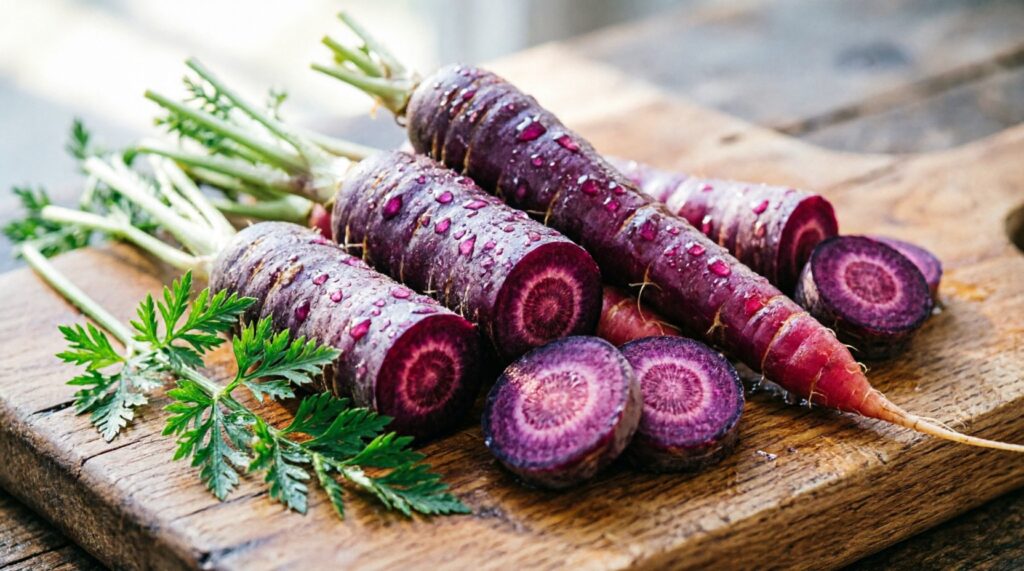
What Makes Purple Carrots Unique?
While most of us grew up with bright orange carrots, purple carrots are actually the original variety. They get their deep violet color from anthocyanins — natural pigments that do more than just look pretty. These compounds have strong antioxidant and anti-inflammatory effects.
Both purple and orange carrots give you beta-carotene (which your body turns into vitamin A) and fiber. But purple carrots add an extra layer of protection thanks to those anthocyanins. Research suggests this may support better metabolic health and help your body handle everyday stress at the cellular level.
Purple Carrots Nutrition facts(per 100g raw):
| Nutrient | Purple Carrot | Orange Carrot |
|---|---|---|
| Calories | ~25–35 kcal | ~41 kcal |
| Anthocyanins | High | None |
| Beta-carotene | Moderate | High |
| Vitamin A | Good | Excellent |
| Vitamin C | ~15% DV | ~10% DV |
| Fiber | 2.8g | 2.8g |
| Potassium | 320mg | 320mg |
It’s all about those vibrant plant compounds. Just like cherry tomatoes pack powerful lycopene for heart health, purple carrots deliver anthocyanins — the same deep purple antioxidants found in blueberries. Both vegetables provide that nature’s brightest colors are your best clue to nutrient density.
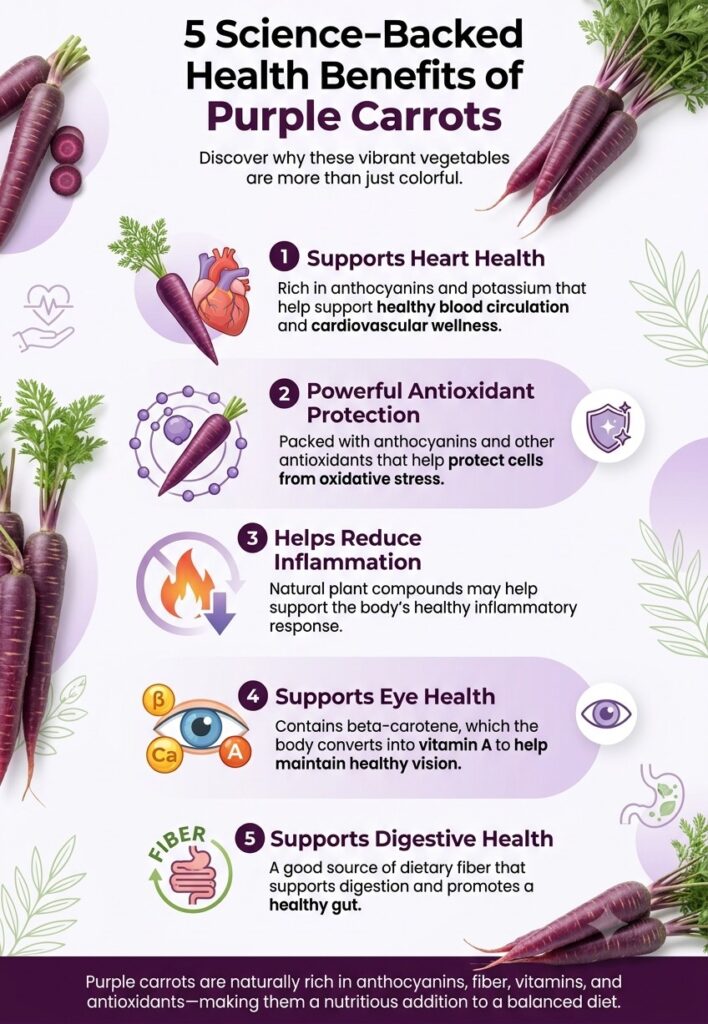
Health Benefits of Purple Carrots
Heart Health & Blood Pressure Support
The anthocyanins in purple carrots may help calm inflammation in your blood vessels. This can support healthier blood pressure and better circulation. Some studies also suggest these compounds help maintain healthy cholesterol levels — a win for your heart.
Fighting Inflammation & Supporting Gut Health
Early research shows purple carrot extracts may help block certain inflammation pathways in the body. That’s good news if you’re managing joint discomfort or digestive sensitivity. Plus, their natural fiber feeds the good bacteria in your gut, which supports overall wellness.
Antioxidant Protection for Longevity
Purple carrots have a higher total antioxidant capacity than orange ones. That means they’re especially good at neutralizing free radicals — unstable molecules that can damage cells over time. Think of them as a simple, tasty tool in your longevity toolkit.
Metabolic Health & Blood Sugar Balance
Some emerging studies suggest that anthocyanin-rich foods like purple carrots may help your body use insulin more effectively. That’s helpful for maintaining steady energy and supporting metabolic health long-term.
Vision & Immune Support
Like orange carrots, purple varieties provide beta-carotene for eye health and vitamin C for immune function. The added anthocyanins may offer extra protection for your eyes against everyday oxidative stress.
Are Purple Carrots Natural? (Yes—They’re the Original!)
Absolutely. Purple carrots were the first carrots ever cultivated, grown in regions like Afghanistan and Persia over a thousand years ago. The orange carrots we know today were actually developed later by Dutch farmers in the 1500s–1600s. So when you choose purple carrots, you’re not just trying a trend — you’re reconnecting with agricultural history and nutrient diversity.
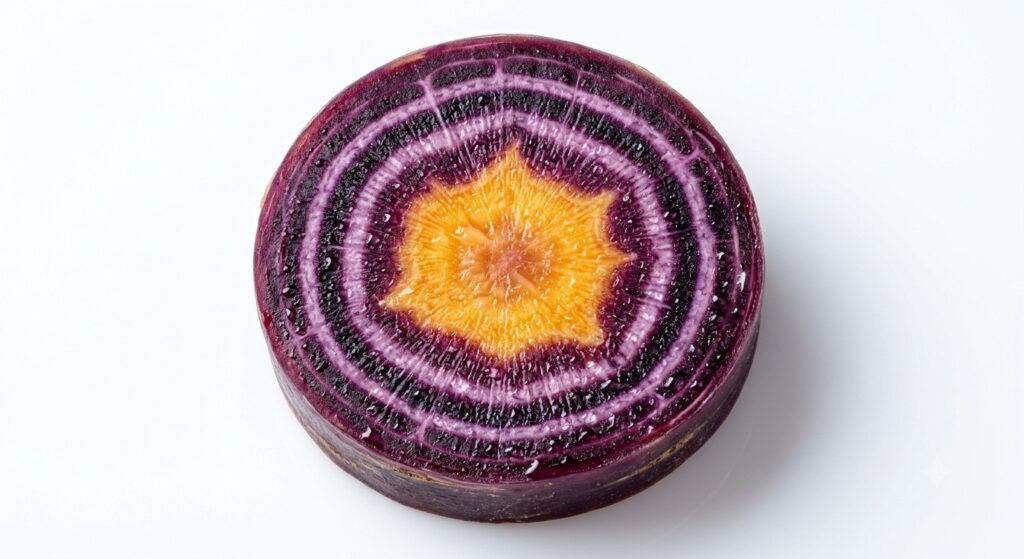
pigment rings surrounding a golden-orange core.
What Do Purple Carrots Taste Like?
Purple carrots aren’t just nutritious — they’re incredibly versatile in the kitchen, much like cherry tomatoes. Both can be roasted to bring out natural sweetness, tossed raw into salads for a pop of color, or blended into sauces and salsas.

Think of them as orange carrots’ slightly sweeter, earthier cousin — with a subtle berry-like hint thanks to the anthocyanins. They’re versatile and delicious:
- Eat them raw in salads (this keeps the most color and nutrients)
- Roast them with olive oil, garlic, and herbs
- Blend into smoothies or fresh juices
- Add to soups, stir-fries, or grain bowls
Pro tip: Heat and long cooking can fade the purple color. For maximum visual impact and nutrient retention, enjoy them raw or lightly steamed.
Where to Buy Purple Carrots (and How to Store Them)
Finding them:
- Check local farmers markets — ask for heirloom or specialty varieties.
- Visit specialty grocers like Whole Foods or Thrive Market
- Order seeds online to grow your own (try Baker Creek or Seed Savers Exchange)
- Search “purple carrots near me” and call local co-ops ahead of time
Storing them:
- Keep unwashed in the crisper drawer, wrapped in a damp paper towel
- Use within 2–3 weeks for best flavor and nutrient density
- Avoid storing near apples or bananas — they release a gas that can speed up spoilage
Purple Carrots vs. Orange Carrots
| Feature | Purple Carrots | Orange Carrots |
|---|---|---|
| Primary Antioxidant | Anthocyanins | Beta-carotene |
| Best For | Heart health, inflammation | Vision, immune support |
| Flavor | Sweeter, earthy, subtle berry | Classic sweet carrot |
| Color When Cooked | Can fade with heat/acid | Stays vibrant |
| History | Original heirloom variety | Bred in the 16th century |
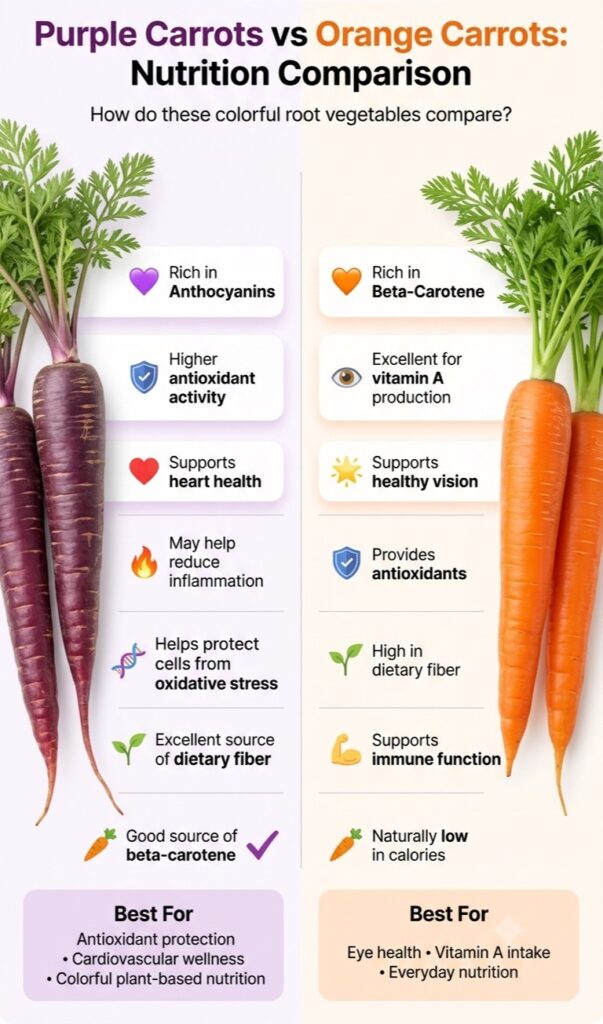
“Both purple and orange carrots are highly nutritious. Purple carrots stand out for their anthocyanin antioxidants, while orange carrots provide exceptionally high beta-carotene for vitamin A and eye health. Including both varieties in your diet offers a wider range of beneficial plant compounds”.
Frequently Asked Questions
Can dogs eat purple carrots?
Yes! Purple carrots are safe for dogs in moderation. They offer fiber and vitamins. Just wash, peel, and cut them into small, bite-sized pieces to avoid choking. Skip any versions cooked with oil, salt, or seasonings. For a complete safety guide, check our dedicated post: Can Dogs Eat Purple Carrots? Vet-Approved Safety Tips.
Are purple carrots genetically modified?
Nope. Purple carrots are natural heirloom varieties — not GMOs. Their rich color comes from anthocyanins, the same compounds found in blueberries, blackberries, and red cabbage.
Do purple carrots have more antioxidants than orange carrots?
Yes, in one keyway. Purple carrots have higher total antioxidant capacity thanks to anthocyanins. Orange carrots lead in beta-carotene. For the widest benefits, enjoy both!
Where can I buy purple carrots near me?
Start with local farmers markets, specialty grocers, or online retailers like Thrive Market. For year-round access, try growing your own using seeds from Baker Creek or Seed Savers Exchange. For more sourcing tips, see our guide: Where to Buy Purple Carrots: Fresh & Organic Options.
How do I cook purple carrots without losing their color?
Eat them raw when possible. If cooking, steam lightly (under 5 minutes) or roast at high heat for a short time. Avoid boiling — anthocyanins can leach into the water. A splash of lemon juice or vinegar can help stabilize the color.
Try This Next: A Simple Purple Carrot Recipe
Love what you read? Put purple carrots to work in your kitchen. Our easy Roasted Purple Carrots with Honey-Thyme recipe is ready in 25 minutes and makes a stunning, nutrient-packed side dish. Get the full recipe with step-by-step photos here: Roasted Purple Carrots with Honey-Thyme.
References: