You’ve seen them in soups, salads, and pantry shelves—but have you ever stopped to ask: What are white beans?
Despite their quiet presence, white beans are among the most nutritionally powerful legumes on the planet. Yet confusion abounds: Are cannellini beans the same as navy beans? Is “white bean” a single variety or a category? And why do longevity cultures—from Sardinia to Okinawa—eat them almost daily?
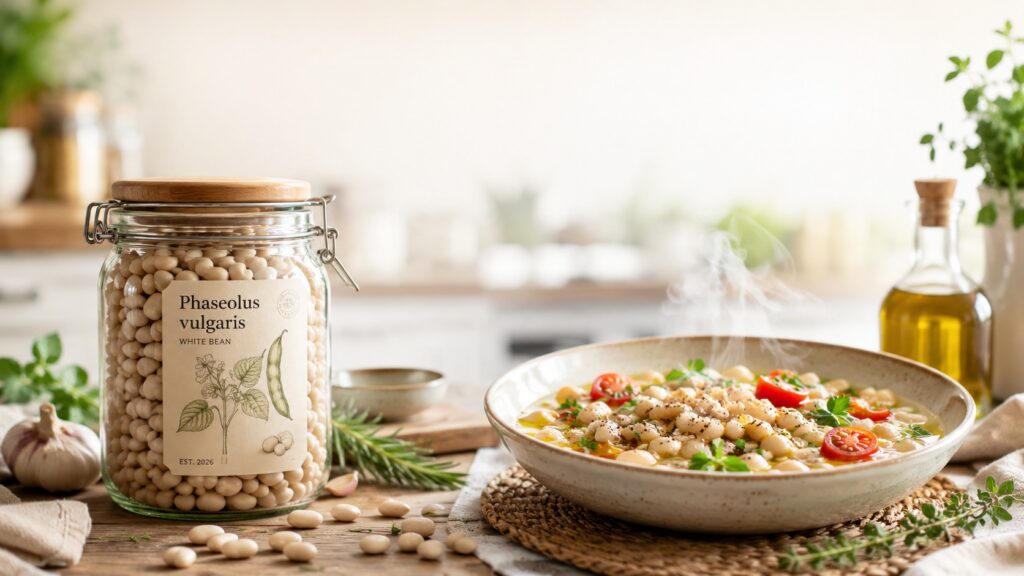
versatility of white beans in modern healthy cooking.
IIn this definitive guide, we’ll unpack:
- The true botanical identity of white beans
- The 4 main types (with visual + culinary comparisons)
- How they fit into plant science, global cuisine, and modern wellness
- Why they deserve a permanent spot in your Super Foods and Botanicals rotation
No fluff. No guesswork. Just clear, science-backed clarity—so you can cook smarter, eat better, and understand the food on your plate.
What Are White Beans?
Though the name “white beans” suggests simplicity, these legumes form a vibrant, nutrient-rich family—united by botanical roots, yet each bringing its own flavor, texture, and culinary superpower to your kitchen.
When a recipe calls for “white beans,” it’s rarely referring to a single species. Instead, “white beans” is a culinary umbrella term for several varieties of light-colored legumes, all prized for their mild flavor, creamy texture, and exceptional nutrition.
But botanically speaking, most white beans belong to one remarkable plant species:
Phaseolus vulgaris — the same species that gives us kidney beans, black beans, and pinto beans.
Yes—color doesn’t define the species. Genetics do.
All true white beans are seeds harvested from pod-bearing plants in the Fabaceae (legume) family. They’re pulses—a subgroup of legumes defined by their dried, edible seeds—and have been cultivated for over 7,000 years across the Americas, Europe, and beyond.
Fun Fact: White beans were domesticated independently in both Mesoamerica and the Andes—making them one of humanity’s oldest plant-based protein sources.
The 4 Main Types of White Beans (Compared)
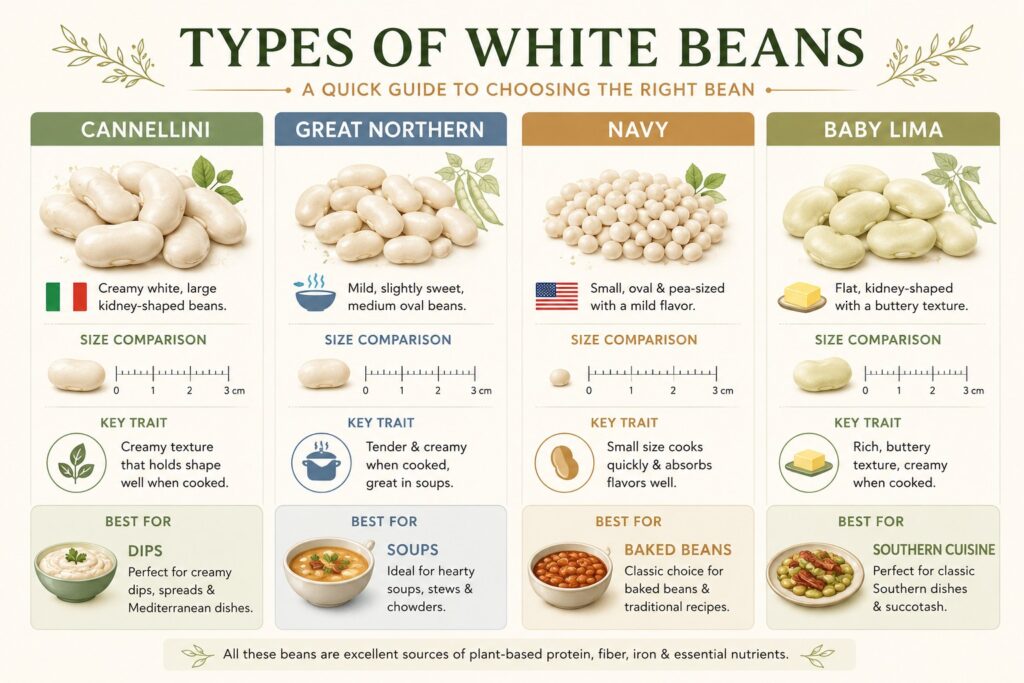
Not all white beans are created equal. Here’s a detailed breakdown of the four most common types found in U.S. markets—plus how to use each for maximum flavor and health benefit.
Cannellini Beans – The Italian Classic
- Size/Shape: Large, kidney-shaped
- Texture: Creamy, meaty when cooked
- Flavor: Mild, slightly nutty
- Best Uses: Minestrone, Tuscan soups, white bean dip, grain bowls
- Botanical ID: Phaseolus vulgaris
Pro Tip: Cannellini beans hold their shape well but mash beautifully, ideal for creamy sauces without dairy.
Great Northern Beans – The All-Purpose Performer
- Size/Shape: Medium, oval
- Texture: Tender, slightly fluffy
- Flavor: Delicate, buttery
- Best Uses: vegetarian, chili Casseroles, pureed soups, stews,
- Botanical ID: Phaseolus vulgaris
The Chef’s Secret: Thanks to their understated flavor, these beans act like a flavor sponge—letting your favorite herbs and spices shine without competing. Perfect for light, layered dishes.
Navy Beans – The American Staple
- Size/Shape: Small, oval (about the size of a pea)
- Texture: Dense, smooth
- Flavor: Very mild
- Best Uses: Baked beans, refried-style spreads, hearty soups
- Botanical ID: Phaseolus vulgaris
Historical Note: Named “navy beans” because they were a staple ration for U.S. sailors in the 19th century due to their long shelf life and high protein.
Baby Lima Beans (a.k.a. Butter Beans) – The Creamy Outsider
- Size/Shape: Flat, moon-shaped
- Texture: Buttery, starchy
- Flavor: Rich, earthy
- Best Uses: Succotash, Southern braises, creamy dips
- Botanical ID: Phaseolus lunatus (different species!)
Important: While often grouped with white beans visually, lima beans are botanically distinct. They contain higher levels of certain compounds (like cyanogenic glycosides), so always cook thoroughly.
Quick-Reference Comparison Table
| Type | Species | Size | Best For | Unique Trait |
|---|---|---|---|---|
| Cannellini | P. vulgaris | Large | Dips, Italian dishes | Holds shape + mashes well |
| Great Northern | P. vulgaris | Medium | Soups, stews | Absorbs flavors |
| Navy | P. vulgaris | Small | Baked beans, purees | High fiber density |
| Baby Lima | P. lunatus | Medium-flat | Southern cuisine | Buttery texture |
Want to see how they perform in recipes? Check out our guide to canned white bean recipes for gut health and glowing skin.
Botanical Origins: Where Do White Beans Come From?
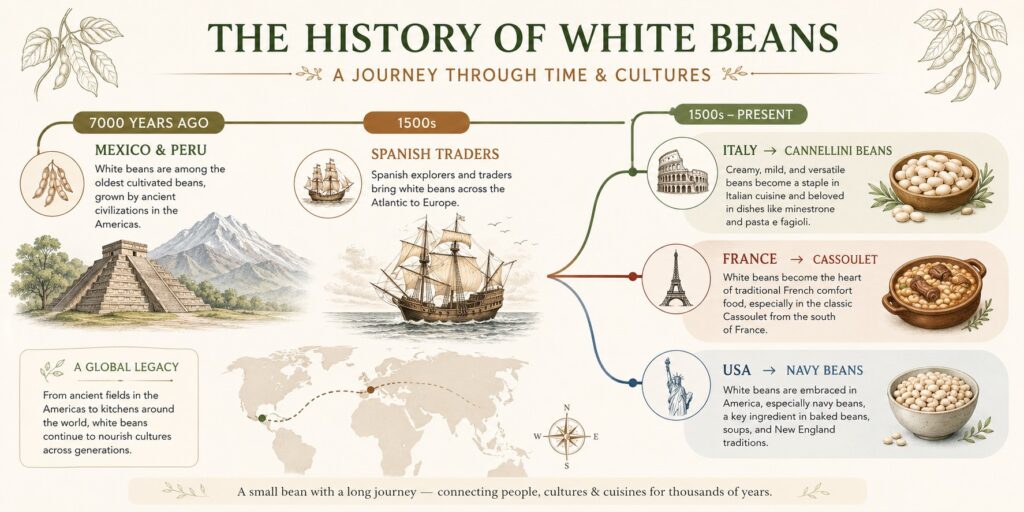
discover the fascinating journey of white beans through history.
White beans didn’t originate in Italy or New England—they’re native to the Americas.
Archaeological evidence shows that Phaseolus vulgaris was first domesticated in Mexico and Peru over 7,000 years ago. Indigenous farmers selectively bred wild bean vines for larger, whiter seeds—long before European contact.
After Columbus, Spanish and Portuguese traders carried white beans to Europe, Africa, and Asia. In Italy, cannellini beans became central to peasant cuisine. In France, they starred in cassoulet. In the U.S., navy beans fueled military rations.
Today, the U.S. is one of the world’s top producers—especially in North Dakota, Michigan, and Washington.
Sustainability Note: White beans fix nitrogen in soil, reducing the need for synthetic fertilizers. They’re a cornerstone of regenerative agriculture.
Nutritional Power: Why Science Calls Them a “Longevity Food”
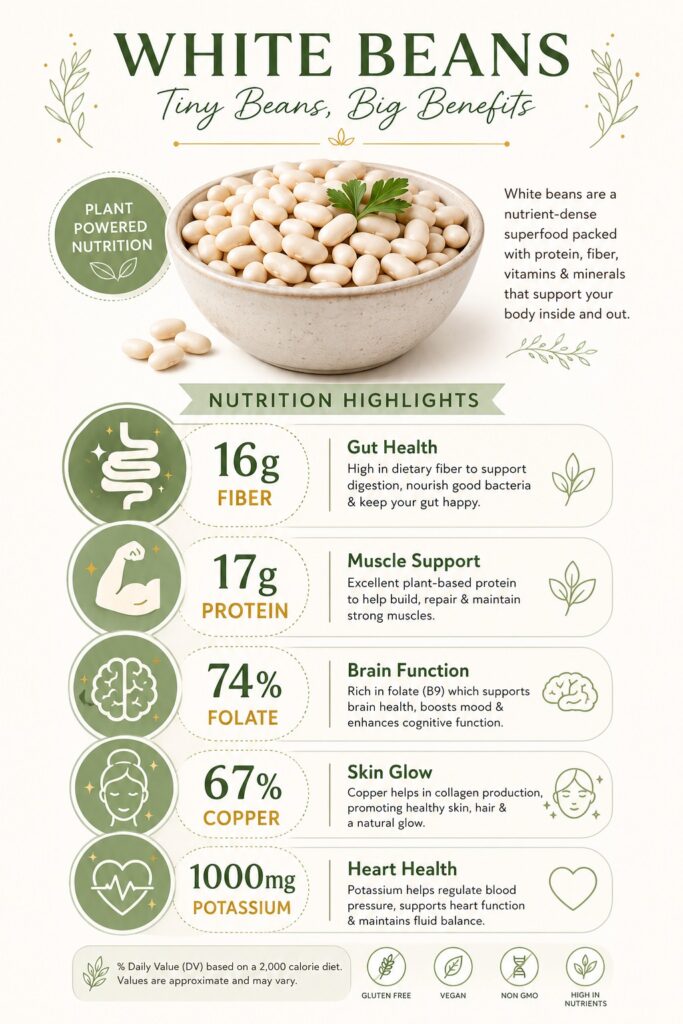
While all white beans share core nutrients, their real power lies in three areas:
Gut Health Super Fuel
Just one serving packs 16g of fiber—that’s 57% of what you need daily—plus resistant starch, a prebiotic powerhouse that nourishes your most beneficial gut microbes.
These microbes produce butyrate, a short-chain fatty acid proven to reduce inflammation and strengthen the gut barrier (Sonnenberg & Sonnenberg, 2023).
Plant Protein + Micronutrient Density
- 17g protein per cup (complete with lysine, often missing in grains)
- 74% DV folate (critical for brain health and mood)
- 67% DV copper (essential for collagen = glowing skin)
- High magnesium & potassium (supports blood pressure and nerve function)
See the full breakdown in our companion post: White Beans Nutrition 2026.
Anti-Aging & Metabolic Resilience
A 12-year NIH study found that adults eating ½ cup of legumes daily had a 22% lower risk of early death from heart disease (Li et al., 2024, AJCN).
They’re also low-glycemic—preventing blood sugar spikes that accelerate aging.
Are White Beans Legumes, Vegetables, or Something Else?
This is a common point of confusion—even among nutritionists.
- Botanically: White beans are legumes (family Fabaceae)—specifically, pulses (dried edible seeds).
- Culinarily: Often grouped with vegetables in dietary guidelines (like MyPlate).
- Not: Fruits, grains, or nuts.
Official Definition (FAO): “Pulses are annual leguminous crops yielding from one to twelve grains or seeds of variable size, shape, and color within a pod.”
So yes—your white beans are legumes first, but they play a vegetable-like role in meals.
Canned vs. Dried: Which Is Better for Health?
Short answer: Both are excellent. Convenience determines your choice.
| Factor | Canned | Dried |
|---|---|---|
| Nutrition | Nearly identical (slight loss of B vitamins) | Full nutrient retention |
| Sodium | Can be high (choose “no salt added”) | None (you control seasoning) |
| Cost | ~$0.50–$0.80/serving | ~$0.20–$0.30/serving |
| Time | Ready in 2 minutes | Requires soaking + 60–90 min cooking |
| Antioxidants | Some increase due to heat processing | Natural levels |
Best Practice: Rinse canned beans under cold water for 30 seconds—this removes up to 40% of sodium and reduces oligosaccharides that cause gas.
For most people, canned beans enable consistent healthy eating—and consistency beats perfection.
How to Add White Beans to Your Diet (Without Bloating)
New to vegetables? Start slow:
- Begin with ¼ cup/day → gradually increase to ½–1 cup
- Always rinse canned beans.
- Pair with digestion aids:
- Cumin, fennel, ginger, or bay leaf (add while cooking)
- Olive oil (boosts fat-soluble nutrient absorption)
- Avoid combining with high-fructose foods (like apples or honey) initially—this can worsen gas.
Easy Starter Idea: Toss rinsed cannellini beans with chopped parsley, lemon juice, garlic, and olive oil. Eat with whole-grain toast.
White Beans in Global Cuisine
- Italy: Pasta e fagioli, ribollita
- France: Cassoulet (with Great Northerns)
- USA: Boston baked beans (navy beans + molasses)
- Brazil: Feijoada (often includes white beans)
- Middle East: White bean salads with tahini
Their neutrality makes them a global canvas.
FAQs:
Are white beans gluten-free?
Yes! All beans are naturally gluten-free. Just check canned labels for cross-contamination if you have celiac disease.
Can I eat white beans every day?
Yes—studies show daily legume intake is safe and beneficial. Rotate types for microbiome diversity.
Do white beans count as a protein or a carb?
Both! They’re a dual-source food: ~25% calories from protein, ~70% from complex carbs (mostly fiber + resistant starch).
Are organic white beans worth it?
If budget allows, yes—organic farming avoids synthetic pesticides and supports soil health. Brands like Eden Organic offer BPA-free cans.
Final Thought
White beans won’t trend on social media. They won’t come in a glossy package. They’ve sustained warriors, working families, and long-lived elders across centuries—not through clever marketing, but through honest, reliable nourishment.
In 2026, as we chase affordable, evidence-based wellness, the real breakthrough might not come from a research lab, but from a simple can resting in your pantry.
References: