Last Updated on 11 May 2026 by Ahsan Khan
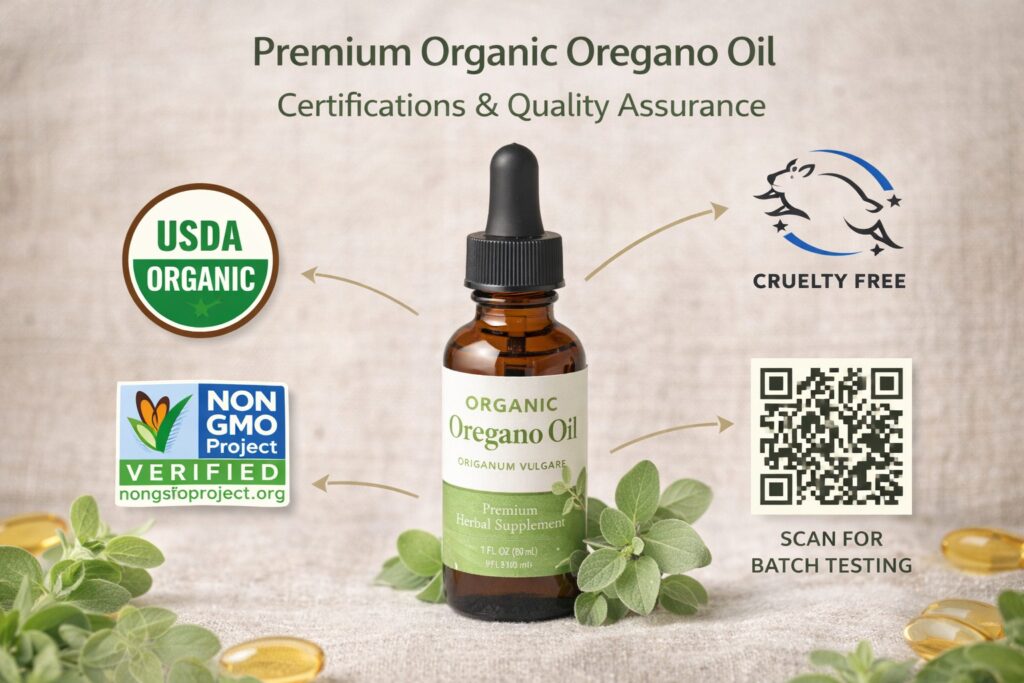
When it comes to herbal supplements like oregano oil, the source matters just as much as the supplement itself. Choosing certified organic oregano oil isn’t just a marketing preference — it’s a commitment to purity, potency, and planetary health.
What Is Organic Oregano Oil?
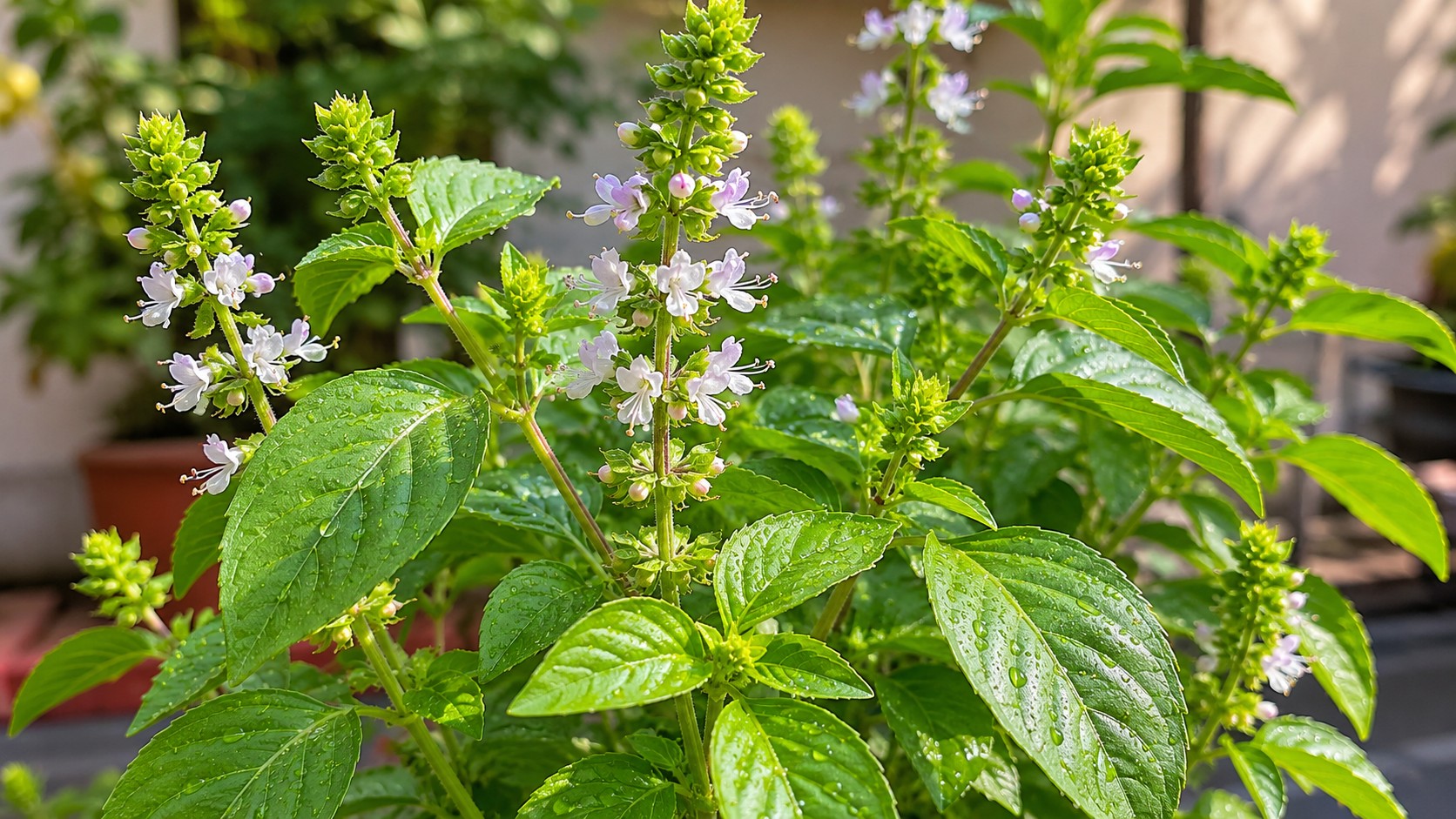
Organic oregano oil is a concentrated herbal extract derived from the leaves of the oregano plant (Origanum vulgare), grown and processed according to certified organic farming standards.
Unlike the dried oregano spice you use in cooking, organic oregano oil is a potent supplement that contains high levels of active plant compounds, particularly carvacrol and thymol — the substances most commonly studied for their potential wellness-supporting properties.
How Is It Made?
The oil is typically extracted through steam distillation, a process that captures the plant’s volatile compounds without using chemical solvents. For a product to be labeled “organic,” the oregano plants must be:
- Grown without synthetic pesticides or herbicides
- Cultivated in soil free from prohibited substances for at least 3 years
- Processed in facilities that prevent contamination from non-organic products
- Certified by a USDA-accredited third-party organization
Organic vs. Regular Oregano Oil: What’s the Difference?
| Feature | Organic Oregano Oil | Conventional Oregano Oil |
|---|---|---|
| Farming Method | No synthetic chemicals | May use pesticides/herbicides |
| Certification | USDA Organic seal required | No certification required |
| Contaminant Risk | Lower (tested) | Variable (may contain residues) |
| Environmental Impact | Sustainable practices | May involve chemical runoff |
| Price | Typically higher | Often lower |
Common Forms Available
Organic oregano oil comes in several forms, each suited for different uses:
- Softgel Capsules: Pre-measured doses, no taste, convenient for daily use
- Vegetarian Capsules: Plant-based alternative to softgels
- Liquid Oil with Dropper: Flexible dosing, can be used topically (diluted)
- Infused Oil: Oregano extract blended with a carrier oil like olive or coconut oil
⚠️ Important Note: Organic oregano oil is a dietary supplement, not a medication. It is intended to support general wellness and is not meant to diagnose, treat, cure, or prevent any disease.
Organic Oregano Oil Benefits: What Research Suggests
While individual results vary and more human clinical trials are needed, preliminary research and traditional use suggest several potential benefits of organic oregano oil. Here’s what the science says:
1. Immune System Support
The polyphenols and carvacrol found in oregano oil may help support healthy immune function. According to research from the National Institutes of Health (NIH), these compounds demonstrate immunomodulatory effects that could help your body defend against common threats.
- Source: NIH – Herbal Immunomodulators
2.Antimicrobial Properties
Studies published in the Journal of Medicinal Food indicate that oregano oil exhibits broad-spectrum antimicrobial activity against certain bacteria and fungi in laboratory settings. The carvacrol content is believed to disrupt microbial cell membranes, making it difficult for pathogens to survive.
- Source: NCBI – Oregano Oil Antimicrobial Research (https://www.ncbi.nlm.nih.gov/)
3. Antioxidant Protection
According to the USDA ORAC database, oregano ranks among the highest antioxidant-containing herbs available. These antioxidants help neutralize free radicals, which may support healthy aging and cellular protection.
4. Anti-Inflammatory Support
Research from Rutgers University suggests that rosmarinic acid and carvacrol, two key compounds in oregano oil, may exhibit anti-inflammatory properties. This could be beneficial for those seeking natural ways to support their body’s inflammatory response.
5. Respiratory Health
Traditional medicine systems have long used oregano for respiratory support during seasonal changes. Modern research is now exploring these traditional applications to understand the science behind them.
- Source: NCCIH – Herbal Respiratory Support
6. Digestive Wellness
Preliminary studies suggest that oregano compound may support healthy gut balance and digestive comfort. However, more human clinical trials are needed to fully understand these effects.
Important Context About These Benefits
Please keep these key points in mind:
- Research Stage: Most studies are preliminary, conducted in laboratory or animal settings. Human clinical trials are still limited.
- Individual Variation: Results vary widely based on your health status, the dosage you take, and the quality of the product you choose.
- Regulatory Note: This product is a dietary supplement. The FDA has not reviewed these claims for accuracy or effectiveness. Oregano oil is sold as a dietary supplement, not a medication.
- Not a Treatment: Oregano oil supplements may support general wellness, but they are not intended to diagnose, treat, cure, or prevent any disease.
- Organic Advantage: Choosing certified organic oregano oil reduces your exposure to pesticide residues and may enhance the potency of beneficial plant compounds.
Why Choosing Organic May Enhance These Benefits
If you’re considering oregano oil supplementation, here’s why organic certification may matter:
- Higher Phytochemical Levels: Research from UC Davis suggests that organically grown herbs may contain elevated levels of protective plant compounds compared to conventionally grown counterparts.
- No Pesticide Interference: Synthetic pesticides and herbicides may interfere with how your body absorbs and uses the natural compounds in oregano oil.
- Cleaner Extract: Since oregano oil is a concentrated extract, any contaminants present in the source plants can become amplified during the extraction process. Organic certification helps minimize this risk from the start.
- Sustainable Potency: Healthy, chemical-free soil tends to produce more nutrient-dense plants, which may translate to more potent herbal extracts.
Source: UC Davis Organic Agriculture Research
Quick Summary
| Benefit | Research Status | Organic Advantage |
|---|---|---|
| Immune Support | Preliminary human studies | Reduced contaminant risk |
| Antimicrobial | Lab studies strong | Higher phytochemical levels |
| Antioxidant | Well-documented | Cleaner concentration |
| Anti-Inflammatory | Promising early research | No pesticide interference |
| Respiratory | Traditional + emerging science | Sustainable sourcing |
| Digestive | Limited human trials | Soil health benefits |
⚠️ Medical Disclaimer
These potential benefits are based on preliminary research and traditional use only.
Oregano oil is not intended to diagnose, treat, cure, or prevent any disease.
Always consult your healthcare provider before starting any new supplement, especially if you take prescription medications, are pregnant or breastfeeding, or manage a chronic health condition.
Organic Oregano Oil: Why It Matters
Here’s what sets organic apart, and how to spot the real deal.
🔍 What “Organic” Really Means for Oregano Oil
USDA Organic certification isn’t just a label — it’s a rigorous verification process. For oregano oil to earn this seal, every step must meet strict federal standards:
| Certification Requirement | What It Means for You |
|---|---|
| No synthetic pesticides | Reduced risk of chemical residues concentrating in your supplement |
| No synthetic fertilizers | Supports soil health and cleaner plant extracts |
| No GMOs | Guarantees traditional, non-engineered oregano varieties |
| Sustainable practices | Protects ecosystems where your herbs are grown |
| Annual third-party audits | Ensures ongoing compliance, not just one-time approval |
🔗 Source: USDA National Organic Program
Why Purity Matters in Concentrated Supplements
Oregano oil is a highly concentrated extract. This means:
🔄 What’s in the plant gets amplified in the oil.
If conventionally grown oregano contains even trace pesticide residues, the extraction process can concentrate those compounds. Organic certification helps minimize this risk from the start.
Research Insight:
A multi-university analysis published in the British Journal of Nutrition found that organically grown herbs often demonstrate higher concentrations of certain protective plant compounds (polyphenols) compared to conventional counterparts — potentially enhancing the very benefits people seek from herbal supplements.
🔗 Source: NIH PubMed – Organic vs Conventional Phytochemicals
🌍 Beyond Your Bottle: The Bigger Picture
Choosing organic oregano oil supports more than personal wellness:
- Soil Health: Organic farming builds living soil that sequesters carbon
- Water Protection: No synthetic runoff contaminates watersheds
- Biodiversity: Organic farms support pollinators and beneficial insects.
- Farmer Welfare: Organic standards often include fair labor practices
Your supplement choice can align with your values.
Organic vs. Conventional: What Does the Science Say?
| Factor | Organic Oregano Oil | Conventional Oregano Oil |
|---|---|---|
| Pesticide Residues | Prohibited (tested) | May contain traces |
| GMO Status | Non-GMO verified | May contain GMOs |
| Farming Practices | Sustainable, regenerative | May use synthetic inputs |
| Third-Party Testing | Required for certification | Optional (varies by brand) |
| Carvacrol Content | Often higher (research suggests) | Variable |
| Environmental Impact | Lower (soil/water protection) | Higher (chemical runoff risk) |
| Cost | 20-40% higher | Lower upfront cost |
| Transparency | High (traceability required) | Varies by manufacturer |
| Certification | USDA Organic seal | None required |
While more human clinical trials are needed, existing agricultural research offers insights:
University of California, Davis researchers observed that certain organically managed herbs showed elevated levels of antioxidant compounds in controlled studies. The theory: plants grown without synthetic protections may produce more of their own defensive phytochemicals.
Important nuance:
- Higher phytochemicals ≠ guaranteed better health outcomes
- Individual response varies based on many factors
- Quality extraction and storage matter as much as farming method
Source: UC Davis Organic Farming Research
Benefits of Organic Certification
Choosing best organic oregano oil ensures you’re getting a pure, contaminant-free product. Here’s why it matters:
- No Pesticide Residues
- Conventionally grown oregano may contain pesticide residues that concentrate in the oil extraction process. USDA Organic certification guarantees no synthetic pesticides.
- 🔗 Source: USDA Organic Standards
- Higher Potency
- Studies from Penn State University suggest that organically grown herbs may contain higher levels of beneficial phytochemicals.
- Environmental Sustainability
- Organic farming practices protect soil health, water quality, and biodiversity.
- No GMOs
- Organic certification prohibits genetically modified organisms.
What to Look for When shopping for organic oregano oil, verify:
- USDA Organic seal
- Wild-crafted or sustainably harvested
- Third-party tested for heavy metals and contaminants
- Clear carvacrol percentage listed
- Made in GMP-certified facilities
- Transparent sourcing information
Where to buy Organic Oregano Oil
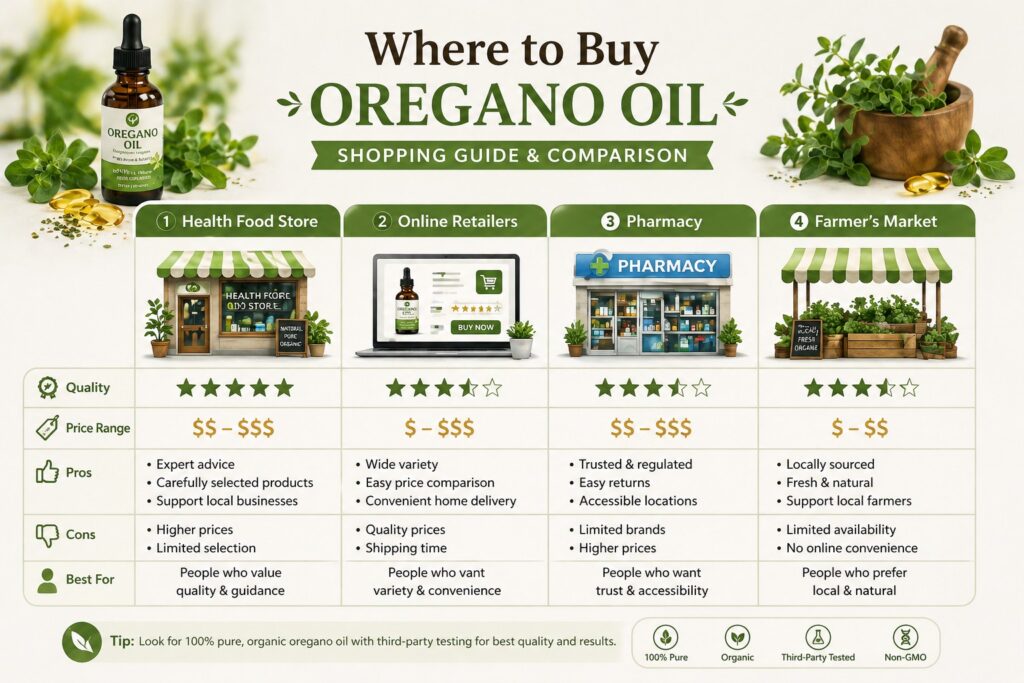
Finding quality organic oregano oil requires knowing where to shop and what to verify. Here’s your guide to where to buy organic oregano oil:
Best Places to Purchase
Health Food Stores
- Whole Foods Market
- Sprouts Farmers Market
- Local co-ops
- Pros: Staff knowledgeable, can ask questions, immediate availability
- Cons: Higher prices, limited selection
Online Retailers
- Amazon (verify seller authenticity)
- iHerb
- Vitacost
- Manufacturer websites
- Pros: Wider selection, competitive pricing, customer reviews
- Cons: Can’t inspect before purchase, shipping time
Pharmacies
- CVS, Walgreens (limited organic options)
- Pros: Convenient, trusted location
- Cons: Often lower quality, fewer organic options
Practitioner-Only Brands
- Available through healthcare providers
- Pros: Highest quality, professional-grade
- Cons: Requires practitioner relationship, higher cost
What to Look for When Buying Organic Oregano Oil
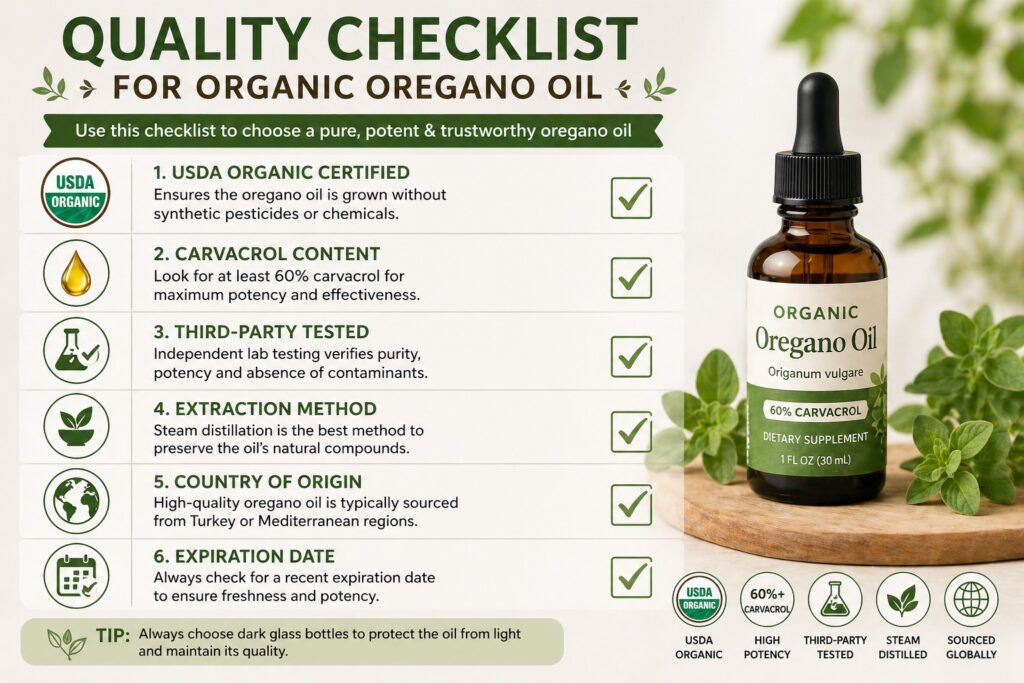
Not all products labeled “organic” deliver the same quality. Use this evidence-based checklist to evaluate brands:
1. USDA Organic Certification (Non-Negotiable)
- Look for: Visible USDA Organic seal on packaging or website
- Verify: Clickable certification number linking to USDA database
- Red Flag: “Made with organic ingredients” (only 70% organic) vs. “100% Organic”
🔗 Source: USDA Organic Labeling Categories
2. Carvacrol Percentage (Potency Indicator)
- Ideal Range: 10-25% carvacrol for general wellness support
- Too Low: Below 5% (may lack potency)
- Too High: Above 70% (requires careful dosing, may irritate)
Why it matters: Carvacrol is the primary active compound in oregano oil responsible for most researched benefits.
3. Third-Party Testing (Beyond Organic)
Look for:
- Certificate of Analysis (CoA) available on request
- Testing for: heavy metals, pesticides, microbial contaminants, solvent residues
- Certifications: USP, NSF, ConsumerLab.com
Why: Organic certification doesn’t test for everything. Independent labs verify purity and potency.
4. Extraction Method Transparency
Preferred Methods:
- Steam distillation (traditional, solvent-free)
- CO2 extraction (cleans, preserves compounds)
Avoid: Products using chemical solvents (hexane, ethanol) unless fully removed and tested.
5. Country of Origin & Sourcing
- Ideal Sources: Mediterranean regions (Greece, Turkey, Spain, Italy) where wild oregano thrives
- Transparency: Brand discloses specific growing region and farming practices
6. Full Ingredient Disclosure
Should Include:
- Exact carvacrol percentage
- Carrier oil type (if diluted): organic olive oil, organic coconut oil
- No “proprietary blends” that hide amounts
7. Freshness Indicators
Check For:
- Clear expiry date (2-3 years from manufacture)
- Dark glass bottle (protects from light degradation)
- Sealed cap with tamper-evident ring
- Batch number for traceability
🔗 Source: FDA – Dietary Supplement Labeling Guide
How to Verify Authenticity: Avoid Counterfeits
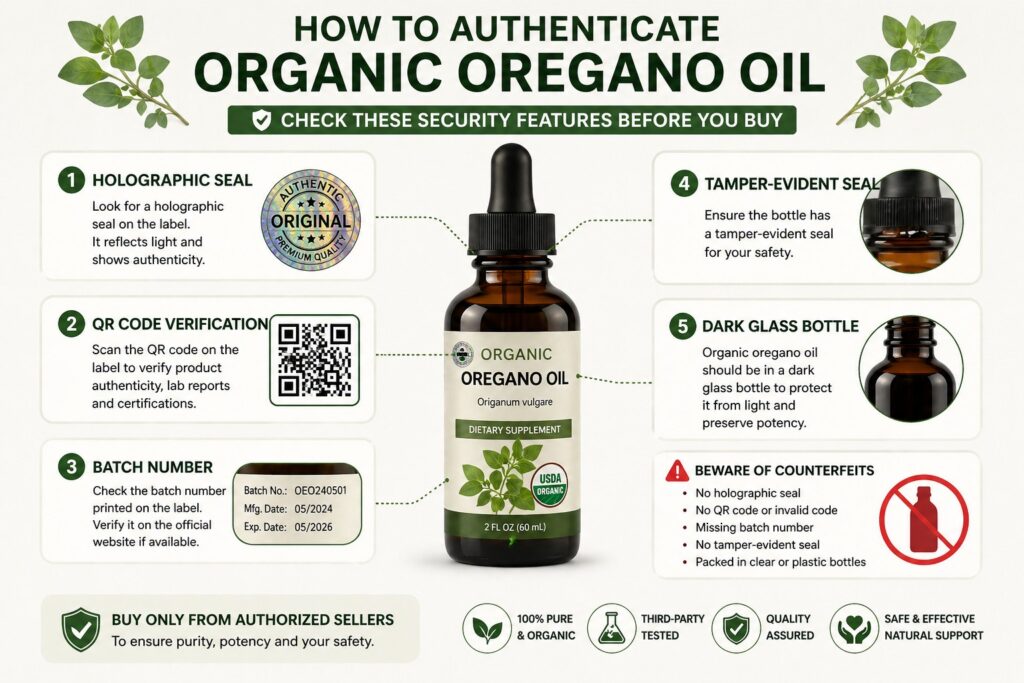
Unfortunately, counterfeit supplements are a real problem, especially online. Protect yourself with these verification steps:
1. Check the USDA Organic Seal
- Should be clearly visible on packaging
- Must include certifier name (e.g., “Certified organic by [name]”)
- Verify certification number at USDA Organic Integrity Database
🔗 Source: USDA – Reporting Organic Fraud
2. Look for Third-Party Testing Seals
- USP Verified
- NSF Certified
- ConsumerLab.com Approved
- Informed Choice (for athletes)
3. Verify Batch Numbers
- Legitimate brands provide:
- Batch/lot number on bottle
- Expiry date clearly printed
- Ability to trace product back to source
Action: Contact the brand with batch number to verify authenticity if suspicious.
4. Examine Packaging Quality
Red Flags:
- Spelling errors on label
- Blurry or pixelated logos
- Cheap plastic bottle (should be dark glass)
- Missing safety seal
- Suspiciously low price
5. Buy from Authorized Retailers
Safest Options:
- Brand’s official website
- Authorized distributors listed on brand website
- Major retailers (Amazon “Shipped by Amazon,” iHerb, Whole Foods)
Avoid:
- Unknown third-party sellers
- Prices significantly below market value
- Auction sites or marketplace apps
Does Organic Oregano Oil Have Side Effects?
While generally well-tolerated when used as directed, some people may experience:
- Digestive upset (nausea, stomach irritation)
- Allergic reactions (especially if allergic to plants in the mint family)
- Heartburn or acid reflux
- Headache or dizziness (rare)
Who Should Avoid It:
- Pregnant or breastfeeding individuals (limited safety data)
- People taking blood-thinning medications (potential interaction)
- Those scheduled for surgery (discontinue 2 weeks before)
- Individuals with bleeding disorders
Make sure to inform your doctor about any supplements you’re taking.
Final Thoughts: Choose Quality, Choose Confidence
Choosing organic oregano oil is an investment in your wellness and peace of mind. By prioritizing USDA Organic certification, transparent carvacrol percentages, and third-party testing, you can confidently select a product that aligns with your health goals.
Remember: Supplements support wellness but don’t replace professional medical care. Always consult your healthcare provider before starting oregano oil, especially if you take medications or manage chronic conditions.
Ready to learn more? Explore our complete oregano oil guide series:
[Oregano Oil Capsules: Benefits & Safe Usage Guide] — Understand how to take oregano oil properly
FAQ’s
What Is Organic Oregano Oil Good For?
Organic oregano oil is commonly used as a dietary supplement for general wellness support.
Early-stage studies and historical herbal practices indicate it could help with:
1. Immune system function (due to polyphenol content)
2. Digestive health (antimicrobial properties studied in lab settings)
3. Respiratory wellness (traditional use during seasonal changes)
4. Antioxidant protection (high ORAC value per USDA database)
What’s the difference between oregano oil and oil of oregano?
They’re the same product. “Oil of oregano” is the traditional term, while “oregano oil” is more commonly used today. Both refer to the essential oil extracted from oregano leaves.
Can I use organic oregano oil topically?
Yes, but always dilute with a carrier oil (like organic coconut or olive oil) at a ratio of 1:3 or 1:4 (one part oregano oil to three or four parts carrier oil). Perform a patch test first to check for skin sensitivity. Liquid formulas are best for topical use.
Is organic oregano oil worth the extra cost?
For many consumers, yes. Organic certification reduces the risk of pesticide residues concentrating in the oil, supports sustainable farming, and often indicates higher quality control. However, if budget is tight, a non-organic brand with third-party testing for contaminants is better than no supplementation at all.
How long can you store organic oregano oil before it expires?
Properly stored in a dark glass bottle away from heat and light, organic oregano oil typically remains potent for 2-3 years from the manufacture date. Once opened, use within 12-18 months for optimal potency. Always check the expiry date.
Can I trust “wild-crafted” labels?
“Wild-crafted” means the oregano was harvested from natural habitats rather than cultivated farms. While this can indicate high-quality plants, it doesn’t guarantee organic status. ‘Wild-crafted’ indicates natural harvesting, while ‘USDA Organic’ ensures no synthetic chemicals were used.”
Are vegetarian capsules as effective as soft gels?
Both can be effective. Soft gels often contain oregano oil diluted in a carrier oil, which may enhance absorption of fat-soluble compounds. Vegetarian capsules may contain powdered oregano leaf or oil absorbed into a powder base. Check the carvacrol percentage and third-party testing rather than focusing solely on capsule type.
Why do prices vary so much between brands?
Price differences reflect:
1. Organic certification costs
2. Carvacrol concentration
3. Third-party testing expenses
4. Extraction method (CO2 is more expensive than steam distillation)
5. Sourcing location and farming practices
6. Brand reputation and marketing
Remember: Higher price doesn’t always mean better quality, but extremely low prices can indicate corner-cutting.
⚠️ Full Disclaimer & Disclosure
Educational Purpose Only: The content on iHealthInTrends.com is for informational and educational purposes only. It is not intended as medical advice, diagnosis, or treatment.
Consult a Professional: Always seek the guidance of your physician or other qualified healthcare provider with any questions regarding a medical condition, medication, or supplement use. Never disregard professional medical advice or delay seeking care because of something you read here.
Individual Results: Individual results may vary. Statements about dietary supplements have not been evaluated by the U.S. Food and Drug Administration. This website does not provide medical advice and is not a substitute for professional healthcare.
Affiliate Disclosure: This post may contain affiliate links. If you purchase through these links, we may earn a commission at no extra cost to you. Our recommendations are based on research and quality criteria, not compensation.
By using this website, you acknowledge that you have read, understood, and agree to this disclaimer.
References :