Last Updated on 10 September 2026 by Ahsan Khan
Black grapes are packed with antioxidants, vitamins, and minerals. They are a fantastic addition to a healthy diet. Their sweet taste and many benefits make them a favorite among fruit lovers. We’ll explore black grapes’ history, nutritional value, and uses in this article.
Looking to boost your health or add flavor to meals? Black grapes are a great pick. They’re rich in nutrients and offer many health benefits. From antioxidants to heart health support, black grapes are a dietary staple.

Compared to red grapes, black grapes have thicker skin and taste sweeter. You can eat them fresh or dry them to make a tasty snack. They are also used to make wine, jam, and juice.
Botanical Roots and Ethnobotanical History
Before diving into modern clinical data, it is worth looking at the deep historical roots of Vitis vinifera. Black grapes are not a modern wellness trend; They are one of the oldest cultivated crops in human history, with agricultural domestication tracing back over 8,000 years to the Caucasus and Near East regions.
Long before we had mass spectrometers to isolate polyphenols, ancient civilizations used dark grapes as functional medicine. In traditional Mediterranean antiquity, physicians like Hippocrates prescribed dark grape diets to restore vitality, aid digestion, and promote wound healing.
Similarly, in Ayurveda (the traditional medicine system of India), black grapes—known as Draksha—are highly revered. Ancient Ayurvedic texts classify them as Rakta shodhana (blood purifiers) and praise their ability to balance the Pitta (heat) and Vata (air) doshas. This centuries-old understanding of their cooling, anti-inflammatory, and hydrating properties perfectly aligns with what modern science is discovering today about their high water content and potent antioxidant matrix.

If you have ever wondered, “Are black grapes good for you?” or “What do black grapes taste like?”, the secret isn’t just in their sweet flavor, but in the impressive matrix of nutrients packed into every single bite. Black grapes (Vitis vinifera) offer a beautifully balanced flavor—naturally sweet, juicy, and subtly tart. But beyond their delightful taste, the health benefits of black grapes are deeply supported by modern nutritional science.
This comprehensive, science-first guide cuts through the hype to explore their exact nutritional value, their wide-ranging benefits for the body and skin, and how to seamlessly incorporate them into a holistic, health-conscious lifestyle.
Black Grapes Nutrition
Source: USDA FoodData Central (FDC ID: 1603159) | Per 100g fresh black seedless grapes
Vitamin C
10.9 mg
12% DV
Dietary Fiber
0.7 g
3% DV
Vitamin A
72 IU
2% DV
View Complete Nutritional Breakdown
| Nutrient | Amount per 100g | % Daily Value* |
|---|---|---|
| Energy | 65 kcal | 3% |
| Protein | 0.72 g | 1% |
| Total Fat | 0.72 g | 1% |
| Carbohydrates | 17.4 g | 6% |
| Dietary Fiber | 0.7 g | 3% |
| Total Sugars | 16.7 g | – |
| Calcium | 14 mg | 1% |
| Iron | 0.26 mg | 1% |
| Sodium | 0 mg | 0% |
| Vitamin C | 10.9 mg | 12% |
| Vitamin A | 72 IU | 2% |
Percent Daily Values are based on a 2,000-calorie diet. . Your individual metabolic requirements and daily targets will naturally vary based on age, activity level, and specific health goals.”
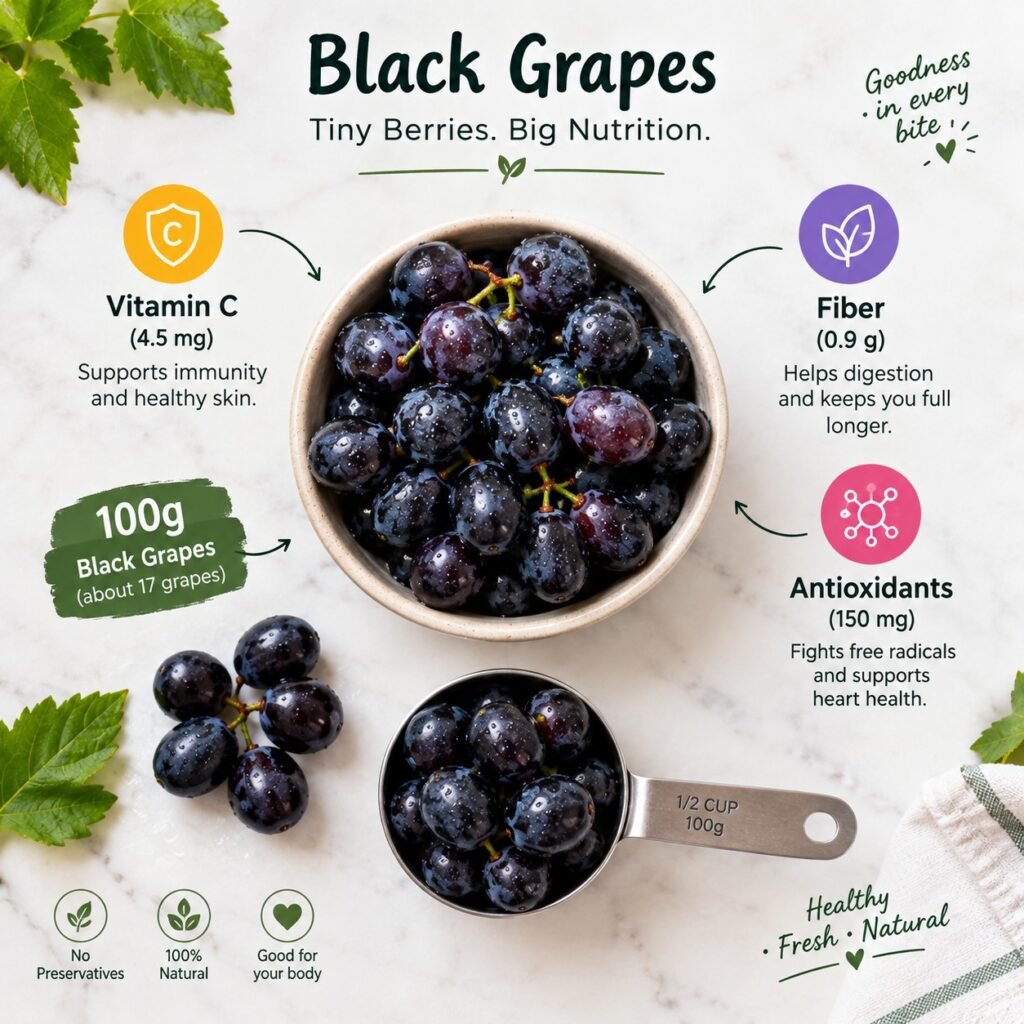
Key Insight: Despite their natural sweetness, black grapes have a low energy density (65 kcal per 100g) and are approximately 82% water. This high water and fiber content promotes satiety, making them a strategic, low-calorie addition to weight management and metabolic health protocols.
Common Questions Answered:
- How many calories are in black grapes? A standard 100g serving contains just 65 kcal, making them a highly volume-rich, low-calorie snack.
- Are black grapes high in sugar? They contain 16.7g of natural sugars per 100g, but this is accompanied by water and fiber, which helps moderate the glycemic response compared to processed sweets.
- Do black grapes provide meaningful vitamins? Yes, a single 100g serving delivers 12% of the Daily Value for immune-supporting Vitamin C, alongside essential trace minerals.
Science of Black Grapes and Metabolic Health
Research indicates that the low energy density of whole fruits like Vitis vinifera plays a behavioral and physiological role in weight management by enhancing satiety without excessive caloric intake. Furthermore, the anthocyanins and resveratrol unique to dark grape varieties have been associated in clinical and preclinical studies with improved lipid profiles and supportive metabolic function.
(Note: For optimal metabolic balance, it is recommended to pair whole fruits with a protein or healthy fat source, such as a handful of almonds or plain Greek yogurt, to further stabilize blood sugar response.)
“Explore more vitamin C-rich super citrus like calamansi.”
Black Grapes Benefits
This Superfood is packed with nutrients and offer many health benefits. They are rich in antioxidants, which fight off harmful free radicals. Eating black grapes regularly can lower the risk of heart disease and some cancers.
Black dry grapes also have lots of antioxidants, even more than fresh grapes. They are easy to add to your diet, making them a great snack.
The benefits of black grapes extend across multiple systems in the body. Driven by a rich concentration of bioactive compounds, these fruits offer supportive wellness advantages. Below is a detailed breakdown of how they may contribute to your overall health.
1. Potent Antioxidant and Cellular Protection
Black grapes are densely packed with powerful antioxidants, particularly polyphenols, resveratrol, and anthocyanins (the compounds that give them their deep purple hue). These bioactive molecules help neutralize harmful free radicals, protecting the body’s cells from oxidative stress. While black grapes deliver anthocyanins, red dragon fruit provides betalains—another powerful antioxidant family worth exploring for comprehensive, full-spectrum wellness.
2. Cardiovascular and Heart Health Support
A diet rich in polyphenol-containing fruits is widely associated with better cardiovascular outcomes. The antioxidants and dietary fiber in black grapes may help support heart health by improving blood lipid profiles, reducing oxidative damage to blood vessels, and promoting healthy blood pressure levels over time.
3. Natural Anti-Inflammatory Effects
Chronic, low-grade inflammation is a root contributor to many modern health concerns. Black grapes contain natural anti-inflammatory compounds that may help modulate the body’s inflammatory responses. This can potentially improve comfort in conditions like arthritis and support overall joint health.
4. Radiant Skin Health and Anti-Aging Properties
The black grapes benefits are not just internal; they are highly valued in natural skincare for their ability to nourish and protect the skin barrier. The antioxidants in black grapes help shield the skin from environmental free radicals, which may reduce the visible signs of aging, such as fine lines and wrinkles, promoting a youthful, radiant complexion.

Natural Skincare Applications:
- Soothing Face Mask: Mash ripe black grapes and blend with a tablespoon of raw honey and plain yogurt to create a hydrating, antioxidant-rich facial treatment.
- Gentle Exfoliating Scrub: Mix a small amount of black grape juice with fine sugar and a few drops of olive oil for a natural, chemical-free exfoliant.
- Balancing Toner: Soak a cotton pad in diluted, fresh black grape juice and gently apply it to the face to help balance the skin’s natural pH. (Note: Always perform a patch test before applying new ingredients to your skin).
5. Nutritional Support for Expecting Mothers
Black grapes can be a valuable, nutrient-dense addition to a prenatal diet. In Hindi, grapes are known as angoor, and they are widely consumed for their hydrating and nourishing properties. They are a natural source of folate, a crucial nutrient for healthy fetal development, alongside vitamin C, potassium, and iron.
Guideline: To safely reap these benefits, moderation and food safety are paramount. A serving size of about ½ cup of thoroughly washed, fresh black grapes per day is generally considered a reasonable addition to a balanced diet. Expecting mothers should always consult their healthcare provider for personalized prenatal dietary advice.
6. Digestive Wellness and Metabolic Balance
The fiber and high-water content in black grapes support healthy digestion and promote a feeling of fullness, which can aid in metabolic balance. When comparing fresh vs. dried black grapes, it is worth noting that black dry grapes (raisins) are a concentrated source of fiber and certain antioxidants. While they make an excellent, convenient snack or salad topping, their natural sugars are more concentrated by weight, making portion control essential for optimal metabolic support.
7. Cognitive Health and Brain Function Support
Emerging research suggests that the polyphenols in black grapes, particularly resveratrol and flavonoids, may support cognitive function and brain health. These bioactive compounds have been studied for their potential to protect neurons from oxidative stress and reduce neuroinflammation, both of which are associated with age-related cognitive decline.
While most robust evidence currently comes from preclinical studies and observational research, the antioxidant and anti-inflammatory properties of black grapes align with established mechanisms for supporting long-term brain health. Incorporating polyphenol-rich foods like black grapes as part of a balanced, brain-healthy diet may contribute to cognitive resilience over time.
Black Grape Varieties: Which is Best for Your Health?
Not all dark grapes are created equal. While all grapes share a foundational nutritional profile, the specific variety can influence the concentration of skin-based antioxidants, texture, and flavor. Here are the most notable black and deep-purple grape varieties:
1. Muscadine (Vitis rotundifolia)
Native to the southeastern United States, Muscadine grapes are instantly recognizable by their thick, tough skin and bold, musky flavor. Health Note: Muscadines are frequently studied for having significantly higher levels of ellagic acid and resveratrol compared to standard European table grapes (Vitis vinifera), making them a standout choice for antioxidant-focused diets.
2. Concord Grapes
Recognizable by their deep, slip-skin purple-black hue and robust, tart flavor, Concord grapes are a North American classic. Health Note: Famous for their exceptionally high anthocyanin content, Concord grapes are the primary variety used in clinical studies examining the cardiovascular benefits of 100% grape juice.
3. Black Corinth (Zante Currants)
Tiny, seedless, and intensely sweet, Black Corinth grapes are often sold in their dried form as “Zante currants.” Health Note: These miniature grapes provide a highly concentrated source of dietary fiber, iron, and potassium in a very small serving size, making them an excellent pantry staple for nutrient-dense snacking.
4. Novelty Cultivars (Moon Drops, Witch Fingers)
These modern, long, cylindrical black grapes have gained popularity for their unique shape and crunchy texture. Health Note: While their appearance is novel, they offer the same core nutritional benefits as traditional round black grapes. Their intense sweetness and firm bite make them a highly effective, healthy snack alternative for both adults and children.
Pro Tip: The majority of a grape’s antioxidants (like resveratrol and anthocyanins) are concentrated in the skin and seeds. Therefore, choosing deeply pigmented, dark-skinned varieties like Muscadine or Concord will generally yield a higher antioxidant payload than lighter-colored grapes.
Black Grapes vs green Grapes
Black and green grapes differ slightly in nutrition and phytochemical content. Black grapes contain higher levels of antioxidants, especially anthocyanins (which give them their dark color) and resveratrol, linked to heart health and anti-aging benefits. They also have slightly more vitamin K and iron. Green grapes are richer in vitamin C and tend to be a bit sweeter, although both have similar calorie and carbohydrate content (about 60–70 kcal per cup). Both are good sources of fiber, potassium, and hydration due to high water content.
In terms of storage, both types should be handled similarly. Store unwashed grapes in the refrigerator, in a perforated or loosely closed container, to maintain freshness. Keep them in the crisper drawer to avoid moisture loss. Washing should be done just before eating to prevent mold. Avoid exposing grapes to heat or direct sunlight, as this accelerates spoilage. For longer storage, grapes can be frozen (remove stems, pat dry, freeze on a tray, then transfer to a bag) and used in smoothies or as a cool snack.
While both grapes are nutritious, black grapes offer enhanced antioxidant benefits, while green grapes provide a crisper, sweeter taste. Choosing either adds vitamins, hydration, and health-promoting compounds to your diet.
Fresh vs Dried Black Grapes
Black grapes come in two forms: fresh and dried. Each has its own benefits and uses. Fresh black grapes are packed with vitamins, minerals, and antioxidants. They’re perfect for a healthy diet.
Dried black grapes, or dry grapes, are a concentrated source of nutrients. They can be used in many recipes. They’re great in trail mix, salads, or as a snack.
The benefits of black dry grapes are many. They’re full of antioxidants and may have health benefits. They’re also good in oatmeal or yogurt.
Nutritional Differences
Fresh and dried black grapes differ in nutrition. Fresh grapes have more water and fewer calories. Dried grapes have more fiber and antioxidants. Here are some key differences:
- Fresh black grapes: higher in vitamin C and potassium
- Dried black grapes: higher in fiber and antioxidants
Creative Ways to Include Black Grapes in Your Diet
Black grapes are a versatile fruit. You can eat them fresh, add them to salads, or blend them into smoothies. They’re also great in baked goods like muffins and cakes. Plus, they’re a tasty topping for yogurt and oatmeal. The black grapes benefits are many, making them a fantastic choice for a healthy diet.
Here are some creative ways to add black grapes to your meals:
- Adding them to your favorite salad recipe for a burst of sweetness and flavor
- Blending them into a smoothie with your favorite fruits and yogurt
- Using them as a topping for oatmeal or yogurt for a nutritious breakfast
- Incorporating them into your favorite baked goods, such as muffins or cakes
Black grapes are easy to include in your daily diet thanks to their many black grapes benefits. Enjoy them fresh, frozen, or dried. They add a delicious and healthy touch to any meal.
Side Effects and Precautions
Black grapes are usually safe to eat, but there are some things to watch out for. Some people might have allergic reactions, which can be mild or severe. It is essential to note that black grapes can cause allergic reactions in some individuals, and they may interact with certain medications.
Pregnant women should eat black grapes in moderation. Eating too much can upset the balance of nutrients. This might harm the health of both the mother and the baby. It’s best to talk to a healthcare provider about eating black grapes during pregnancy.
- Consume black grapes in moderation
- Avoid eating black grapes if you have a known allergy
- Consult with a healthcare provider before consuming black grapes during pregnancy
Knowing the potential side effects and taking precautions can help enjoy the benefits of black grapes. This way, you can minimize the risks.
How to Select and Store Black Grapes for Maximum Freshness
To ensure you are getting the full nutritional benefit of black grapes, proper selection and storage are essential. Improper handling can lead to premature spoilage, mold growth, and a loss of delicate antioxidants.
Tips for Selecting the Best Black Grapes:
- Look for Plumpness: Choose bunches with firm, plump grapes that are deeply colored and securely attached to green, flexible stems.
- Avoid Moisture: Steer clear of containers with visible moisture, shriveled grapes, or brown stems, as these are early signs of spoilage.
- The “Frost” is Good: A natural, whitish-gray coating on the skin (called “bloom”) is completely safe. It is a natural protective layer produced by the fruit and indicates freshness.
Science-Backed Storage Guidelines:
- Resist the urge to wash them right away. While it’s tempting to prep your produce as soon as you get home, adding moisture before storage actually creates the perfect environment for mold to thrive. Keep them dry in the refrigerator and give them a thorough rinse under cool water only when you’re ready to eat.
- Optimal Temperature: Keep them in the crisper drawer of your refrigerator, ideally in a perforated plastic bag or a breathable container to maintain humidity while allowing airflow. Properly stored, fresh black grapes can last 7 to 14 days.
- Food Safety First: When you are ready to eat them, rinse them thoroughly under cool, running water to remove any potential surface dirt, bacteria, or pesticide residue. (This is especially crucial for expecting mothers and children).
- Freezing for Later: If you have an excess, black grapes freeze beautifully. Wash, dry completely, remove from stems, and freeze on a baking sheet before transferring to an airtight freezer bag. Frozen black grapes make an excellent, low-calorie snack or smoothie base.
Conclusion
Black grapes are a great addition to any diet. They are packed with nutrients and offer many health benefits. By adding them to your meals, you can get a boost of antioxidants, vitamins, and minerals.
Try to make black grapes a part of your daily routine. You can snack on them, blend them into smoothies, or use them in recipes. Just remember to eat them in moderation to get the most benefits.
Black grapes can help you live a healthier life. Enjoy their taste, find new ways to use them, and enjoy the health perks they bring. With a bit of creativity, you can easily add black grapes to your daily meals and feel the positive effects.
Explore more superfood benefits, like those found in Blue Spirulina Powder, to complement the nutritional power of black grapes
FAQ’s
Are black grapes healthy?
Yes. They are a nutrient-dense, low-calorie fruit rich in vitamins, minerals, and antioxidants that can actively support a balanced, health-conscious diet.
Are black grapes sweet?
Yes, they are naturally sweet with a subtle, refreshing tartness, making them a highly satisfying and healthy alternative to processed snacks.
What are the benefits of black grapes?
Black grapes are packed with antioxidants, vitamins, and minerals. They offer many health benefits. These include lowering heart disease risk, fighting inflammation, and having anti-cancer properties.
Can black grapes be consumed during pregnancy?
Yes, black grapes are safe during pregnancy in moderation. They provide essential nutrients for expecting mothers. But, too much can upset nutrient balance. Always check with a healthcare professional about how much to eat.
How can black grapes be used in skincare?
Black grapes are full of antioxidants and other good stuff for the skin. They can be used in face masks and scrubs to nourish and protect. They also help reduce fine lines and wrinkles.
How can black grapes be incorporated into a weight management diet?
Black grapes are low in calories and high in fiber and water. They’re filling and can help with weight management. But, eat them in moderation to avoid nutrient imbalance. Following portion control and timing can support your weight goals.
What are the differences between fresh and dried black grapes?
Fresh and dried black grapes differ in nutrition and use. Fresh grapes are full of vitamins, minerals, and antioxidants. They’re great for a healthy diet. Dried grapes are more concentrated and can be used in many recipes.
Are black seedless grapes good for you?
Absolutely. Black seedless grapes retain nearly all the nutritional benefits, fiber, and antioxidants of their seeded counterparts, offering the same health advantages in a highly convenient form.
What are muscadine black grapes?
Muscadine black grapes are a distinct variety native to the southeastern United States. They are notable for their thick skins and are frequently studied for their exceptionally high levels of ellagic acid and resveratrol.
What are long black grapes?
Long black grapes (such as ‘Moon Drops’ or ‘Witch Fingers’) are newer cultivars known for their unique cylindrical shape, crunchy texture, and intensely sweet flavor. They offer the same core nutritional benefits as traditional round black grapes.
Medical and Health Claim Disclaimer
The information provided in this article is for educational and informational purposes only and is not intended as medical advice, diagnosis, or treatment. The health benefits of black grapes described herein are based on general nutritional science and traditional use. Individual results may vary. Black grapes are not intended to cure, treat, or prevent any disease. Always consult with a qualified healthcare professional or registered dietitian before making significant changes to your diet, especially if you are pregnant, nursing, managing a chronic health condition, or taking prescription medications.