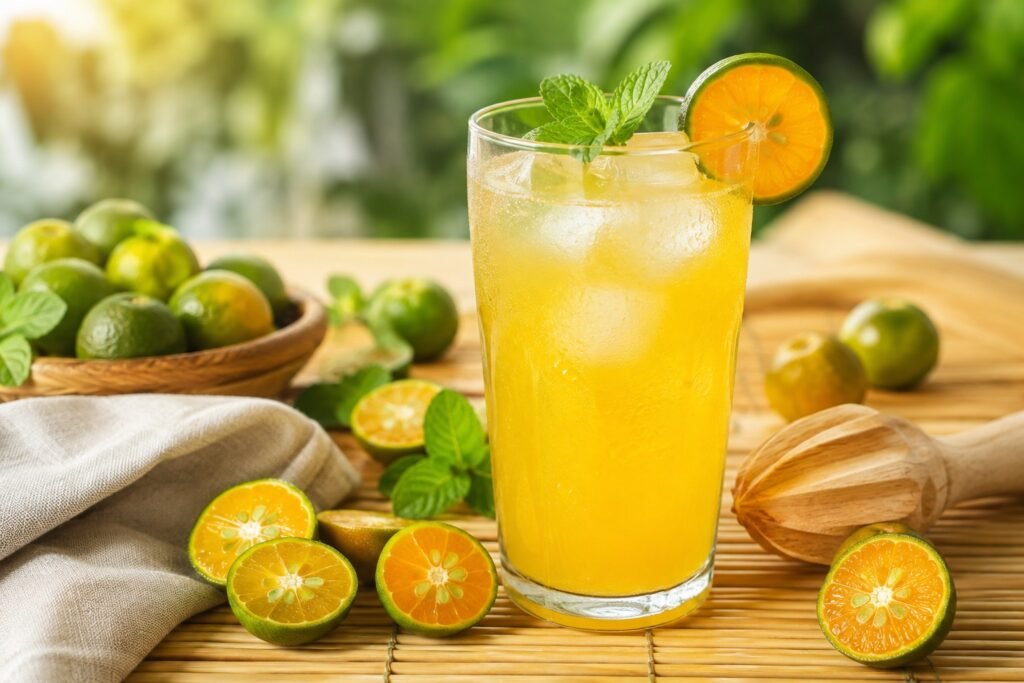
If there’s one sound that defines a Filipino kitchen, it’s the squeeze-squeeze of tiny citrus fruits being turned into a tall, ice-cold glass of calamansi juice. It’s the drink of childhood summers, the go-to sore-throat remedy, and today — a rising star in the global wellness beverage scene.
But what is calamansi juice exactly? How do you make it the right way (no bitterness!)? And if you don’t have time to squeeze 25 tiny fruits, what should you buy instead?
This guide covers everything: the classic recipe, 4 delicious variations, storage secrets, science-backed benefits, and the best ready-made options on the market.
Why Calamansi Juice Recipe Is So Popular
In the Philippines, calamansi juice isn’t a trend — it’s a way of life. Nearly every household serves it chilled with meals, and it doubles as a home remedy for colds, coughs, and hot afternoons.
Today, its popularity is exploding beyond the Philippines because of:
- The immunity drink wave – consumers are swapping sodas for vitamin C-rich natural drinks
- The rise of Filipino food globally – as adobo and sinigang go mainstream, calamansi follows
- Agricultural innovation – in January 2024, the Philippine Department of Agriculture planted “Makasim” (NSIC 2023 C1 01), the first-ever NSIC-registered calamansi variety, signaling a new era of standardized, high-quality fruit production (DA.gov.ph, 2024)
Why You’ll Love This Recipe
- Ready in 10 minutes — no cooking, no fancy equipment
- Only 4 pantry ingredients
- One base recipe, 4 delicious variations
- RUN Naturally rich in vitamin C — cheaper and cleaner than store-bought
- Freezer-friendly for up to 3 months
What Is Calamansi Juice?
Calamansi juice is the freshly squeezed juice of the calamansi fruit (Citrofortunella microcarpa) — a small citrus hybrid of kumquat and mandarin orange, native to the Philippines. It’s also called calamondin juice in Western horticulture.
Flavor profile: Think lime-level tartness, but with a softer, floral sweetness and aromatic peel oils that lemons simply can’t match.
New to this fruit? Read our pillar guide: [What is Calamansi? The Ultimate Guide to the Filipino Super Citrus]
Ingredients & Tools
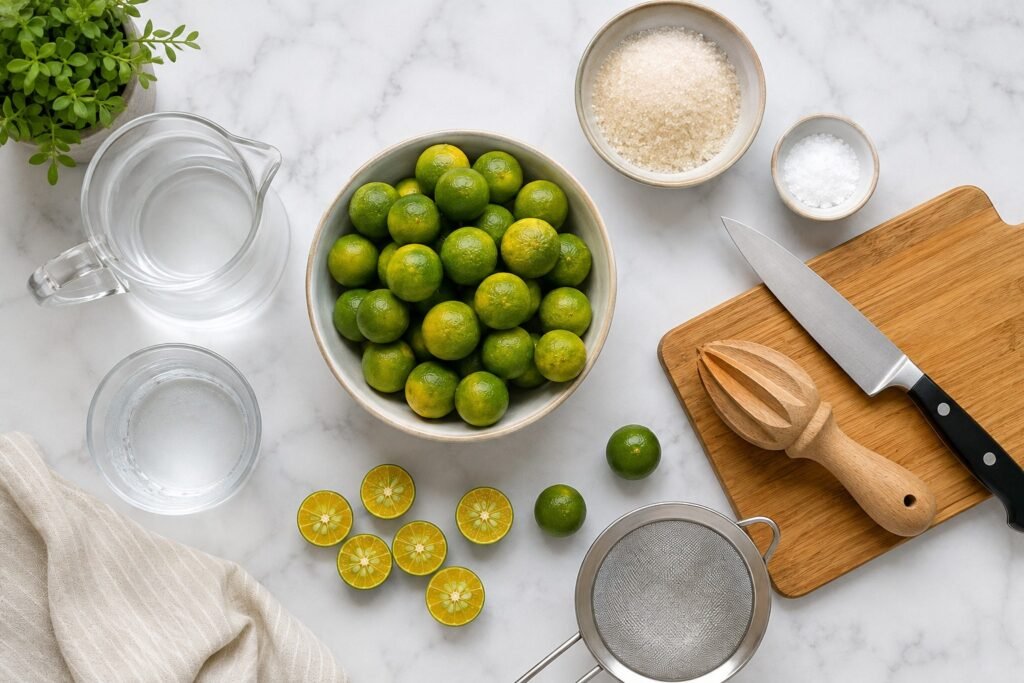
Ingredients (Serves 2)
| Ingredient | Amount | Notes |
|---|---|---|
| Fresh calamansi | 20–25 fruits | Yields ~½ cup juice |
| Cold water | 3 cups | Filtered preferred |
| Sugar | 3–4 tbsp | Or simple syrup |
| Salt | Tiny pinch | Optional – rounds out flavor |
| Ice cubes | As needed |
Tools
- Sharp knife + cutting board
- Citrus squeezer or calamansi press
- Fine mesh strainer or cheesecloth
- glass pitcher
Calamansi Juice Yield & The Golden Ratio
| Amount | Fruit Needed | Juice Yield |
|---|---|---|
| 1 glass (250ml) | 10–12 fruits | ~2½ tbsp |
| 1 pitcher (1L) | 40–50 fruits | ~½ cup+ |
| 1 cup juice | 20–25 fruits… wait, correction below |
The Golden Ratio: 1 part calamansi juice: 6 parts cold water: sweetener to taste.
Pro yield tips:
- One calamansi = about 1–1½ teaspoons of juice
- Room-temperature fruits yield more juice than cold ones
- Rolling fruits before cutting can boost yield by up to 20%.
How to Choose the Best Calamansi
- Color: Yellow orange = ripe & juicy. Rock-hard green = extra sour, less juice.
- Feel: Slightly firm with a gentle give; heavy for its size = more juice.
- Smell: A fresh floral-citrus aroma at the stem end.
- Avoid: Shriveled skin, soft brown spots, or moldy stems.
- Peak season: November–February in the Philippines.
Can’t find fresh fruit nearby? See our guide: [Calamansi Near Me – Where to Buy Fresh Fruit & Extracts]
How to Make Calamansi Juice (Step-by-Step)
- Step 1 – Prep the fruit: Rinse calamansi, then gently roll each fruit on the counter with your palm. This breaks internal membranes and releases more juice.
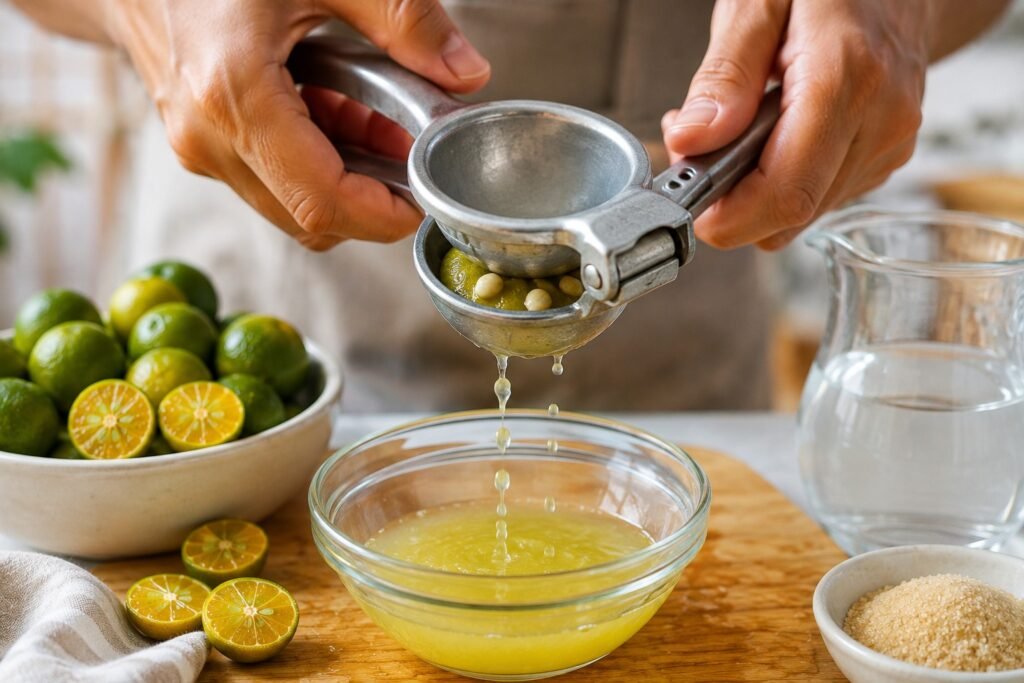
- Step 2 – Slice each fruit in half crosswise and Squeeze with a citrus press, catching seeds.
- Pro tip: Don’t over-crush the peel — it releases bitter oils.
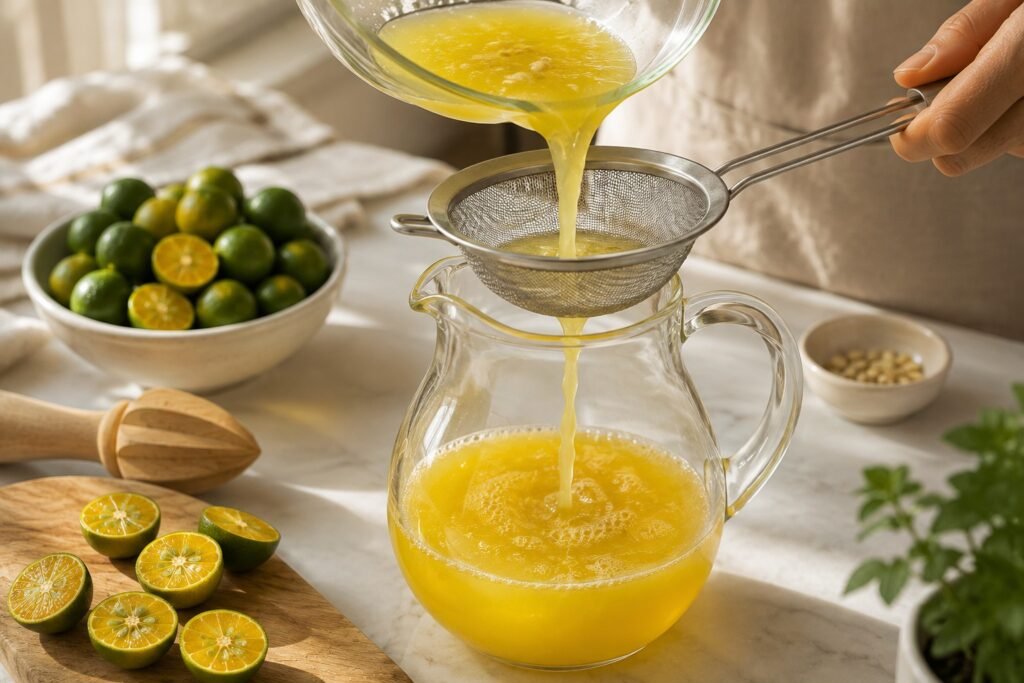
- Step 3 – Strain: Pour juice through a fine mesh strainer into your pitcher for a smooth, seed-free drink.
- Step 4 – Sweeten: Dissolve sugar in ½ cup warm water (quick simple syrup), then add to the pitcher.
- Step 5 – Mix & balance: Add remaining cold water + a tiny pinch of salt. Taste — aim for a sweet-tart balance like lemonade with floral notes.
- Step 6 – Serve: Pour over ice. Garnish with a calamansi slice or mint.
5 Common Mistakes (And How to Avoid Them)
- Over-squeezing the peel → releases bitter oils. Press gently, once.
- Squeezing cold fruit → less juice. Bring to room temp + roll first.
- Adding sugar straight to cold water → grainy drink. Make quick simple syrup instead.
- Storing in metal or cheap plastic → metallic taste. Always use glass.
- Using unripe green fruit only → harsh sourness. Mix green + yellow orange for balance.
4 Delicious Variations
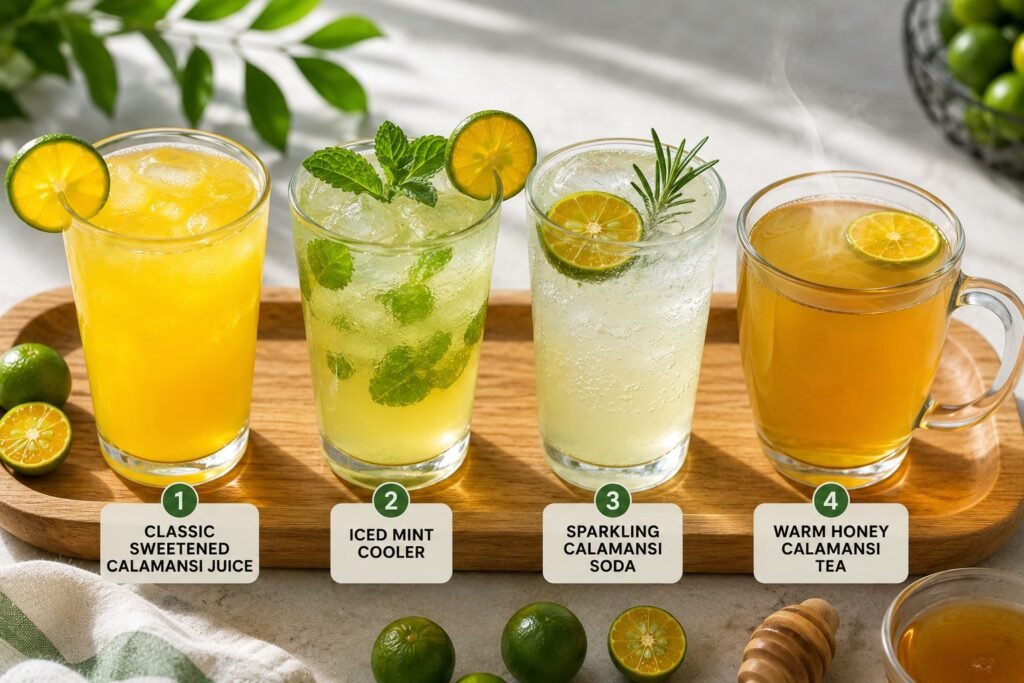
- Honey Calamansi (Sore-Throat Soother)
Swap sugar for 2–3 tbsp raw honey. Serve warm for coughs or cold for a cleaner-sweet drink. - Iced Calamansi Mint Cooler
Add muddled mint leaves + extra ice. Perfect for hot climates and BBQ pairings. - Sparkling Calamansi Soda
Replace 1 cup of water with chilled club soda. Add a splash of simple syrup — instant Filipino “sprite.” - Calamansi Ginger Shot
1 tbsp calamansi juice + 1 tsp ginger juice + honey. A powerful morning immunity shot.
Storage Tips
- Fridge: Store strained juice in an airtight glass container for 3–4 days (avoid metal acidity — reacts).
- Freezer: Freeze juice in ice cube trays — lasts up to 3 months. Pop 2 cubes in water anytime!
- Simple syrup separately: Keeps 1 week, so your juice stays fresh-tasting.
Health Benefits of Calamansi Juice
- Immune support: Rich in vitamin C — essential for immune defense and collagen production
- Digestion: Citric acid stimulates digestive juices and relieves bloating.
- Hydration + low calories: A flavorful alternative to sugary sodas
- Antioxidants: Flavonoids help fight oxidative stress and inflammation
Moderation note: Its acidity can irritate sensitive stomachs and tooth enamel — rinse with water after drinking.
Deep dive here: What Is Calamansi? Interesting Facts About Filipino Super Citrus
Nutrition Snapshot (Verified USDA Data)
Commercial canned calamansi drink (per 100 ml — USDA FDC ID 2085027):
| Nutrient | Amount |
|---|---|
| Calories | 56 kcal |
| Vitamin C | 24.8 mg (~28% Daily Value) |
| Total Sugars | 14 g (added sugar — the canned downside!) |
| Fat / Protein | 0 g |
Our homemade glass (250 ml, in Recipe Card):
| Nutrient | Approx. Amount |
|---|---|
| Calories | ~45–50 kcal |
| Vitamin C | ~9–12 mg (double the fruits for an immunity boost!) |
| Sugar | ~9–12 g — you control it (swap to honey or stevia) |
💡 The takeaway: Canned versions deliver more vitamin C per sip but pack soda-level sugar. Homemade calamansi juice gives you the floral citrus benefits with up to 3× less sugar — that’s the iHealth Trends way.
Calamansi Juice (Classic Filipino Style)
Equipment
- 1 Citrus squeezer or press
- 1 Fine mesh strainer
- 1 Glass pitcher
Ingredients
- 25 piece fresh calamansi fruits (yields ~½ cup juice)
- 3 cups cups cold filtered water
- ½ cup warm water (for simple syrup)
- 3–4 tbsp white sugar (or honey to taste)
- 1 tiny pinch of salt (optional)
- Ice cubes, calamansi slices, mint (for serving)
Instructions
- Rinse the calamansi fruits, then gently roll each one on the counter with your palm to break the internal membranes and release more juice.
- Slice each fruit in half crosswise, then squeeze with a citrus press — press gently only once, because over-crushing the peel releases bitter oils.
- Strain the juice through a fine mesh strainer into a glass pitcher to remove seeds and pulp.
- Dissolve the sugar in ½ cup of warm water to make a quick simple syrup, then pour it into the pitcher.
- Add the remaining cold water plus a tiny pinch of salt, then taste and adjust until you reach a sweet-tart balance similar to lemonade with floral notes.
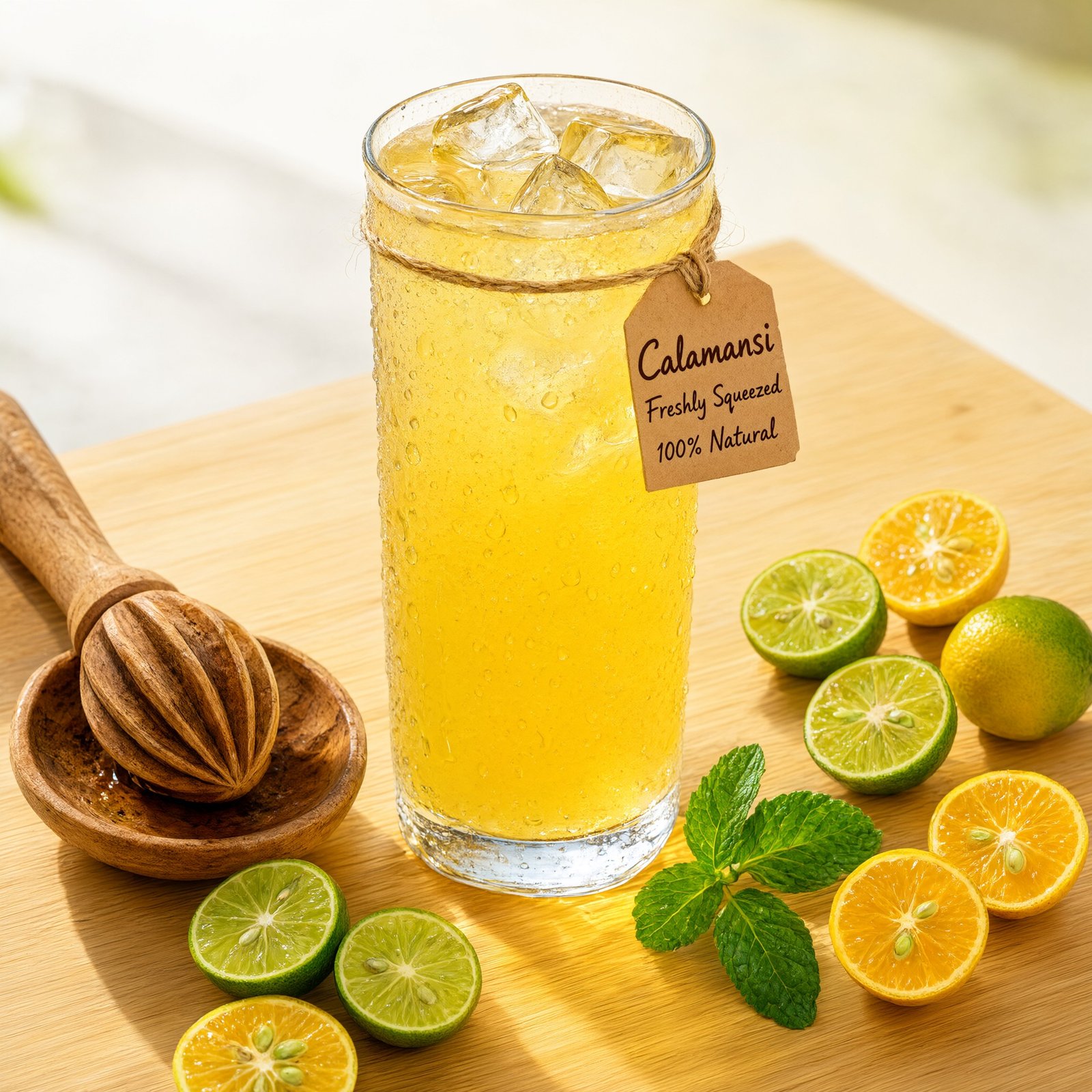
- Serve over ice, garnished with a calamansi slice or fresh mint.
Notes
Variations: Honey (swap sugar), Iced Mint (add muddled mint), Sparkling (replace 1 cup water with club soda), Ginger Shot (1 tbsp juice + 1 tsp ginger juice + honey).
Nutrition
FAQ’s
Is calamansi juice the same as lemonade?
No — it’s tarter than orange but sweeter and more floral than lemon, with unique aromatic peel oils.
How much can I drink daily?
One glass (250ml) a day is plenty for most adults.
Can I use bottled calamansi?
Yes, but check labels — choose 100% juice or extract without artificial sweeteners.
How much juice does one calamansi yield?
About 1–1½ teaspoons. For one glass, plan on 10–12 fruits.
Can I make calamansi juice with bottled or frozen calamansi?
Yes! Choose 100% juice or pure extract with no added sugar. Frozen cubes work great — just thaw and squeeze.
Is calamansi juice good for weight loss?
It’s an excellent low-calorie soda replacement. There’s no magic fat-burning effect, but lightly sweetened calamansi juice supports hydration and cuts empty calories.
Final Sip
Calamansi juice is more than a drink — it’s Filipino heritage in a glass, a vitamin C powerhouse, and a rising global wellness trend. Whether you squeeze it fresh, freeze it in cubes, or grab a ready-made extract, you’re sipping something special.
Share this recipe with a friend who needs their daily vitamin C! 🍋
References:
- Planting Ceremony of 1st NSIC-Registered Calamansi (January 25, 2024) | Official Portal of the Department of Agriculture
- Vitamin C – Health Professional Fact Sheet
- Beverages, citrus fruit juice drink, frozen concentrate, prepared with water – Nutrients – SR Legacy | USDA FoodData Central
- CALAMANSI JUICE DRINK, CALAMANSI – Nutrients – Branded | USDA FoodData Central