Last Updated on 26 June 2026 by Ahsan Khan
“Discover why NASA uses spirulina for astronauts. Learn about spirulina NASA research, space nutrition benefits, and how this superfood supports space missions.”
Spirulina for Astronauts: The Cosmic Connection
What do astronauts and wellness enthusiasts have in common?
Both rely on spirulina—a tiny blue-green algae that’s become one of the most powerful tools for human survival beyond Earth.
In the expansive realm of space exploration, where rockets traverse the cosmos and astronauts navigate weightlessness, nutrition isn’t just about taste—it’s about survival. Blue spirulina, distinguished by its vivid color and nutrient-dense composition, has emerged as the ideal companion for those venturing beyond our familiar blue planet.
NASA Spirulina Space Research History
The Space Race for Nutrition
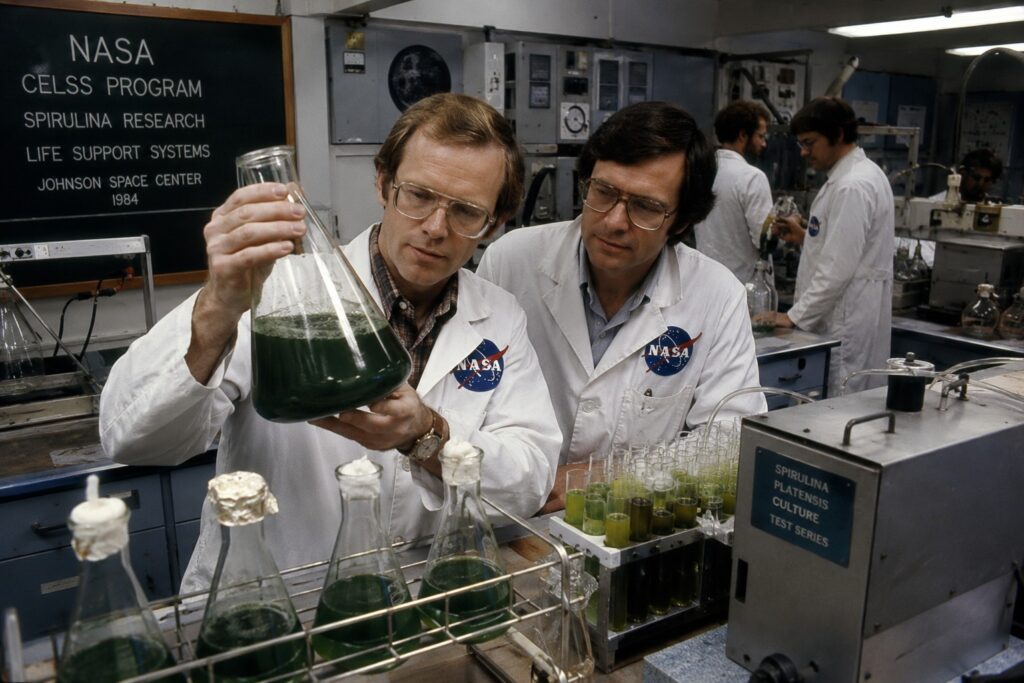
NASA’s interest in spirulina dates back to the 1980s when the agency began exploring sustainable food sources for long-duration space missions through the Controlled Ecological Life Support Systems (CELSS) program.
Key Milestones:
- 1980s-1990s: NASA identifies spirulina as a candidate for bioregenerative life support
- 2000s: Orbital laboratory becomes testing ground for spirulina bioreactors, proving algae can thrive without gravity
- 2010s: American Public University System receives NASA grants to study plants (including algae) in outer space
- 2020s: Spirulina integrated into astronaut supplement protocols for ISS missions
Fun Fact: Spirulina was first consumed by Aztec civilizations in Lake Texcoco (modern-day Mexico) over 500 years ago. Now, it’s helping humans reach Mars! Learn about Spirulina’s ancient origins.
5 Reasons Astronauts Use Spirulina
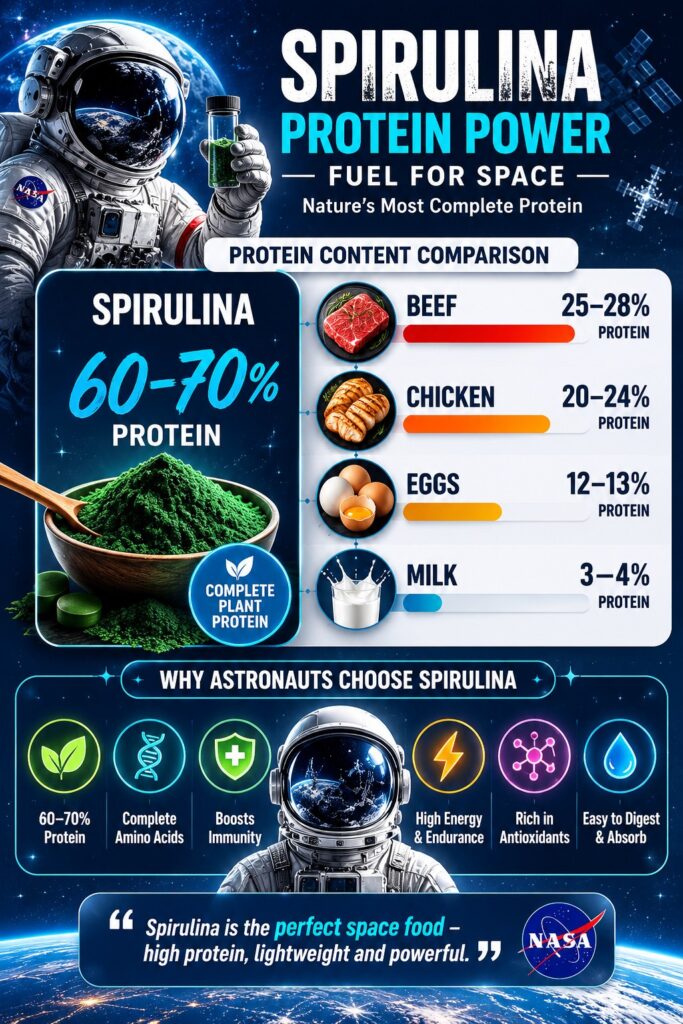
1. Space-Tested Protein Boost
The Challenge: Nasa spirulina Astronauts lose 1-2% of bone density per month in space and experience muscle atrophy due to microgravity. They need high-quality protein that’s lightweight and shelf-stable.
Spirulina’s Solution:
- 60-70% protein by dry weight (more than beef, chicken, or soy)
- Complete amino acid profile (though methionine/cysteine are lower)
- Highly digestible (85-95% absorption rate vs. 50-60% for meat)
- Compact storage: 1 oz provides ~17g protein
NASA’s Take: Within the confined quarters of a spacecraft, spirulina’s protein density becomes a vital lifeline, ensuring optimal muscle maintenance during extended space journeys.
2. Immune Defense Against Cosmic Radiation
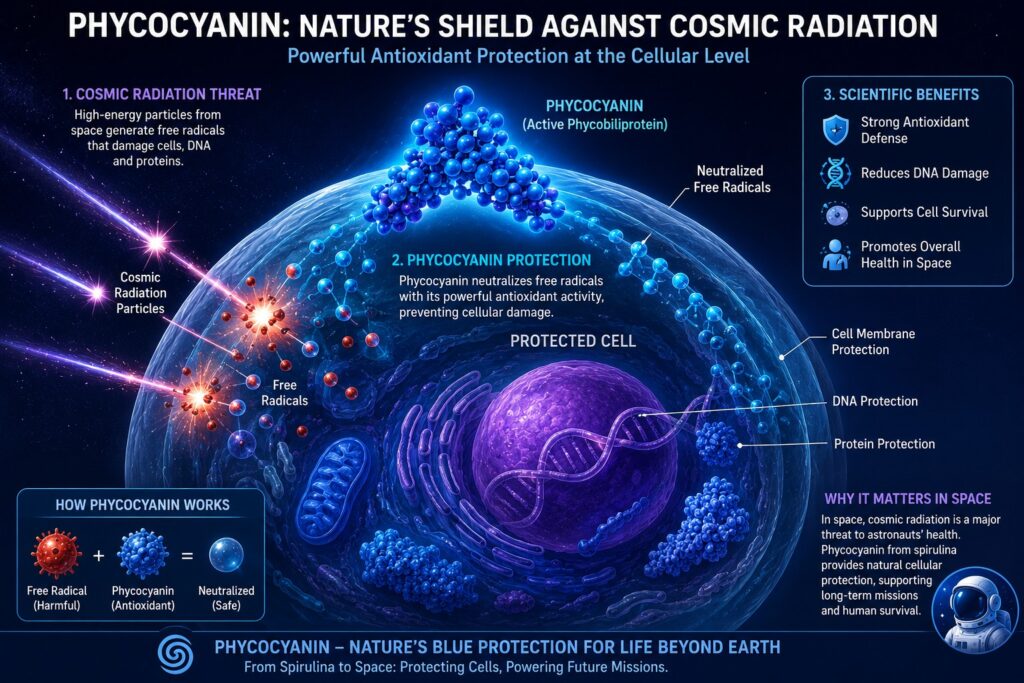
The Challenge: Space radiation is 100-1000x stronger than on Earth. Astronauts face increased cancer risk, DNA damage, and immune system suppression from galactic cosmic rays and solar particle events.
Spirulina’s Solution:
- Phycocyanin (the blue pigment) is a potent antioxidant that:
- Scavenges free radicals generated by radiation exposure
- Protects DNA integrity and cell membranes
- Modulates immune response without overstimulation
- Beta-carotene & chlorophyll provide additional radioprotective effects
Research Insight: Studies show phycocyanin can reduce radiation-induced oxidative stress by up to 40% in animal models—critical for Mars missions where astronauts face 6+ months of deep space radiation.
3. Micronutrient Powerhouse in Compact Form
The Challenge: Spacecraft have limited cargo capacity. Every gram counts. Space missions demand compact, shelf-stable nutrition—supplements must deliver high nutrient density while maintaining integrity during multi-year storage.
Spirulina’s Solution:
Just 1 tablespoon (7g) delivers:
- Vitamin B12: Critical for nerve function (controversial bioavailability, but present)
- Iron: Prevents anemia in low-gravity environments
- Vitamin B1 (Thiamin): 14% DV for energy metabolism
- Vitamin B2 (Riboflavin): 20% DV for cellular function
- Copper: 47% DV for iron absorption
- Gamma-linolenic acid (GLA): Anti-inflammatory omega-6
Shelf Stability: Properly dried spirulina maintains nutrient integrity for 2-3 years—perfect for Mars missions.
Pro Tip: Want this nutrient density on Earth? Discover blue spirulina benefits for daily wellness.
4. Sustainable Space Farming Solution
The Challenge: Resupply missions cost $10,000+ per pound to the ISS. For Mars (500+ days round trip), astronauts must grow their own food with minimal resources.
Spirulina’s Solution:
| Resource | Spirulina | Traditional Crops |
|---|---|---|
| Water Use | 100x less than beef | High irrigation needs |
| Land Efficiency | 20x more protein/acre | Large fields required |
| Growth Rate | Doubles every 24-48 hours | Weeks to months |
| CO₂ Conversion | Absorbs CO₂, produces O₂ | Variable |
| Light Requirements | Thrives in LED light | Needs full spectrum |
NASA’s Vision: Spirulina’s rapid growth and minimal resource requirements position it as an ideal candidate for bioregenerative life support systems on:
- 🌕Lunar bases
- 🔴Mars habitats
- 🛰️ Deep space vessels
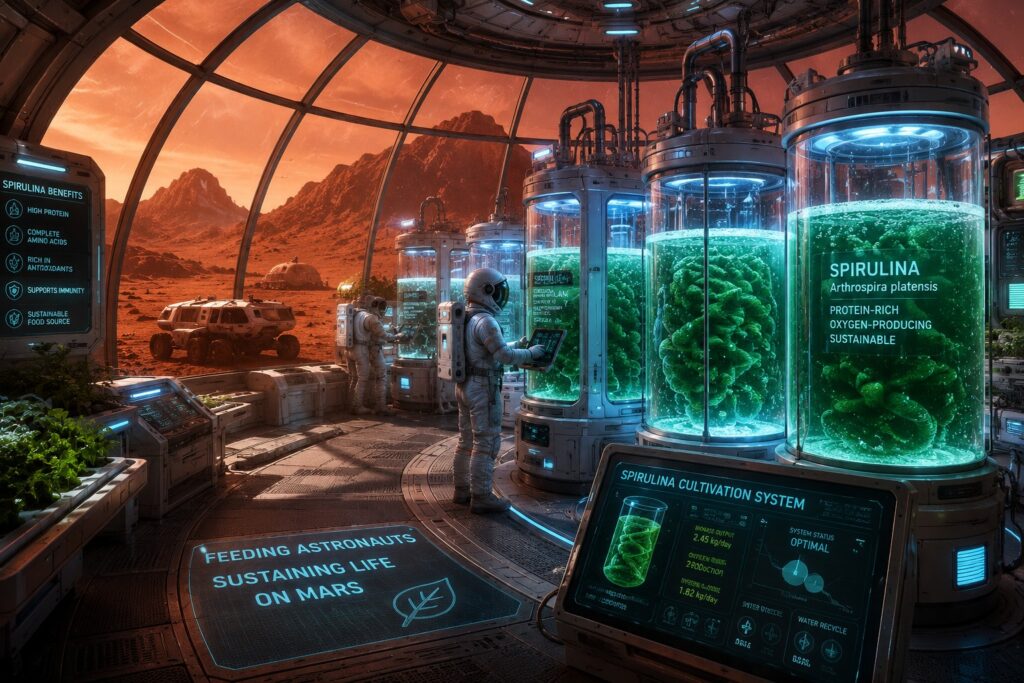
Real-World Test: The Mars Desert Research Station in Utah has already tested spirulina cultivation in Mars-like conditions with promising results!
5. Cosmic Aesthetics for Astronaut Well-Being
The Challenge: Space food is notoriously bland and monochromatic (think: beige pouches, gray rehydrated meals). Mental health suffers without sensory variety.
Spirulina’s Solution:
- Vibrant blue color adds visual excitement to meals
- Psychological boost: Colorful food improves mood and meal satisfaction.
- Versatility: Can color drinks, frostings, energy bars without artificial dyes
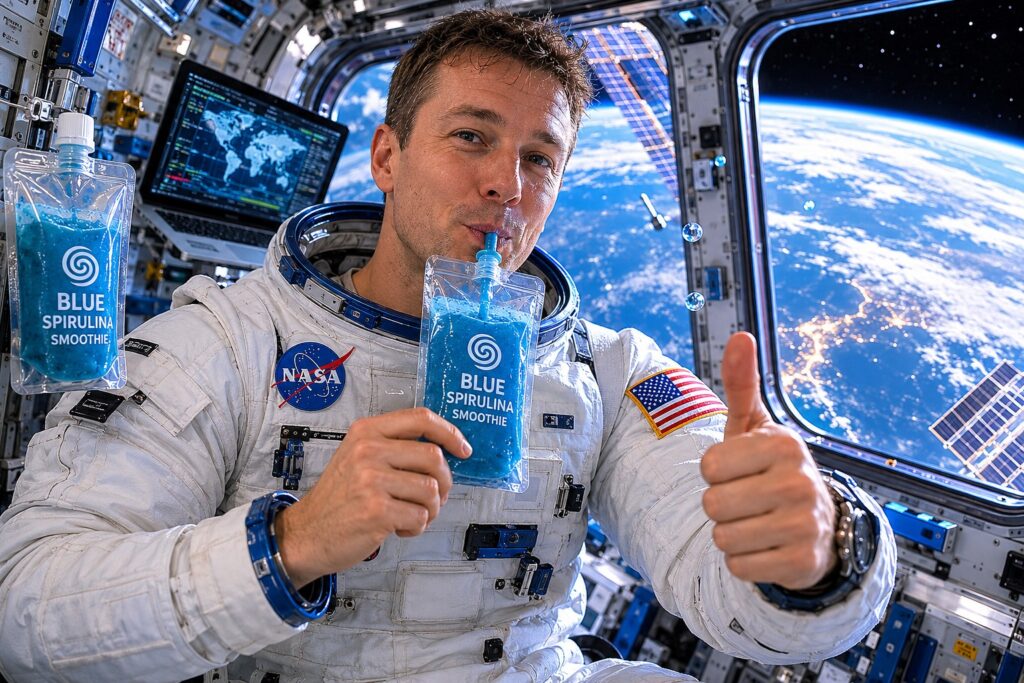
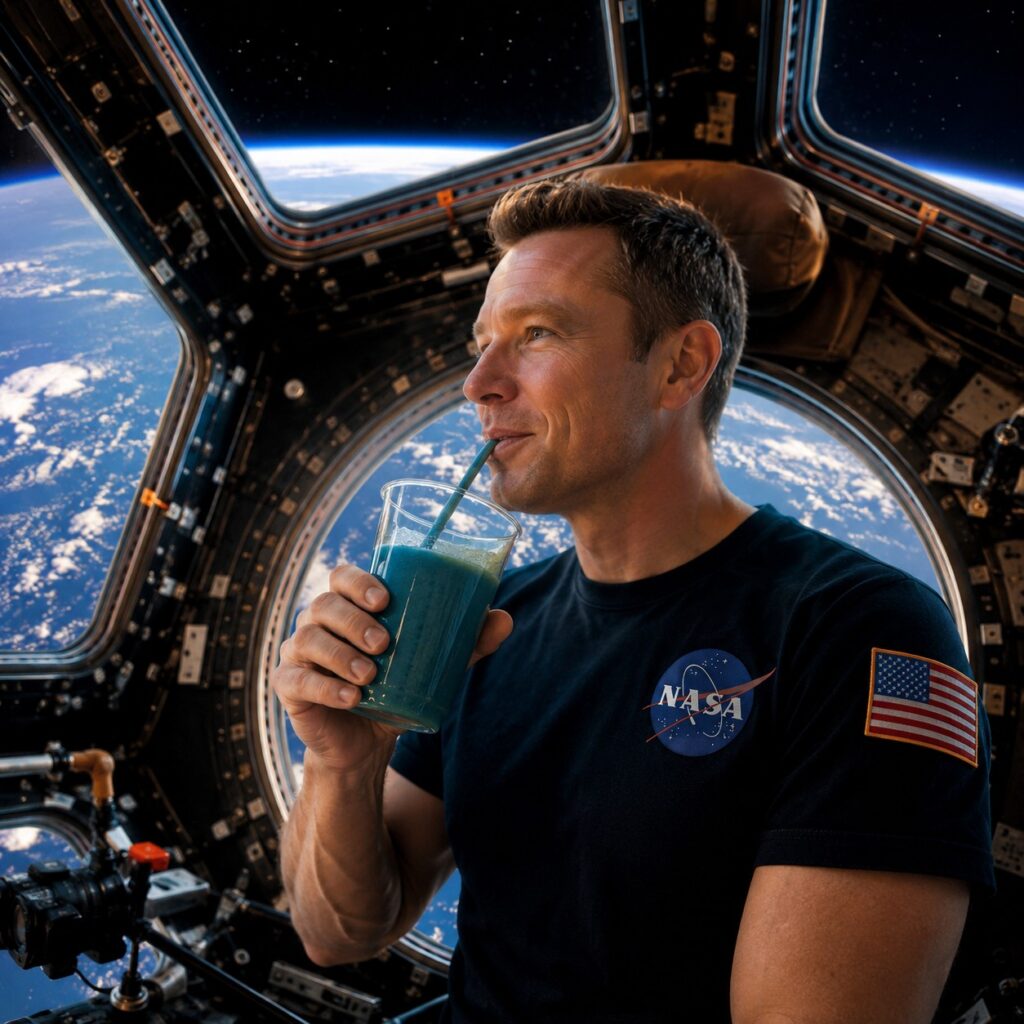
Imagine: Astronauts indulging in blue spirulina smoothies against the breathtaking backdrop of star-studded darkness. The celestial color palette not only adds wonder to daily sustenance but also contributes to overall well-being in the cosmic environment.
Earth Application: Love smoothies? Try our 10 Vibrant Blue Spirulina Smoothie Recipes for your own cosmic breakfast!.
From Space to Earth: Your Benefits
Why Should You Care About Spirulina for Astronauts ?
If spirulina is good enough for the extreme conditions of space, imagine what it can do for your daily life on Earth!
| Space Challenge | Earth Equivalent | Spirulina Benefit |
|---|---|---|
| Cosmic radiation | Pollution, UV exposure | Antioxidant protection |
| Muscle atrophy | Sedentary lifestyle | Protein for muscle health |
| Immune suppression | Stress, poor sleep | Immune system support |
| Limited nutrition | Processed food diet | Nutrient density |
| Mental fatigue | Brain fog, low energy | B vitamins for cognition |
The Bottom Line: You don’t need to be an astronaut to benefit from space-grade nutrition. Whether you’re chasing kids, deadlines, or fitness goals, spirulina delivers:
- Sustained energy without caffeine crashes
- Clearer skin from antioxidant protection
- Stronger immunity during cold/flu season
- Better recovery after workouts
- Mental clarity for busy days
Not sure about the taste? Read our honest spirulina taste review.
Could You Grow Spirulina on Mars?
The Science of Space Agriculture
Yes—and here’s how:
Spirulina thrives in conditions that would kill most plants:
- Temperature tolerance: 20-40°C (68-104°F)
- Water source: Can use recycled wastewater
- Light: Grows under LED lights (no sunlight needed)
- Atmosphere: Consumes CO₂, produces oxygen
- Nutrients: Needs only minerals (nitrogen, phosphorus, potassium)
NASA’s Mars Farming Prototype:
Spirulina for Astronauts The Veggie Plant Growth System on the ISS has already proven that controlled-environment agriculture works in space. Spirulina cultivation systems are even simpler:
- Photobioreactor tanks (closed-loop systems)
- LED lighting (energy-efficient, customizable spectrum)
- Nutrient solution (recycled from astronaut waste)
- Harvest & dry (using spacecraft heat systems)
Fun Fact: One kilogram of spirulina can produce 1.5 kg of oxygen—enough for one astronaut’s daily needs!
Dosage: Astronaut vs. Earthling
How Much Spirulina for Astronauts is ideal?
Astronaut Protocol:
- Daily dose: 2-5 grams (adjusted for mission duration)
- Timing: Split doses with meals for optimal absorption
- Form: Powder mixed into drinks, or compressed tablets
- Monitoring: Regular blood tests for nutrient levels
Earthling Recommendations:
| Goal | Daily Dose | Best Time |
|---|---|---|
| General wellness | 1-3 grams | Morning with breakfast |
| Athletic performance | 3-5 grams | Pre/post-workout |
| Immune support | 2-4 grams | With meals, divided |
| Skin health | 1-2 grams | Morning (with vitamin C) |
| Detox/cleansing | 3-6 grams | On empty stomach |
Important: Start with ¼-½ tsp (1g) and gradually increase over 2-3 weeks. Consult your healthcare provider before use, especially if pregnant, nursing, or managing health conditions.
Ready to try spirulina like the pros? Learn where to buy quality spirulina.
FAQ’s
Does NASA actually use spirulina?
Yes! NASA has researched spirulina since the 1980s through the CELSS (Controlled Ecological Life Support Systems) program. While not yet a primary food source on the ISS, spirulina is used as a nutritional supplement for astronauts and is being tested for future Mars missions as part of sustainable food production systems.
Why is spirulina good for space travel?
Spirulina is ideal for space because it’s: (1) extremely nutrient-dense with 60-70% protein, (2) lightweight and compact for storage, (3) can be grown in space with minimal resources, (4) provides radiation-protective antioxidants, and (5) produces oxygen while consuming CO₂—perfect for closed-loop life support systems.
Can spirulina protect against space radiation?
Research suggests that phycocyanin, the blue pigment in spirulina, has radioprotective properties. It scavenges free radicals generated by cosmic radiation and may help protect DNA and cell membranes. While not a complete shield, it’s part of a multi-layered radiation protection strategy for astronauts.
How much spirulina do astronauts take daily?
Astronauts typically consume 2-5 grams of spirulina daily, adjusted based on mission duration and individual nutritional needs. This is similar to Earth recommendations for active adults seeking optimal health benefits.
Will spirulina be grown on Mars?
Very likely! Spirulina’s ability to grow in controlled environments with minimal water, LED lighting, and recycled nutrients makes it one of the top candidates for Mars farming. NASA and private space companies are actively testing cultivation systems for future lunar and Martian bases.
Can I buy the same spirulina astronauts use?
While astronauts use pharmaceutical-grade spirulina, you can purchase high-quality, third-party tested spirulina from reputable brands like Nutrex Hawaii, Micro Ingredients, and Sunfood. Look for organic certification and contaminant testing to ensure safety. See our buying guide.
Is space-grown spirulina different from Earth spirulina?
The species is the same (Arthrospira platensis), but growth conditions affect nutrient composition. Space-grown spirulina may have slightly different protein profiles due to microgravity effects, but research shows it remains nutritionally viable. Earth-grown spirulina from controlled facilities is equally nutritious for daily use.
References :
- American Public University System’s Supernova Search Group Receives NASA Grant to Conduct Research on Plants in Outer Space | American Public University System (APUS)
- Nutrition Research Arrives Aboard Space Station – NASA
- Bioregenerative Life-Support Systems for Crewed Missions to the Moon and Mars | Frontiers Research Topic
- ESA – Growing Algae on Mars
- Metabolites from Edible Blue-Green Algae for Obesity-Induced Inflammation
- FAO Fisheries and Aquaculture Department – A review on culture, production and use of spirulina as food for humans and feeds for domestic animals