Last Updated on 6 June 2026 by Ahsan Khan
Walk into a farmers’ market in June, and you might spot small, round fruits labeled “Cherry Plums”—some ruby red, others golden yellow. They look like cherries. They taste like plums. So… what is a cherry plum, really?
Spoiler: It’s not a hybrid. It’s not a marketing gimmick. And yes—it’s 100% edible (skin, flesh, and all—just skip the pit!).
Let’s clear up the confusion once and for all – with botanical precision, historical depth, and practical wisdom
What is a Cherry Plum?
The cherry plum (Prunus cerasifera) is a true species of stone fruit in the Rosaceae family—not a cross between cherries and plums, despite the name.
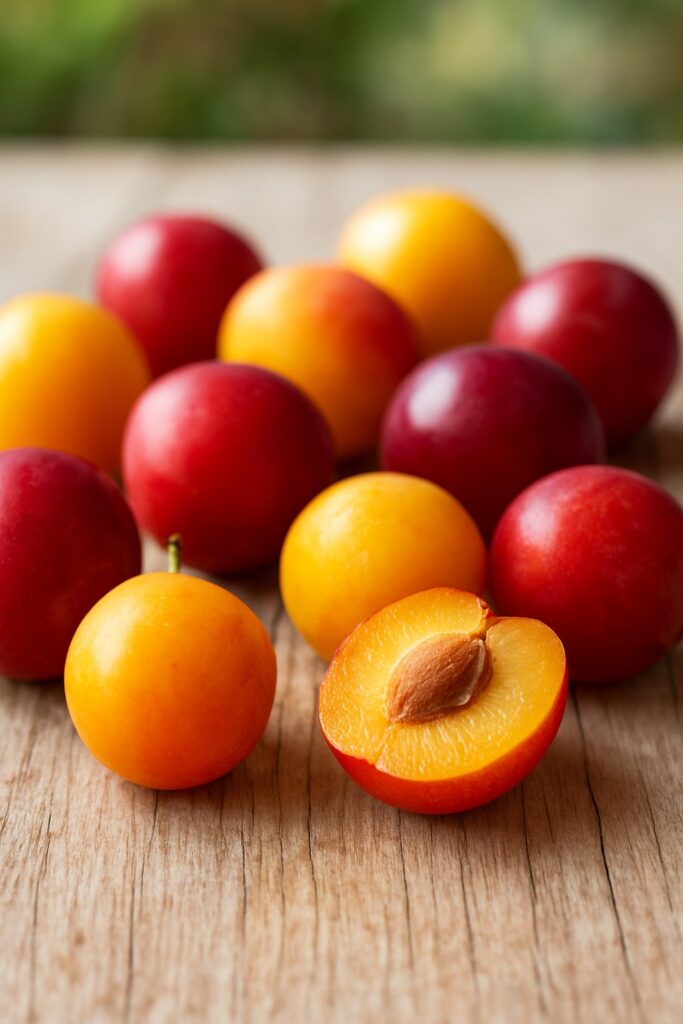
color varieties. The halved fruit shows its small pit and juicy flesh.
- Native to: Southeast Europe and Western Asia (Caucasus, Iran, Turkey)
- First cultivated: Over 2,000 years ago
- Tree height: 15–25 feet, often used ornamentally
- Fruit size: 1–2 inches in diameter (smaller than most plums, larger than cherries)
Fun Fact: In Georgia (the country), cherry plums are called tkemali and are fermented into a tangy sauce served with grilled meats—a tradition dating back to ancient times.
How to Identify a Cherry Plum Tree in the Wild or Garden
Many confuse cherry plums with blackthorn (Prunus spinosa) or bullace (a wild plum). Here’s how to tell them apart:
Leaves
- Cherry plum: Narrow, lance-shaped leaves (5–7 cm long), finely toothed edges, dark green above, paler beneath.
- Blackthorn: Smaller, oval leaves that appear after flowering (cherry plum leaves emerge with or before flowers).
Bark & Thorns
- Cherry plum: Smooth, gray-brown bark on young branches; no thorns (a key differentiator!).
- Blackthorn: Extremely thorny, rough black bark—hence the name.
Flowers
- Cherry plum: Solitary white or pale pink blossoms (1.5–2 cm wide) on short stalks, appearing in early spring (often February–March in mild climates)—before leaves fully open.
- Blackthorn: Flowers directly on thorny stems, no stalks.
fruit
- Cherry plum: Round, smooth skin, ripens May–July.
- Bullace: Bluer bloom, more acidic, ripens later (August–September).
Tip: If you see a small plum-like fruit growing on a thornless tree with early pink-white blossoms—you’ve found a cherry plum.
Cherry Plum vs. Plum vs. Cherry: Key Differences

larger than a cherry, with a unique sweet-tart flavor. Not a hybrid!
Key Takeaway: Cherry plums ripen earlier than most plums (late spring), making them one of the first fresh fruits of the season.
What Does a Cherry Plum Taste Like?
- Red/Purple Varieties: Bright, tangy-sweet—like a plum with a hint of cherry and almond (from the pit’s natural benzaldehyde).
- Yellow/Gold Varieties: Milder, honey-like sweetness, less acidic.
- Texture: Juicy but firm—less mushy than overripe plums.
Best eaten: Fresh off the tree, in jams, or lightly poached. Avoid cooking too long—flavor fades fast.
Are Cherry Plums Edible? (Yes—With One Warning)
Yes! The flesh and skin are completely safe to eat raw or cooked.
- But never eat the pit (seed). Like all stone fruits, cherry plum pits contain amygdalin, which can convert to cyanide when crushed or chewed.
- Swallowing a whole pit accidentally? Harmless—it passes through intact.
- Chewing or blending pits? Avoid it.
Where Do Cherry Plums Grow?
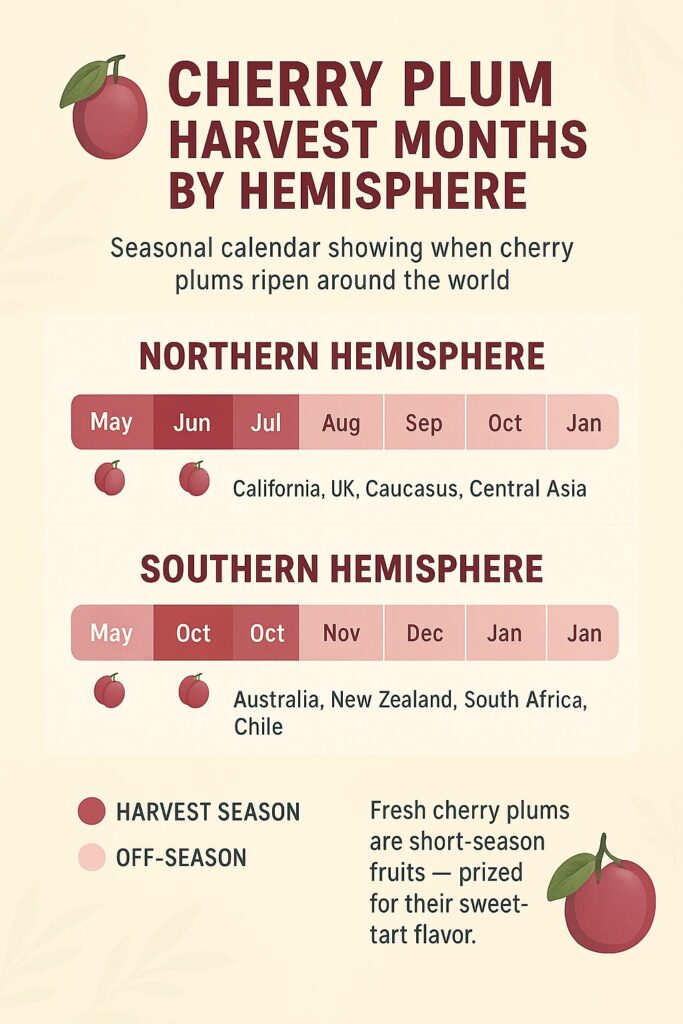
- Wild: Caucasus Mountains, Balkans, Iran
- Cultivated: USA (California, Pacific Northwest), UK, Australia, New Zealand
- Hardiness Zones: USDA 5–9
- Tree Features: Early spring blossoms (pink/white), drought-tolerant, low-maintenance
Many people grow Prunus cerasifera ‘Nigra’ or ‘Thundercloud’ purely for its purple foliage –not knowing it also bears delicious fruit!
Ecological Insight: Cherry plum blossoms are among the first reliable sources of nectar for bees emerging in early spring—making them a vital early-season lifeline for pollinators. Its fruit feeds birds like blackbirds and thrushes—making it a valuable wildlife tree Cherry Plum (Prunus cerasifera) – Woodland Trust
Historical & Cultural Uses Around the World
Beyond snacking, cherry plums have deep roots in traditional food systems:
- Georgia: Tkemali sauce—fermented with garlic, herbs, and chili—is served with khinkali (dumplings) and grilled meats.
- Iran: Dried cherry plums (goje sabz) are used in stews like khoresht-e goje.
- Victorian England: Planted as ornamental “flowering plums”—the fruit was considered a bonus during lean years.
- Caucasus: Leaves are sometimes used to wrap dolma (stuffed grape leaves alternative).
This isn’t just fruit—it’s cultural heritage.
Growing Cherry Plums in Your Garden
Want your own supply? Cherry plums are among the easiest fruit trees to grow:
Top Cultivars
- ‘Nigra’: Deep purple leaves, red fruit
- ‘Thundercloud’: Similar, with slightly larger fruit
- ‘Pissardii’: Classic purple-leaf variety
Care Tips
- Sun: Full sun (6+ hours/day)
- Soil: Well-drained; tolerates clay if not waterlogged
- Water: Moderate—drought-tolerant once established
- Pruning: Light pruning in late winter to shape; avoid heavy cuts
- Pollination: Self-fertile—no second tree needed!
Yield: A mature tree can produce 20–50 lbs. of fruit annually—enough for fresh eating, jam, and sharing.
How to Use Cherry Plums
- Fresh: Snacks, fruit salads
- Preserved: Jams, chutneys, tkemali sauce
- Beverages: Infused water, shrubs, light wines
- Desserts: Tarts, compotes, ice cream swirls
Use them like you would other seasonal fruits—add to salads (just as you might with mandarin segments)
FAQs
Is cherry plum a real fruit?
Yes! It’s a natural species called Prunus cerasifera, grown for thousands of years—not a lab-made hybrid.
Can you eat cherry plums raw?
Absolutely. Eat the skin and flesh fresh. Just discard the pit.
Are cherry plums and pluots the same?
No. Plums are man-made hybrids (plum + apricot). Cherry plums are a wild species with no crossbreeding.
Are cherry plum trees messy?
They can drop fruit if not harvested—but many ornamental varieties produce little to no fruit.
Where can I buy cherry plums?
Farmers markets, specialty grocers (like Whole Foods), or grow your own tree. They’re rarely in big supermarkets.
Is cherry plum invasive?
In some regions (e.g., parts of North America), it can naturalize—but it’s not classified as highly invasive like Callery pear. Check with your local extension office
References: