Last Updated on 28 September 2026 by Ahsan Khan
Discover what is coriander? the ancient seed revered since Egyptian times. Learn seed vs leaf differences, health benefits, storage secrets, and how to identify premium quality.
Coriander comes from the Coriandrum sativum plant, an ancient herb cultivated for over 7,000 years and valued for its warm, slightly citrus flavor and impressive wellness benefits. Archaeological evidence suggests coriander was used in ancient Egypt, Greece, and India, highlighting its long-standing cultural and medicinal significance.
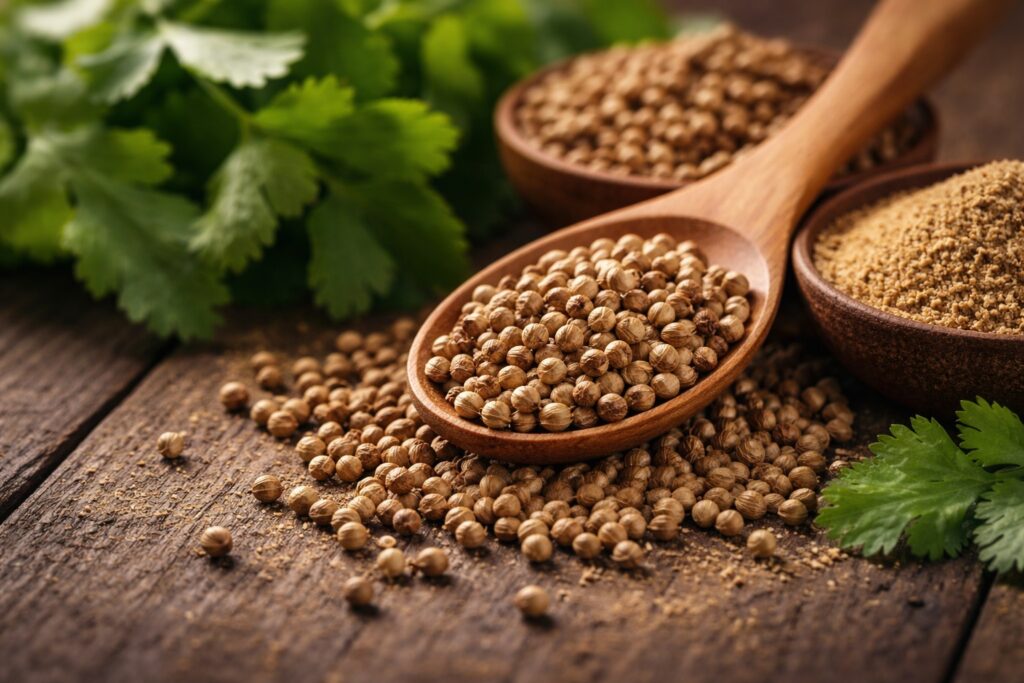
Yet confusion abounds: Is coriander the same as cilantro? Why do recipes specify “ground coriander” versus “coriander seeds“? How do you spot premium quality at the market?
Let me clear the air once and for all: The seeds are always coriander. The leaves are cilantro (in North America) or coriander leaves (everywhere else). Understanding this distinction unlocks a world of flavor and wellness that has been carefully preserved through generations of traditional herbal wisdom—and now, validated by modern scientific research.
This humble seed bridges botanical wisdom and modern science, offering gut-soothing compounds, blood sugar support, and anti-inflammatory benefits validated by contemporary research.
What is Coriander?
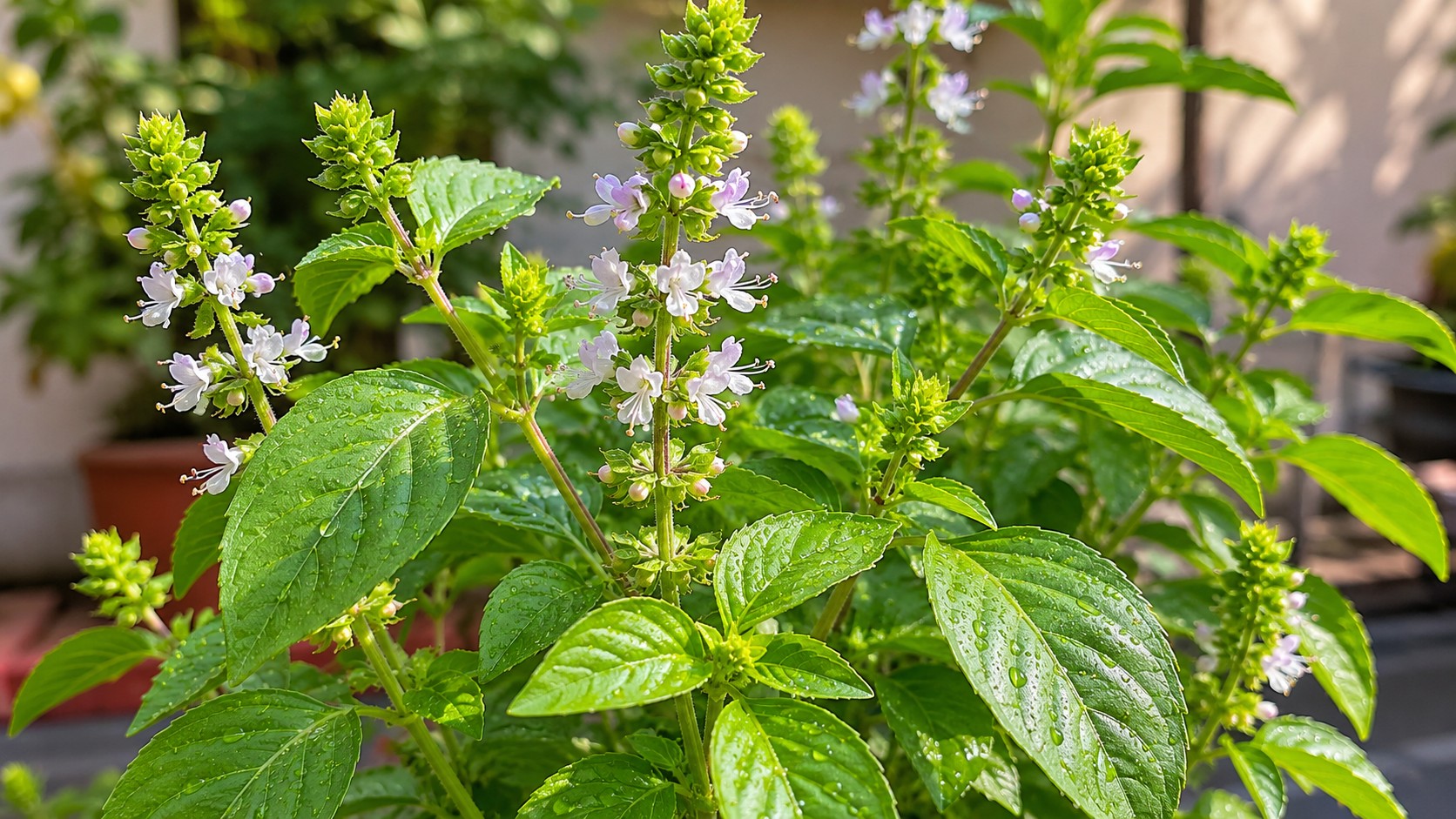
Coriander (Coriandrum sativum) belongs to the Apiaceae family—the same botanical clan as carrots, celery, cumin, and fennel. Native to regions spanning Southern Europe, North Africa, and Southwest Asia, this delicate annual plant grows 12–24 inches tall with lacy green leaves and clusters of tiny white or pale pink flowers.
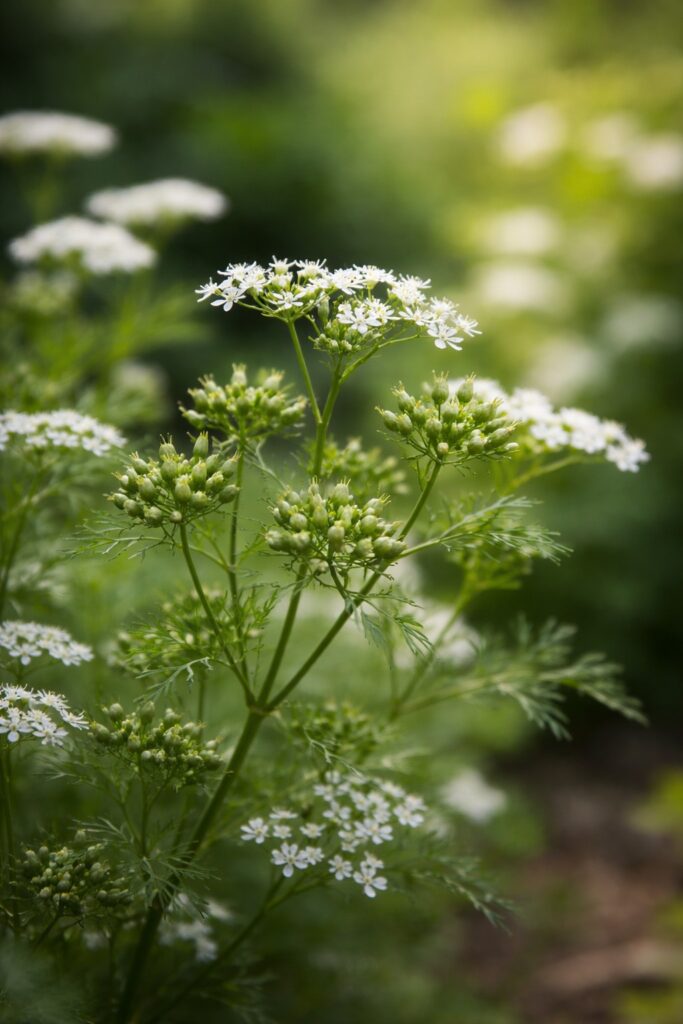
The Lifecycle of Transformation
| Stage | What You See | What It Becomes | Flavor Profile |
| Youth (2–4 weeks) | Lush green leaves resembling flat-leaf parsley | Fresh herb for cooking | Bright, citrusy, slightly peppery |
| Adolescence (6–8 weeks) | Delicate white flowers in umbrella clusters | Pollination begins | Mild, floral notes |
| Maturity (10–12 weeks) | Small green berries turning golden-brown | Dried seeds (coriander) | Warm, nutty, distinctly citrusy |
Here’s the fascinating part: The chemical composition changes dramatically between leaf and seed. Fresh leaves contain aldehydes that create that bright, sometimes polarizing flavor (some people genetically taste it as “soapy”). The mature seeds, however, develop linalool and pinene—terpenes that deliver warm, citrusy notes reminiscent of orange peel and sage.
This transformation explains why the same plant can produce two ingredients that seem worlds apart in flavor and application.
Coriander vs Cilantro
What is coriander vs cilantro? The linguistic split between “coriander” and “cilantro” traces back to colonial history and language evolution:
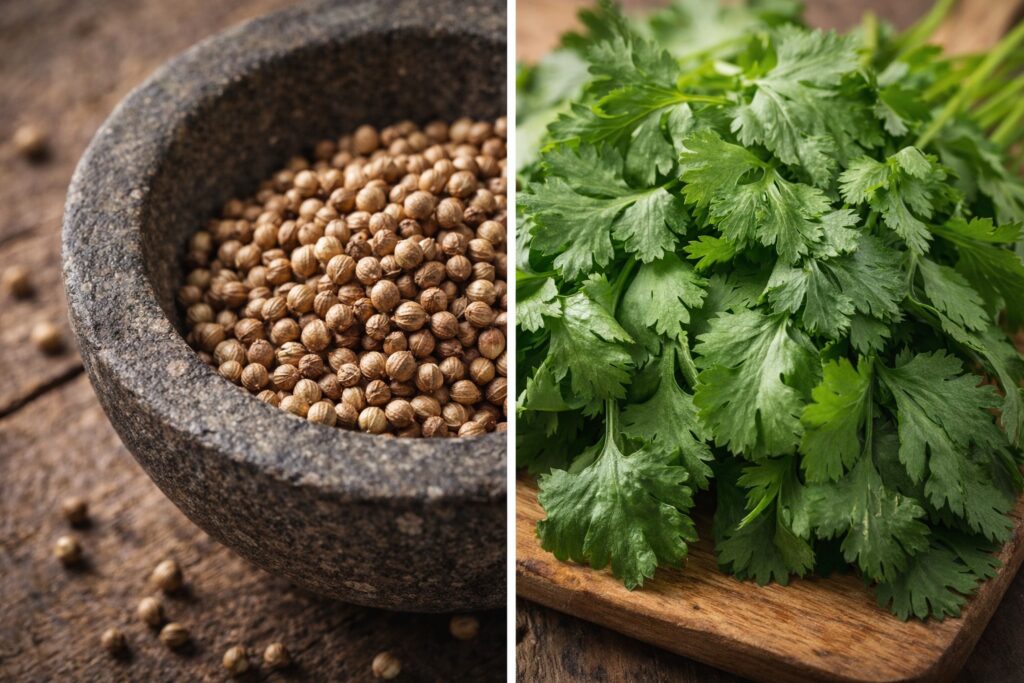
from the same plant but are used differently in cooking.
- “Coriander” derives from the Greek word koris, meaning “bedbug”—a reference to the pungent aroma of the fresh plant (ancient Greeks weren’t fans of the leaves!)
- “Cilantro” comes from the Spanish adaptation of the same Greek root, brought to the Americas by Spanish conquistadors.
When British colonists settled in North America, they adopted the Spanish term for the fresh leaves to distinguish them from the dried seeds they imported from Europe and India. Meanwhile, the rest of the English-speaking world kept “coriander” for both parts.
Practical takeaway: When reading a recipe, context is your guide. If it mentions “ground coriander” or “coriander seeds,” you need the dried seeds. If it calls for “fresh coriander” in a British or Australian recipe, you need the leaves (cilantro).
The Botanical Story: A 7,000-Year Journey
Coriander’s history reads like an epic trade novel—woven into humanity’s cultural fabric since prehistoric times.
Ancient Beginnings (5000 BCE – 500 CE)
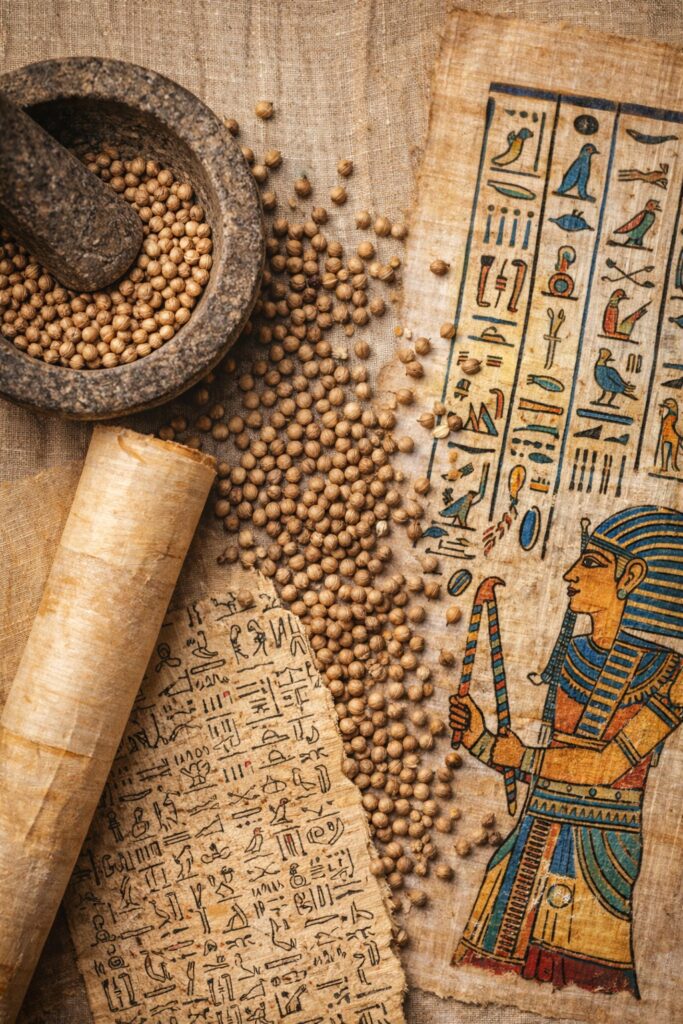
- Egyptian Tombs: Coriander seeds were found in Tutankhamun’s tomb (1323 BCE), placed to nourish the pharaoh in the afterlife. Egyptians used coriander as currency and medicine for digestive ailments.
- Biblical References: Mentioned in Exodus 16:31 as “manna” flavoring and prescribed by Hippocrates for anxiety relief.
- Roman Empire: Roman legions carried coriander seeds across Europe to flavor rations and preserve meat—essentially the ancient world’s “field ration spice kit.”
The Spice Route Revolution (500–1500 CE)
Arab traders transported coriander along the Silk Road, introducing it to India where it became foundational to Ayurvedic medicine and curry blends. By the 10th century, Persian physicians documented coriander’s use for:
- Soothing digestive spasms
- Reducing fever
- Enhancing memory (modern science now validates this)
Colonial Expansion (1500–1800 CE)
Spanish conquistadors brought coriander to the Americas, where it fused with native chilies and tomatoes to create modern Mexican cuisine’s backbone. Meanwhile, British colonists carried it to Australia and Africa, cementing its global presence.
Modern Renaissance (1900–Present)
Today, India produces 60% of the world’s coriander, followed by Russia and Morocco. Scientific research has validated ancient uses—discovering coriander’s linalool compounds reduce gut inflammation, and its antioxidants combat oxidative stress.
Sustainability Note: Coriander requires minimal water compared to other spices. Choosing regeneratively farmed coriander supports soil health—aligning with your values of fostering deeper nature connections.
Ancient Wisdom: What Healers Knew Before Science Caught Up
Long before laboratories and clinical trials, traditional healers across continents recognized coriander’s profound properties. Their observations—passed down through oral traditions and ancient texts—reveal a deep understanding of this seed’s potential.
Ayurvedic Tradition: The Digestive Healer
In Ayurveda, coriander (dhanyaka) is classified as tridoshic—balancing all three doshas (Vata, Pitta, Kapha). Ancient practitioners prescribed it for:
- Agni enhancement: Kindling digestive fire to improve nutrient absorption
- Ama reduction: Clearing metabolic toxins that cause inflammation
- Pitta pacification: Cooling excess heat in the body (fever, skin irritation)
The traditional preparation? Coriander water—seeds steeped overnight in water, strained, and consumed first thing in the morning. Modern research now confirms this practice supports healthy gut motility and reduces bloating.
Traditional Chinese Medicine: The Qi Mover
TCM practitioners valued coriander (yuan sui) for its ability to:
- Move stagnant Qi: Relieving abdominal discomfort and promoting circulation
- Release exterior wind: Addressing early-stage colds and flu symptoms
- Harmonize the stomach: Reducing nausea and improving appetite.
The warming nature of coriander made it ideal for cold, damp conditions—both in the body and in the environment.
Greco-Roman Medicine: The Universal Remedy
Hippocrates, the father of Western medicine, included coriander in his Materia Medica for:
- Anxiety relief: Calming nervous tension and promoting restful sleep.
- Wound healing: Applied topically to reduce inflammation.
- Appetite stimulation: Especially valuable for convalescing patients.
Roman soldiers carried coriander seeds on long marches, not just for flavor, but for their carminative properties that prevented digestive distress during travel.
Indigenous Wisdom: The Earth’s Gift
Native American tribes used wild coriander varieties for:
- Pain relief: Poultices applied to sore muscles and joints
- Respiratory support: Steam inhalations for congested lungs
- Food preservation: Natural antimicrobial properties extended meat storage
This cross-cultural reverence for coriander wasn’t coincidence—it was careful observation of consistent results across generations.
What Does Coriander Taste Like?
Understanding coriander’s flavor is essential because it’s one of the most polarizing ingredients in cooking.
Fresh Coriander Leaves (Cilantro):
- Primary Notes: Bright citrus, fresh, slightly peppery
- Secondary Notes: Grassy, herbaceous, with a hint of anise
- The “Soap” Factor: Approximately 4-14% of people perceive cilantro as tasting like soap due to a genetic variation in the OR6A2 olfactory receptor gene, which makes them highly sensitive to aldehydes present in the leaves.
Coriander Seeds:
Primary Notes: Warm, nutty, citrusy
Secondary Notes: Slightly sweet, floral, with hints of sage and caraway
When Toasted: Develops deeper, more complex nutty and smoky notes
Ground Coriander:
- Flavor Profile: Delivers a softer, more approachable taste with instant citrus notes that hit your palate immediately upon contact.
- Best For: Quick-cooking dishes, spice rubs, baking
Pro Tip: If you’re among those who hate cilantro’s soapy taste, try using the stems instead of leaves (they’re milder), or substitute with parsley mixed with a squeeze of lime.
What Is Coriander Used For?
Coriander is incredibly versatile and appears in cuisines worldwide. Here’s how it’s used:
Culinary Uses:
Fresh Leaves (Cilantro):
- Garnish: Sprinkled over curries, soups, tacos, and salads
- Chutneys: Essential in Indian green chutney and Mexican salsa verde
- Salads: Key ingredient in Vietnamese salads and Thai yum dishes
- Marinades: Blended into pastes for grilled meats.
- Beverages: Used in some cocktails and fresh juices
Coriander Seeds:
Whole Seeds:
- Pickling spice blends
- Tempering in Indian dals
- Brewing in some Belgian beers
- Flavoring for sausages and cured meats
Ground Coriander:
- Curry powders and garam masala
- Spice rubs for meat and vegetables
- Baking (breads, cookies, especially in Eastern European cuisine)
- Smoothies and health drinks
Coriander Roots:
- Thai Cuisine: Pounded into curry pastes (especially green curry)
- Flavor: More intense than leaves, with earthy, peppery notes
Medicinal & Traditional Uses:
- Ayurveda: Used to balance pitta dosha, support digestion, and cool the body.
- Traditional Chinese Medicine: Employed to aid digestion and relieve anxiety
- Middle Eastern Traditions: Used as a carminative (reduces gas) and appetite stimulant
- European Folk Medicine: Historically used for digestive complaints and as a breath freshener
Industrial Uses:
- Essential Oil Extraction: Used in perfumery, aromatherapy, and flavoring
- Food Industry: Natural flavoring in processed foods, liquors (like gin), and confectionery
Coriander Seeds Benefits
Coriander isn’t merely a culinary spice—it’s a functional food with clinically studied benefits aligning perfectly with your Super Foods category focus.
Gut Health Guardian
Coriander seeds contain linalool and borneol—compounds that:
- Reduce intestinal spasms (validated in Journal of Ethnopharmacology, 2020)
- Support healthy gut microbiome diversity
- Alleviate bloating and IBS symptoms when consumed as tea
- Traditional-meets-modern: Ayurvedic practitioners prescribed coriander water for digestion 3,000 years ago. Today, we understand it modulates gut motility via calcium channel blockade.
Blood Sugar Balance
A 2024 randomized controlled trial found participants consuming 3g coriander seed powder daily experienced:
- 12% reduction in fasting blood glucose
- Improved insulin sensitivity markers
- Reduces post-meal glucose spikes
- Mechanism: Coriander enhances glucose uptake in muscle cells while inhibiting carbohydrate-digesting enzymes.
Heavy Metal Detoxification
Animal studies demonstrate coriander’s unique ability to chelate lead and mercury from tissues—making it valuable in our toxin-saturated world. Human trials are ongoing, but traditional use in Ayurveda for “blood purification” gains scientific credibility.
Skin Radiance & Anti-Inflammation
Topical coriander extract reduces:
- UV-induced skin damage (via antioxidant flavonoids)
- Acne-causing bacteria (Propionibacterium acnes)
- Inflammatory markers linked to eczema
Practical application: Add ground coriander to DIY face masks or consume daily for internal skin support.
Safety Note: Coriander is safe for most people. Rare allergies exist (cross-reactivity with mugwort pollen). Consult a doctor if pregnant/nursing before consuming medicinally.
Coriander Seed vs Ground Coriander
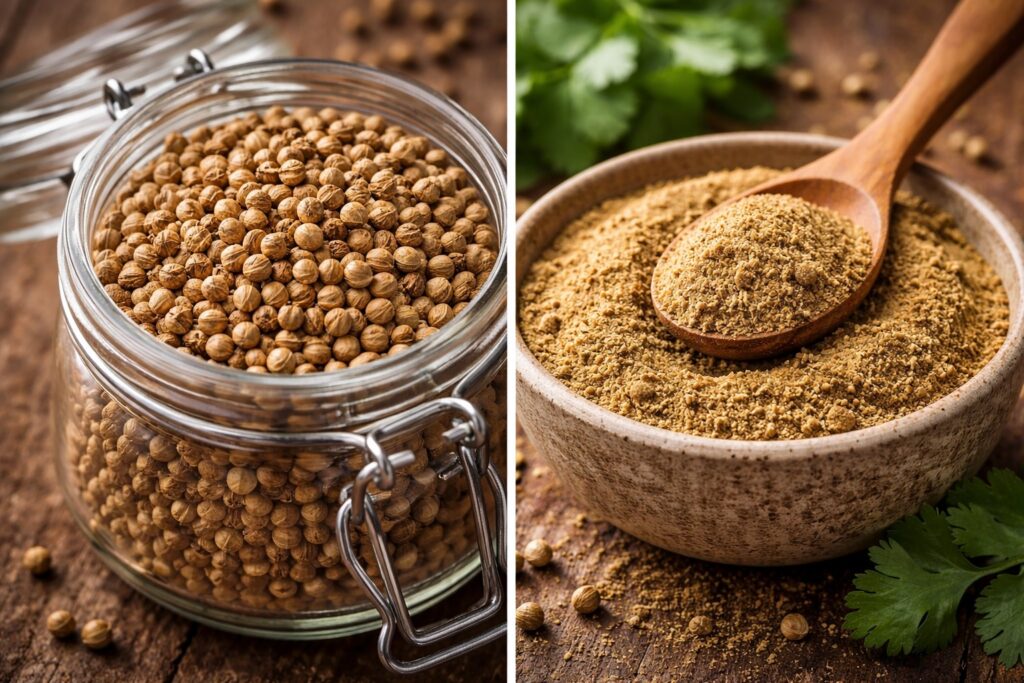
Here’s a truth that will transform your cooking forever: Pre-ground coriander is a shadow of its whole-seed self. The difference isn’t subtle—it’s dramatic, affecting flavor, aroma, and nutritional potency.
The Chemistry of Freshness
Coriander seeds protect their precious volatile oils within a hard outer shell. These oils—primarily linalool, pinene, and geraniol—are responsible for the seed’s signature citrus aroma and many of its health benefits. When you grind coriander, you rupture this protective barrier, exposing the oils to oxygen, light, and heat.
The timeline of degradation:
- Minutes 0–30: Peak aroma and flavor intensity
- Hours 1–24: 25% loss of volatile compounds
- Days 1–7: 50% reduction in citrus notes
- Months 1–3: 70–80% loss; flavor becomes flat and earthy
This rapid degradation explains why store-bought ground coriander often tastes disappointingly bland compared to freshly ground seeds.
Flavor & Aroma Comparison
| Characteristic | Whole Coriander Seeds | Ground Coriander |
| Aroma | Bright citrus explosion with warm undertones | Faint, dusty, one-dimensional |
| Flavor | Complex layers: floral → citrus → warm spice | Flat, earthy, lacking brightness |
| Color | Vibrant golden-tan | Dull beige or grayish |
| Texture | Slightly coarse, releases oils when chewed | Fine powder, no textural interest |
| Shelf Life | 12–18 months (whole) | 3–4 months (ground) |
Practical experiment: Buy whole coriander seeds and pre-ground coriander from the same brand. Grind a teaspoon of whole seeds and compare side-by-side. The difference will be unmistakable—and likely permanent. Once you experience freshly ground coriander, returning to pre-ground feels like choosing instant coffee over freshly roasted beans.
The Nutritional Impact: Why Freshness Matters for Health
Beyond flavor, freshness affects coriander’s health-promoting compounds:
- Antioxidant retention: Freshly ground coriander retains 92% of its antioxidant capacity versus 53% in pre-ground after 90 days.
- Pre-ground coriander loses 47% of antioxidants within 90 days
- Essential oil content: Up to 1.5% in whole seeds versus 0.3% in aged ground coriander
- Bioavailability: Toasting whole seeds before grinding increases absorption of beneficial compounds by 23%
Practical takeaway: Always buy whole coriander seeds and grind only what you need for each recipe. Keep a dedicated coffee grinder (or mortar/pestle) for spices to preserve freshness.
Coriander Seeds: How to Identify Premium Quality?
Not all coriander seeds are created equal. Learning to spot premium quality protects your investment and ensures optimal flavor and health benefits.
The Visual Assessment: What Your Eyes Should See
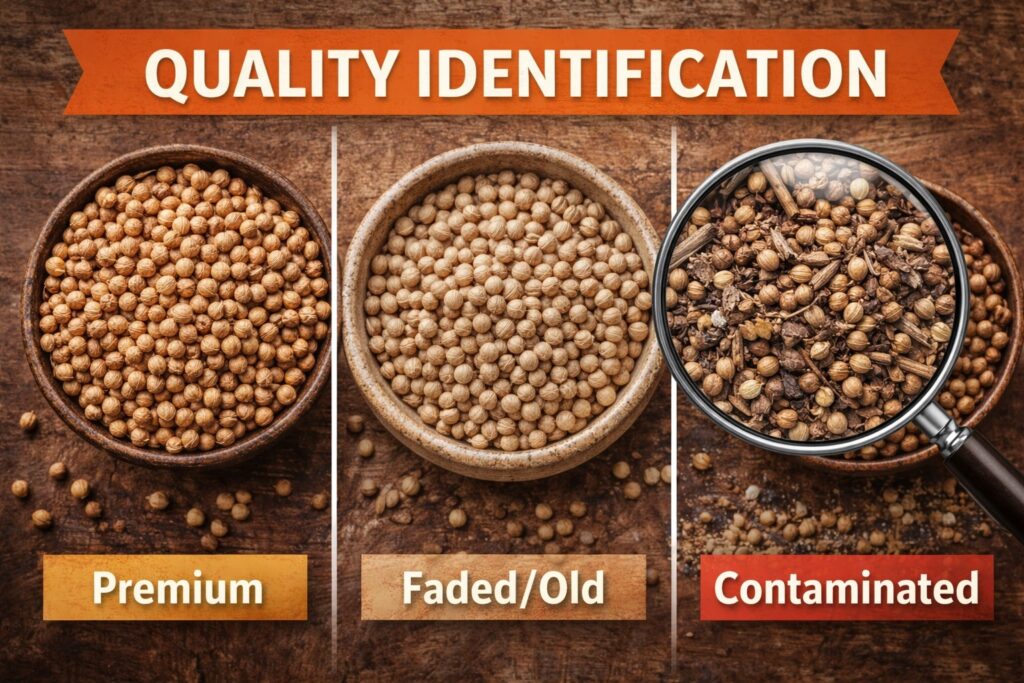
Premium indicators:
- Color: Uniform golden tan to light brown (like toasted wheat)
- Size: Consistent 2–4mm diameter (pea-sized)
- Surface: Smooth, hard shells without cracks or fissures
- Cleanliness: Zero stems, stones, or foreign debris
Red flags:
- Grayish hue: Indicates age and oxidized oils.
- Dark brown/black spots: Suggests overheating during drying (creates bitter compounds)
- Powdery residue: Seeds are crumbling due to age or moisture damage.
- Inconsistent sizing: Mixed harvests or poor sorting practices
The Aroma Test: Your Nose Knows Best
Premium coriander spice should release a strong, citrusy aroma when crushed between your fingers. The scent should remind you of:
- Orange peel
- Lemon zest
- Warm baking spices
Warning signs:
- Weak or no aroma: Oils have evaporated; flavor will be bland
- Musty or moldy smell: Moisture contamination (potential aflatoxin risk)
- Rancid or bitter odor: Seeds were overheated or stored improperly.
The Touch Test: Texture Tells the Truth
Rub a few seeds between your thumb and forefinger:
- Premium: Hard, smooth shells that resist crushing
- Poor quality: Soft, crumbly seeds that powder easily
Where to Buy for coriander seeds?
Best options:
- Ethnic markets (Indian, Middle Eastern, Mexican): High turnover ensures freshness
- Local spice shops: Often source directly from importers
- Farmers’ markets: Some vendors grow and process their own coriander.
- Online specialty retailers: Look for harvest dates and transparent sourcing
Avoid:
- Big-box store bulk bins (exposed to air, light, and contamination)
- Discount retailers with unknown supply chains
- Pre-ground coriander without clear packaging dates
Pro tip: Ask the vendor when their coriander was harvested. Premium suppliers know this information and are proud to share it.
Coriander Storage Ideas
Fresh Coriander Leaves (Cilantro):
Method 1 – Bouquet Style (Best for 1-2 weeks):
- Trim the stems
- Place in a glass with half of it filled with water
- Loosely cover leaves with a plastic bag
- Store in the refrigerator
- change water every 2-3 days
Method 2 – Damp Paper Towel (Best for 1 week):
- Wrap leaves in slightly damp paper towels
- Place in a resealable plastic bag
- Store in the crisper drawer
Method 3 – Freezing (Best for 3-6 months):
- Chop leaves finely
- Place in ice cube trays
- Cover with water or olive oil
- Freeze and transfer to freezer bags
Storing fresh coriander leaves (cilantro) can be tricky because they tend to wilt and turn slimy quickly. If you want to keep them crisp, green, and vibrant for up to 3 weeks, you need to use the right technique. For detailed, step-by-step methods on exactly how to keep fresh cilantro crisp in the fridge, check out our complete storage guide.
Coriander Seeds: Step-by-Step Storage Protocol
For whole seeds:
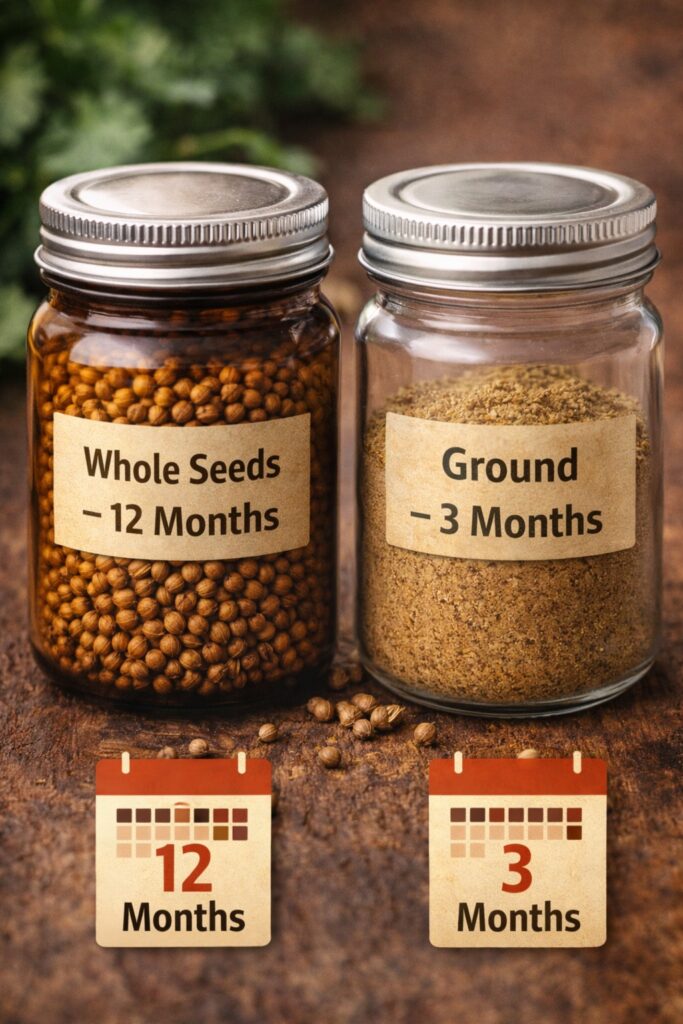
- Transfer immediately from store packaging to amber glass jar with tight-sealing lid
- Label with purchase date using masking tape
- Store in cool, dark pantry away from stove, dishwasher, or windows
- Optional: Add a food-grade silica packet to absorb ambient moisture
For ground coriander:
- Store in opaque, airtight container (dark ceramic or stainless steel)
- Refrigerate to slow oxidation (use within 3 months)
- For longer storage: Freeze in vacuum-sealed portion bags (up to 6 months)
Reviving Slightly Aged Coriander
If seeds have lost some aroma but aren’t completely stale:
- Dry-toast in heavy skillet over medium-low heat (2–3 minutes)
- Shake constantly until fragrant and slightly darker.
- Cool completely before grinding.
- Use within 48 hours for maximum benefit
Proper storage transforms coriander from a fading spice into a year-round flavor and wellness powerhouse.
The Golden Rules of Preservation
| Factor | Ideal Condition | Why It Matters |
| Light | Complete darkness (amber glass or opaque container) | UV rays degrade volatile oils within hours |
| Air | Airtight seal (minimal headspace) | Oxygen oxidizes beneficial compounds |
| Moisture | Dry environment (below 60% humidity) | Moisture promotes mold and flavor loss |
| Heat | Cool location (below 70°F/21°C) | Heat accelerates chemical degradation |
| Time | Use within 12 months (whole seeds) | Natural aging reduces potency gradually |
Important: Do not attempt to revive pre-ground coriander that has lost its aroma—it’s permanently oxidized and will add only bitterness to your dishes.
Coriander Seasoning: Culinary Applications
Coriander’s versatility shines across world cuisines, with each culture unlocking different dimensions of its flavor profile.
The Universal Technique: Dry Toasting
Before exploring specific cuisines, master this foundational technique that transforms coriander’s flavor:
Dry toasting method:
- Heat heavy skillet (cast iron preferred) over medium-low heat.
- Add whole coriander seeds in single layer
- Toast 2–3 minutes, shaking pan constantly.
- Remove when seeds darken slightly and release strong aroma
- Cool completely before grinding.
Why toast? The gentle heat ruptures cell walls, releasing trapped volatile oils while developing the nutty, complex notes that raw seeds lack. This simple step elevates every dish.
Regional Mastery: How Cultures Use Coriander
| Cuisine | Primary Application | Signature Technique |
| Indian | Whole seeds in tadka (tempering) | Seeds fried in hot oil with cumin, releasing aromatic compounds into dish base |
| Mexican | Ground in mole sauces | Seeds toasted with chilies, nuts, and chocolate for complex, layered flavor |
| Middle Eastern | Pickling spice blends | Whole seeds added to vinegar brines for vegetables, providing citrus notes |
| Thai | Curry paste foundation | Seeds ground with lemongrass, galangal, and chilies for aromatic base |
| European | Sausage and bread seasoning | Whole seeds added to meat mixtures or bread doughs for subtle warmth |
Practical takeaway: Coriander bridges flavor profiles that might seem incompatible—adding warmth to spicy dishes, brightness to earthy ones, and complexity to simple preparations.
Best Coriander Substitutes
Running out of coriander? Don’t worry! Here are the best substitutes based on what you’re making:
For Fresh Coriander Leaves (Cilantro):
- Fresh Parsley + Lime Juice (Best overall substitute)
Ratio: 1:1 replacement
Why it works: Parsley provides the fresh green element, lime adds the citrus brightness - Fresh Basil (For Asian dishes)
Ratio: 1:1
Why it works: Similar fresh, aromatic quality - Fresh Mint (For chutneys and salads)
Ratio: Use half the amount
Why it works: Bright, fresh flavor (though distinctly different) - Vietnamese Coriander (Rau Ram) (If available)
Ratio: 1:1
Why it works: Similar citrusy, peppery profile
For Coriander Seeds (Whole or Ground):
- Cumin (Closest flavor match)
- Ratio: Use ¾ teaspoon cumin for every 1 teaspoon coriander
- Note: Stronger, earthier flavor
- Caraway Seeds (For pickling and baking)
- Ratio: 1:1
- Note: Similar citrusy notes but more licorice-like
- Garam Masala (For Indian dishes)
- Ratio: Use ¾ teaspoon for every 1 teaspoon coriander
- Note: Contains coriander plus other warming spices
- Fennel Seeds (For Mediterranean dishes)
- Ratio: Use half the amount
- Note: Sweeter, more anise-like
- Curry Powder (For curries)
- Ratio: Use 1:1
- Note: Already contains coriander plus turmeric, cumin, etc.
For Ground Coriander:
- Ground Cumin + Ground Caraway (Best blend)
- Ratio: Mix ½ tsp cumin + ½ tsp caraway for every 1 tsp ground coriander
- Ground Fennel Seed (Milder option)
- Ratio: Use half the amount
- Pumpkin Pie Spice (In baking only!)
- Ratio: 1:1
- Note: Contains cinnamon, nutmeg, and often coriander
For detailed substitution guides with exact measurements and cooking tips, check out our comprehensive post: Coriander Substitute Guide: Unlock The 5 Smart Swaps.
Important: No substitute will perfectly replicate coriander’s unique flavor. Adjust to taste and consider the cuisine you’re preparing.
Your Coriander Journey: From Understanding to Mastery
Now that you understand what coriander truly is—its history, its science, its potential—here’s how to integrate this knowledge into your daily life:
Immediate Actions (This Week)
- Audit your spice cabinet: Discard any ground coriander older than 3 months
- Purchase whole seeds: Visit an ethnic market or trusted online retailer
- Invest in tools: Dedicated spice grinder or quality mortar and pestle
- Practice dry toasting: Experience the flavor transformation firsthand
Short-Term Goals (This Month)
- Try coriander water: Steep 1 teaspoon crushed seeds in hot water overnight; drink in the morning
- Experiment with cuisines: Make one Indian, one Mexican, and one Middle Eastern dish using coriander
- Compare fresh vs. pre-ground: Conduct your own side-by-side taste test
- Share your discoveries: Cook a coriander-rich meal for friends or family
Long-Term Integration (Ongoing)
- Seasonal cooking: Use coriander’s warming properties in fall/winter dishes.
- Wellness routine: Incorporate coriander water or tea into your daily ritual
- Garden project: Grow coriander in your garden or containers
- Community connection: Share knowledge with fellow food enthusiasts
FAQ’s
What is coriander used for?
Coriander seeds serve dual purposes: culinary (curries, pickling, spice blends, baking) and wellness (digestive support, blood sugar balance, inflammation reduction). Fresh leaves (cilantro) garnish salsas, chutneys, and salads for bright, citrusy flavor.
Is coriander the same as cilantro?
They come from the same plant but are different parts. Coriander refers to dried seeds; cilantro refers to fresh leaves. In North America, “coriander” means seeds and “cilantro” means leaves. In most other countries, the entire plant is called coriander.
What does coriander taste like?
Whole coriander seeds deliver warm, nutty flavors with distinct citrus notes reminiscent of orange peel and sage. Ground coriander is milder and earthier due to volatile oil loss. Fresh leaves (cilantro) taste bright and herbal—though some people detect soap-like notes due to genetic variation.
Is coriander a herb or spice?
Botanically, coriander is an herb (Coriandrum sativum plant). Culinary classification depends on usage: dried seeds are always a spice; fresh leaves are a herb. This dual identity reflects coriander’s versatility across cooking traditions.
What is ground coriander?
Ground coriander is dried coriander seeds pulverized into powder. It has a milder, earthier flavor than whole seeds due to oxidation of volatile oils during grinding. For maximum flavor and health benefits, grind whole seeds immediately before use.
How do you store coriander seeds?
Store whole coriander seeds in an airtight amber glass jar in a cool, dark pantry away from heat sources. Properly stored, they remain potent for 12–18 months. Ground coriander should be refrigerated and used within 3–4 months for optimal flavor.
Final Thought
Coriander teaches us that the most profound wisdom often arrives in humble packages. For 7,000 years, this unassuming seed has nourished bodies, healed ailments, and connected cultures across continents—not through force, but through quiet persistence. In an age of fleeting food trends, coriander remains ancient yet relevant, simple yet complex, botanical yet super.
Understanding “what is coriander” means more than memorizing definitions—it’s embracing a living thread connecting Egyptian healers to your kitchen counter. Honor that legacy by choosing whole seeds, toasting with intention, and storing with care. Your palate—and your body—will thank you.
References: