Learn how to grow tomatillos at home — from seed to harvest. Step-by-step guide with planting tips, care advice, and troubleshooting (why they’re not fruiting). Perfect for beginners.
If you’ve ever fallen in love with the bright, tangy kick of salsa verde, here’s a little secret:
The magic ingredient — tomatillo — is easier to grow than tomatoes.
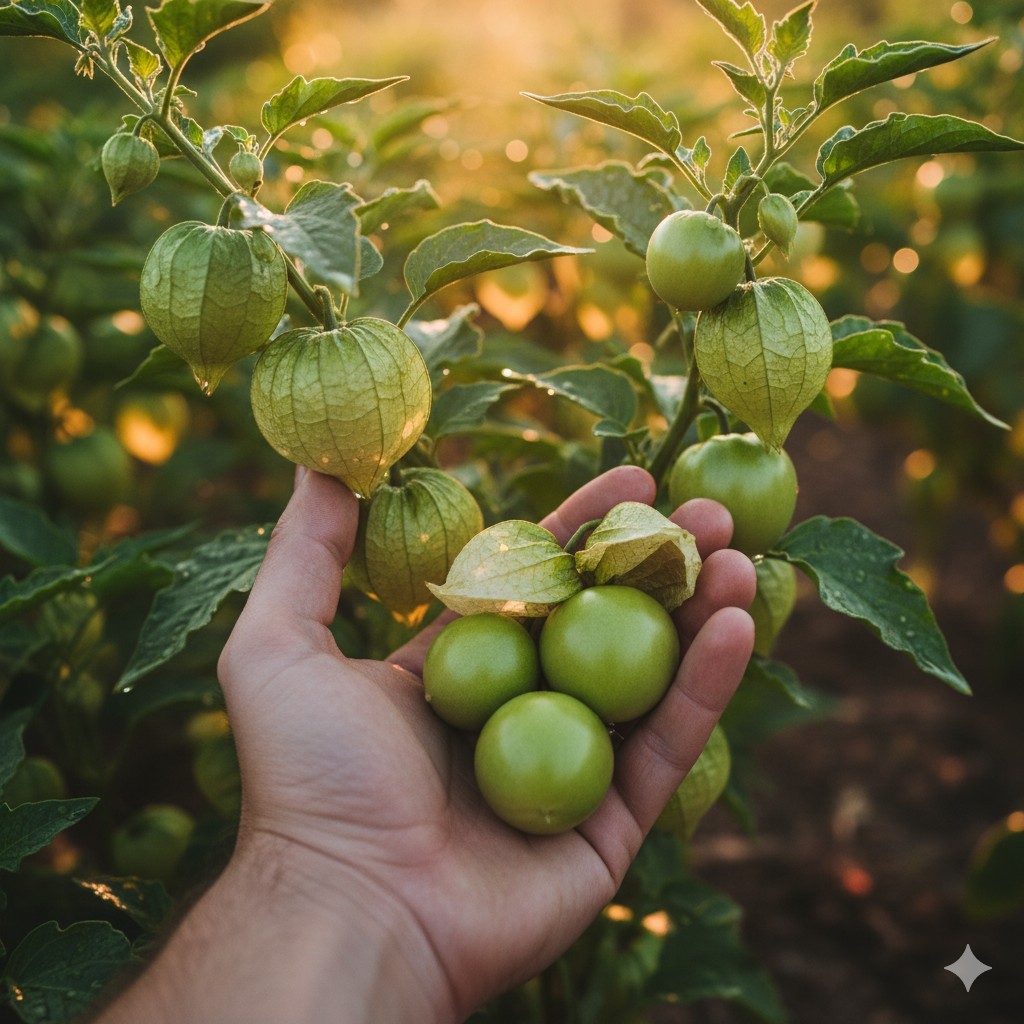
My first attempt? Total flop. The plant looked healthy – big leaves, pretty yellow flowers — but not a single fruit appeared. After weeks of wondering what went wrong, I learned the #1 rule of growing tomatillos:
How to Grow Tomatillos
You need at least two plants.
Unlike tomatoes, most tomatillo varieties can’t pollinate themselves. They need a buddy nearby to cross-pollinate and produce those papery-husked gems.
Once I planted a second one? Boom. Fruit everywhere.
In this complete guide, I’ll walk you through everything you need to grow thriving tomatillo plants — whether you’re planting in a backyard garden, raised bed, or even a pot on your balcony.
Let’s get growing.
Now, let’s go step by step.
Step 1: Start Seeds Indoors (6–8 Weeks Before Last Frost)
Tomatillos are warm-season plants — they hate cold soil and frost.
So unless you live in a tropical climate, you’ll want to start seeds indoors.
Here’s how:
- When: 6–8 weeks before your area’s last expected spring frost
- Containers: Use seed trays or small pots
- Soil: Moist, well-draining seed-starting mix
- Planting depth: ¼ inch deep
- Temperature: Keep soil between 70–80°F (21–27°C)
- Germination time: 3–14 days
Tip: A simple heat mat under the tray speeds up sprouting — especially if your house runs cool.
Keep seedlings under a grow light or near a sunny window. Rotate daily to prevent leggy stems.
Step 2: Harden Off Your Seedlings (Don’t Skip This!)
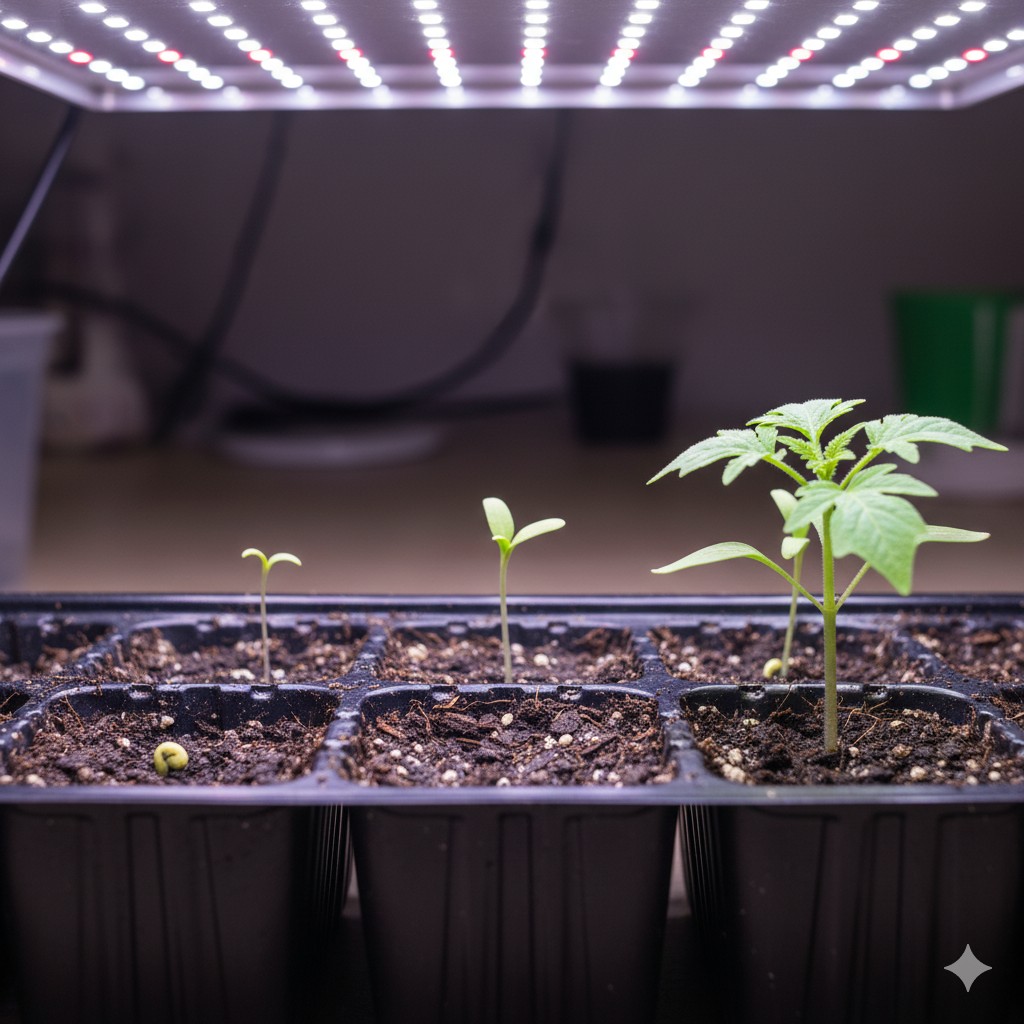
tomatillo growth in a propagation tray, nurtured by the steady light of a dedicated grow lamp.
You’ve nurtured your little plants for weeks… now it’s time to move them outside.
But don’t just plop them into the garden. That’s like taking someone from a cozy room into desert sun — shock happens.
Hardening off is like giving your seedlings a gentle “outdoor boot camp” — gradually acclimating them to sun, wind, and temperature swings so they don’t get shocked by the real world.
Do this over 7–10 days:
| DAY | EXPOSURE |
|---|---|
| 1–2 | 1–2 hours of shade |
| 3–4 | 3–4 hours of morning sun |
| 5–7 | All day in partial sun |
| 8–10 | Overnight (if no frost) |
By the end, your plants will be toughened up and ready for transplant.
Step 3: Transplant Outdoors (With a Buddy!)
This is where most people make the big mistake: planting only one tomatillo.
Repeat after me: One plant = no fruit.
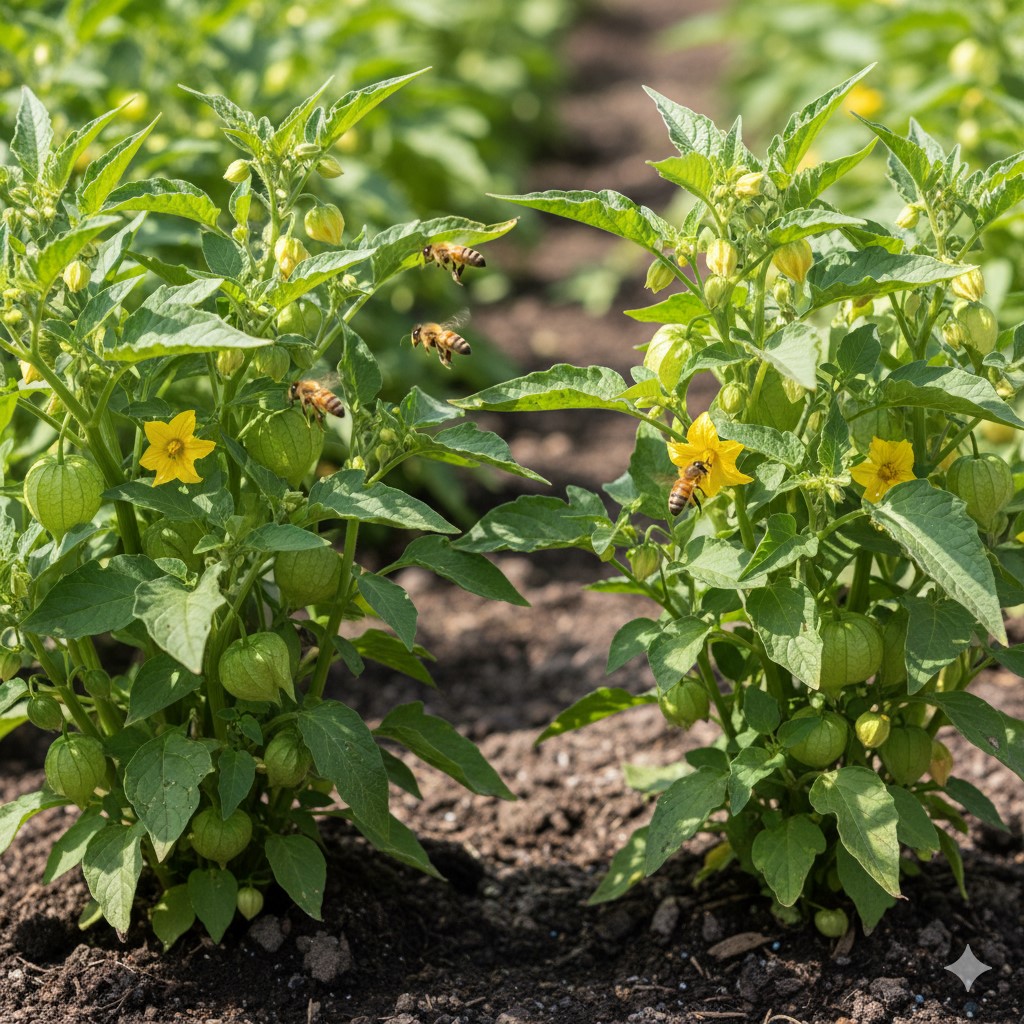
busy bees, highlighting the essential role of cross-pollination for abundant fruit production.
Most tomatillo varieties are self-incompatible — meaning they need pollen from a different plant to set fruit. So, unless you have two (or more), you’ll get flowers… but nothing inside the husk.
How to Plant:
- Wait until all danger of frost has passed
- Choose a sunny spot – at least 6–8 hours of direct sunlight
- Soil pH: 6.0–7.0 (slightly acidic to neutral)
- Spacing: 2–3 feet apart
- Depth: Plant deep, like tomatoes — bury part of the stem for stronger roots
- Add compost or aged manure for nutrients
Pro tip: Interplant with onions, garlic, or marigolds — they repel pests naturally.
Avoid planting near potatoes — they compete for space and attract similar diseases.
Step 4: Water & Mulch Like a Pro
Tomatillos like consistent moisture — not soggy, not dry.
- Water deeply 2–3 times per week (more in hot climates)
- Avoid wetting leaves — this prevents fungal diseases
- Mulch with straw or wood chips — keeps roots cool and soil moist
Never let the soil dry out completely during flowering and fruiting.
And yes — container plants need more frequent watering. Check daily in summer.
Step 5: Support Your Plants (They Get Tall!)
Tomatillo plants don’t stay small.
They grow 3 to 4 feet tall and can spread wide. Without support, they’ll flop over and rot.
Use one of these:
- Sturdy stakes
- Tomato cages
- Trellises or fencing
Tie stems gently with soft plant ties as they grow.
A little pruning helps too — remove lower leaves touching soil to improve airflow and reduce disease risk.
When to Harvest Tomatillos
You’ve nurtured your plants for months… flowers bloomed, husks formed — now you see green fruits inside.
But when do you pick them?
Because unlike tomatoes, tomatillos don’t ripen off the vine — so timing matters. Pick too early, and they’re excessively tart. Wait too long, and they split, rot, or get eaten by pests.
Here’s how to harvest at the perfect moment — every time.
Visual Signs Your Tomatillos Are Ready
Look for these 3 key signs:
- The Husk Turns Tan or Light Brown
- Starts green and tight around the fruit
- As it matures, it dries out and puffs open.
- Color change = maturity signal
- The Fruit Fills the Husk.
- Immature: Small, loose inside husk
- Mature: Presses against the inner lining
- Think: “Fullness” under the paper shell
- Firm, Bright Green Skin (or Yellow/Red, by Variety)
- Most stay green — don’t expect red like tomatoes
- Some varieties turn yellow (Golden Nugget) or purple-red (Purple de Milpa).
- Should feel firm, not mushy
Pro Tip: Gently shake the plant. If ripe tomatillos drop easily, they’re ready!
How Long Does It Take to Harvest?
| From | Time |
|---|---|
| Transplant to first harvest | 70–85 days |
| Flowering to mature fruit | ~4–6 weeks |
| Peak harvest season | Midsummer to early fall |
In warm climates (zones 8–11), you may harvest continuously for 2+ months.
How to Harvest (Without Damaging the Plant)
Do NOT yank them off!
Tomatillos are delicate where the stem meets the fruit.
Best method:
- Hold the branch steady with one hand
- Use the other to gently twist and pull the fruit free.
- Or use clean scissors/pruners to snip the stem.
Avoid pulling — you might break branches or damage future growth.
And check every few days — they come in waves!
Common Problems & How to Fix Them
Even healthy-looking plants can struggle. Here’s what to watch for:
| PROBLEM | WHY IT HAPPENS | HOW TO FIX |
|---|---|---|
| Flowers but no fruit | Lack of pollination (only one plant) | Plant a second tomatillo; attract bees |
| Small fruits | Poor pollination or low nutrients | Add compost; avoid pesticides that kill pollinators |
| Yellow leaves | Overwatering or nitrogen deficiency | Check drainage; feed with balanced fertilizer |
| Pests (hornworms, aphids) | Common in nightshade family | Hand-pick; spray with neem oil |
| Fungal spots | Wet foliage, poor airflow | Water at base; space plants properly |
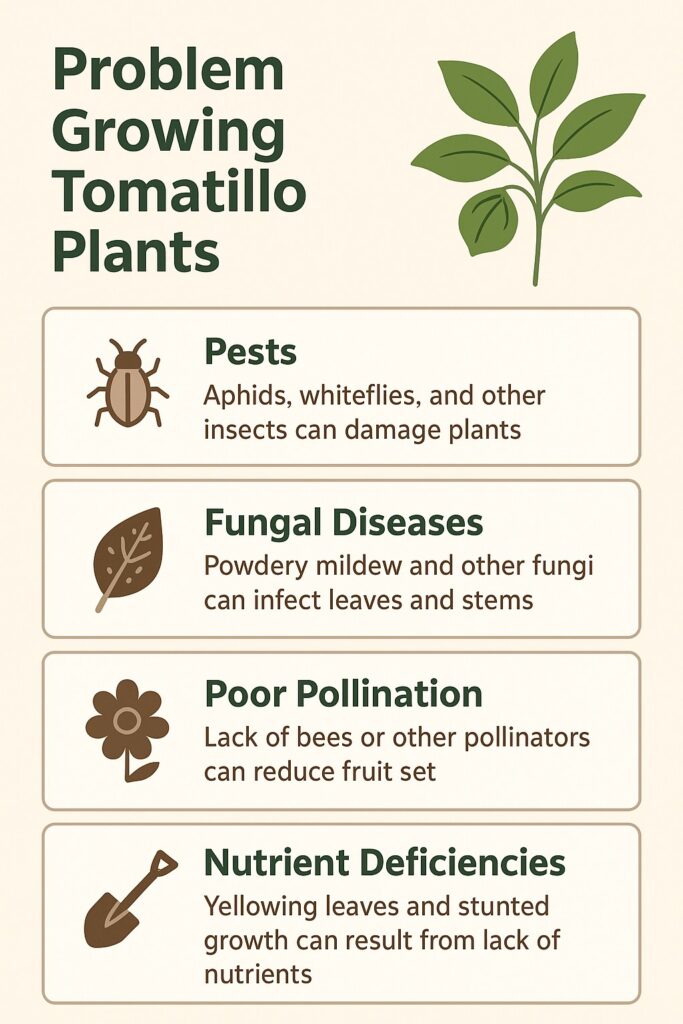
and fix issues like pests, poor pollination, and nutrient deficiencies.”
Encourage pollinators: Plant marigolds, borage, or lavender nearby. Bees are essential for fruit set.
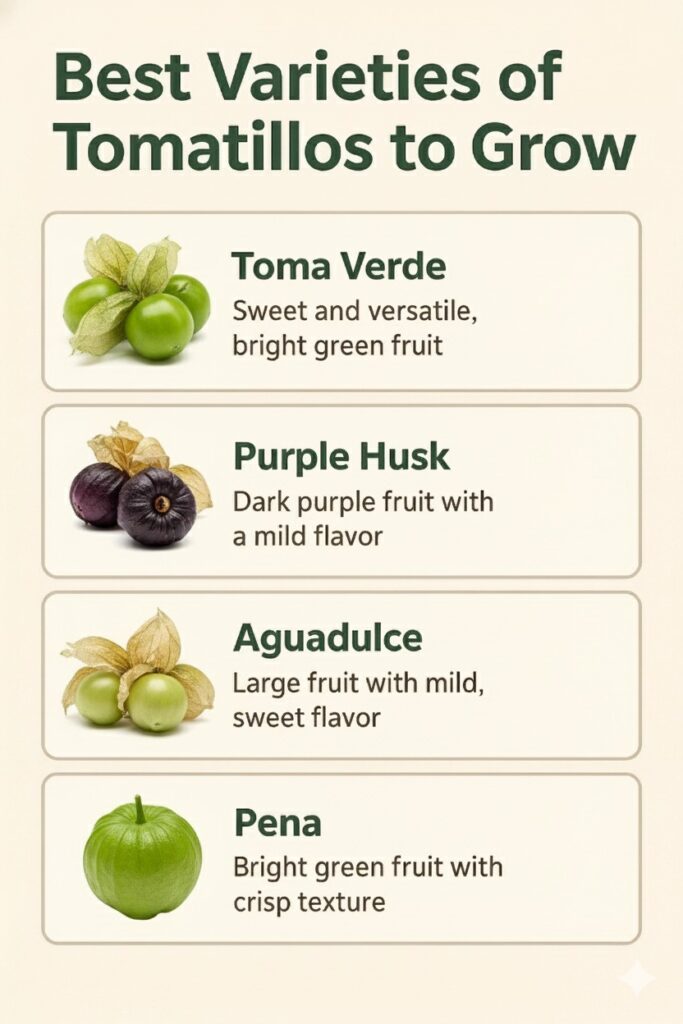
Best Varieties to Grow
Not all tomatillos are the same. Here are top picks for home growers:
| VARITY | COLOR | FLAVOR | DAYS OF MATURITY |
|---|---|---|---|
| Toma Verde | Green | Classic tart-sweet | 75 days |
| De Milpa | Green | Earthy, authentic | 80 days |
| Purple de Milpa | Purple-green | Sweet, complex | 80 days |
| Golden Nugget | Yellow | Mild, fruity | 70 days |
and fix issues like pests, poor pollination, and nutrient deficiencies.
Organic tomatillo seeds
Organic tomatillo seeds are produced without synthetic fertilizers, pesticides, or genetic modification, ensuring a natural start for your garden. Choosing certified organic seeds supports sustainable farming practices and helps maintain soil health and biodiversity. Tomatillos (Physalis ixocarpa) thrive in warm climates, require at least two plants for cross‑pollination, and are valued for their tangy, citrus‑like fruits used in salsa verde and other traditional dishes. When purchasing organic tomatillo seeds, look for reputable suppliers that provide certification details, ensuring the seeds meet recognized organic standards.
Where to buy seeds
When choosing tomatillo seeds, it’s best to purchase from trusted suppliers that specialize in heirloom, non‑GMO, or organic varieties. Certified seed companies ensure quality, germination rates, and genetic stability, which is especially important since tomatillos require cross‑pollination and may not produce well from hybrid or store‑bought fruit. Avoid saving seeds from grocery tomatillos, as they are often sterile or hybridized and may not grow true to type.
- Seed Savers Exchange (heirloom, non-GMO)
- Baker Creek Heirloom Seeds (unique varieties)
Avoid using seeds from store-bought tomatillos — they’re often sterile or hybrid.
Container Growing Tips:
- Pot size: At least 5 gallons (bigger is better)
- Drainage: Must have holes in the bottom
- Soil: Use quality potting mix (not garden soil)
- Sunlight: 6–8 hours daily
- Fertilizer: Add slow-release granules or liquid feed monthly
- Water: Check daily — pots dry out fast
Remember: still plant two pots for pollination!
When to Plant Tomatillos (By Zone)
| USDA ZONE | START INDOORS | TRANSPLANT OUTDOORS |
|---|---|---|
| 4–5 | March–April | Late May–June |
| 6–7 | February–March | April–May |
| 8–11 | January–February | March–April (can grow year- round in warm zones) |
Find your zone: USDA Plant Hardiness Zone Map
In zones 8–11, tomatillos can be perennial — they may come back each year if protected from rare frosts.
Elsewhere, treat them as annuals.
FAQ’s
Do I really need two tomatillo plants?
Forks. Most varieties require cross-pollination. One plant alone usually produces no fruit.
How long does it take to grow tomatillos?
70–85 days from transplant to harvest.
Can I grow tomatillos from grocery store fruit?
No. Commercial tomatillos are often seedless or from hybrid plants that won’t grow true. Always use certified seeds.
Are tomatillo plants poisonous?
No – but like tomatoes, the leaves and husks are not edible. Only the ripe fruit inside is safe to eat.
What grows well with tomatillos?
Great companions: onions, garlic, basil, marigolds
Avoid: potatoes, fennel
Can You Grow Tomatillos in Pots?
Yes – and they do great in containers!
Perfect if you have a patio, balcony, or limited space.
Are tomatillos toxic?
Only the ripe fruits are edible; other plant parts are toxic.
Final Thought
Grow More Than One — And Taste the Difference
Growing tomatillos isn’t hard. Just remember the golden rule: plant two.
Once you do, you’ll be rewarded with a steady supply of fresh, vibrant fruits perfect for homemade salsas, soups, and tacos.
And there’s something deeply satisfying about making salsa verde from tomatillos you grew yourself.
It tastes better. It feels better.
So grab some seeds, start early, give them sun and space — and get ready to harvest your own little lanterns of flavor.
Happy gardening, brother.
Have you tried growing tomatillos? Did your fruits? Share your story in the comments — we’d love to hear from you!
Loved this guide? Pin it for later or share with a fellow gardener!
REFERENCE: