Last Updated on 22 September 2026 by Ahsan Khan
The Pantry Panic Moment
You’re halfway through cooking that fragrant curry or vibrant salsa when you realize—you’re out of coriander. Panic sets in. Do you abandon dinner? Run to the store? Or is there a smart coriander substitute hiding in your spice rack right now?
Good news: coriander is surprisingly replaceable—if you know the right swaps. Whether you’re missing coriander seeds, ground coriander, or fresh coriander leaves, this guide reveals 5 proven coriander substitute options that save your meal without sacrificing flavor.
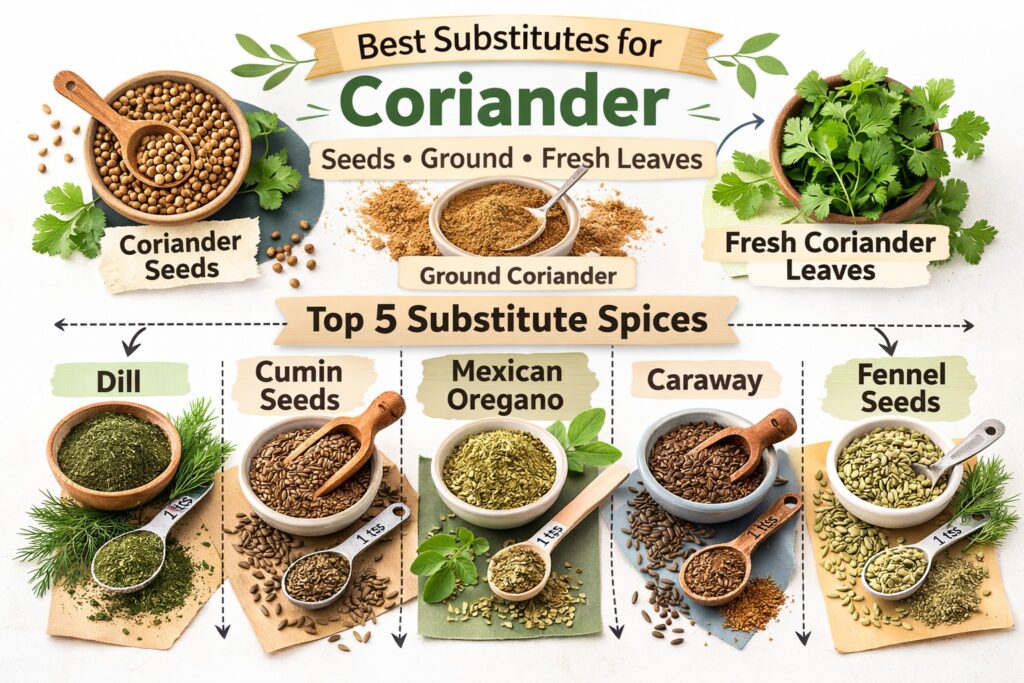
fresh leaves – along with five common substitutes used in cooking.
Coriander Substitute
Understanding The Difference: Seeds vs Leaves vs Ground
Before diving into coriander substitute options, it’s crucial to understand which type of coriander your recipe needs—because seeds, leaves, and ground coriander are NOT interchangeable.
Understanding Substitution of Coriander
| Type | Flavor Profile | Best For |
| Coriander Seeds | Warm, nutty, citrusy, slightly sweet | Curries, pickling, spice blends, roasted vegetables |
| Fresh Coriander Leaves (Cilantro) | Bright, herbal, citrusy, pungent | Salsas, chutneys, garnishes, fresh salads |
| Ground Coriander | Milder, earthy, warm citrus | Baking, dry rubs, marinades, spice mixes |
Why this matters: A coriander substitute for seeds won’t work for leaves, and vice versa. Match the substitute to the form your recipe requires.
Wait — is your cilantro actually bad, or just wilted?
Limp, droopy cilantro can be revived in a 5-minute ice-water bath. Only slimy stems or yellowed, black-spotted leaves are beyond saving. Before you substitute, learn how to revive wilted cilantro and store it fresh for 3+ weeks — you may not need a substitute at all.
Coriander Seeds Substitute
Substitute #1: Cumin + Fennel Seed Blend
When your recipe calls for whole coriander seeds—think Indian garam masala, pickling spice, or roasted vegetable seasoning—this two-ingredient blend delivers remarkably close flavor.
The Perfect Ratio: 2:1 Cumin to Fennel
| Spice | Ratio | Why It Works |
| Cumin Seeds | 2 parts | Provides earthy warmth and depth |
| Fennel Seeds | 1 part | Adds sweet, citrusy notes missing from cumin alone |
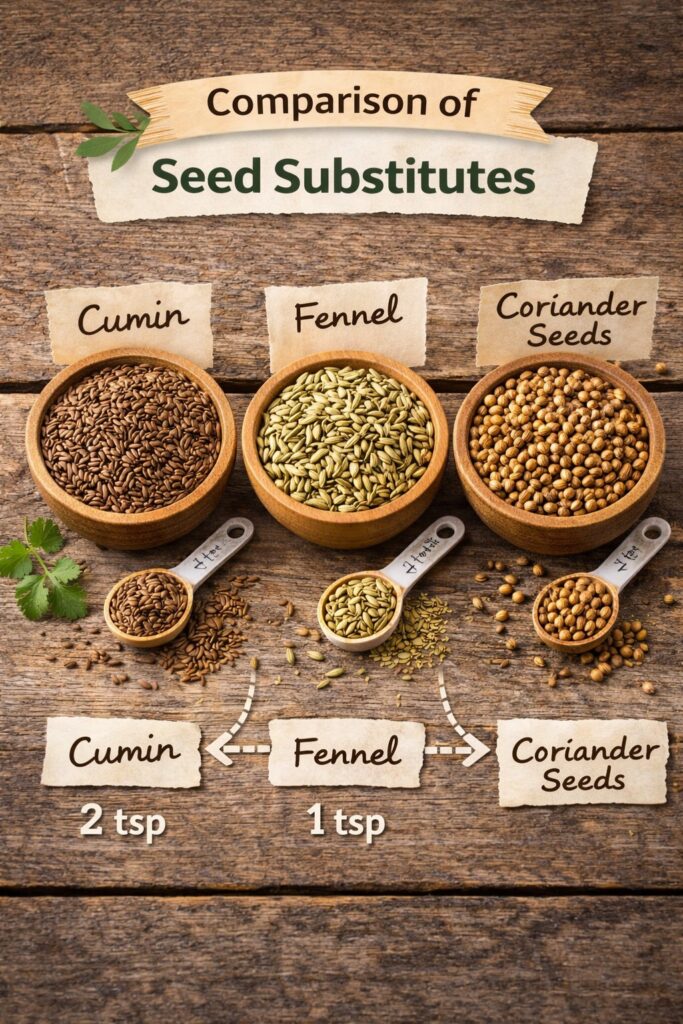
as a simple substitute for coriander seeds in many recipes.
How to use:
- Toast cumin and fennel seeds together in a dry pan (2–3 minutes)
- Grind or use whole depending on recipe
- Use 1:1 ratio—replace 1 tsp coriander seeds with 1 tsp blend
When to Use This Substitute
- Indian curries and spice blends
- Pickling recipes
- Roasted vegetable seasoning
- Middle Eastern meat rubs
Flavor Comparison
| Characteristic | Coriander Seeds | Cumin-Fennel Blend |
| Warmth | Medium | Medium-High |
| Citrus Notes | High | Medium |
| Sweetness | Medium | Medium-High |
| Earthiness | Medium | High |
Pro Tip: Add a pinch of orange zest to the blend for extra citrus brightness that mimics coriander’s signature note.
Fresh Coriander Substitute
In long-cooked dishes, cilantro’s delicate aldehyde compounds evaporate with heat anyway — so fresh leaves mainly contribute background warmth. Substitute ½ tsp ground coriander seeds (or cumin) per 1 tbsp fresh cilantro, added mid-cook, then finish with a squeeze of lime or lemon juice at serving time to restore brightness.
| Recipe Calls For | Use Instead | When to Add |
|---|---|---|
| 1 tbsp fresh cilantro (cooked dish) | ½ tsp ground coriander + 1 tsp lime juice | Spice mid-cook; lime at the end |
| 1 tbsp fresh cilantro (garnish) | Parsley + lime zest mix | Just before serving |
| 1 tsp dried cilantro flakes | Skip entirely — flavor is gone | Use fresh or ground instead |
Substitute #2: Parsley + Lime Zest Hack
Fresh coriander leaves (cilantro) have a distinctive bright, citrusy flavor that’s tricky to replicate. But when you’re in a pinch, this parsley-lime combination comes surprisingly close.
The Simple Formula
| Ingredient | Amount | Purpose |
| Flat-leaf Parsley | 1 cup chopped | Provides fresh herbal base (milder than cilantro) |
| Lime Zest | 1 lime | Adds citrus brightness missing from parsley |
| Lemon Juice | 1 tsp | Enhances citrus notes without overpowering |
How to use:
- Finely chop parsley (stems removed)
- Zest one lime directly over parsley
- Add lemon juice and toss gently
Use 1:1 ratio—replace 1 cup fresh coriander with 1 cup parsley-lime mix
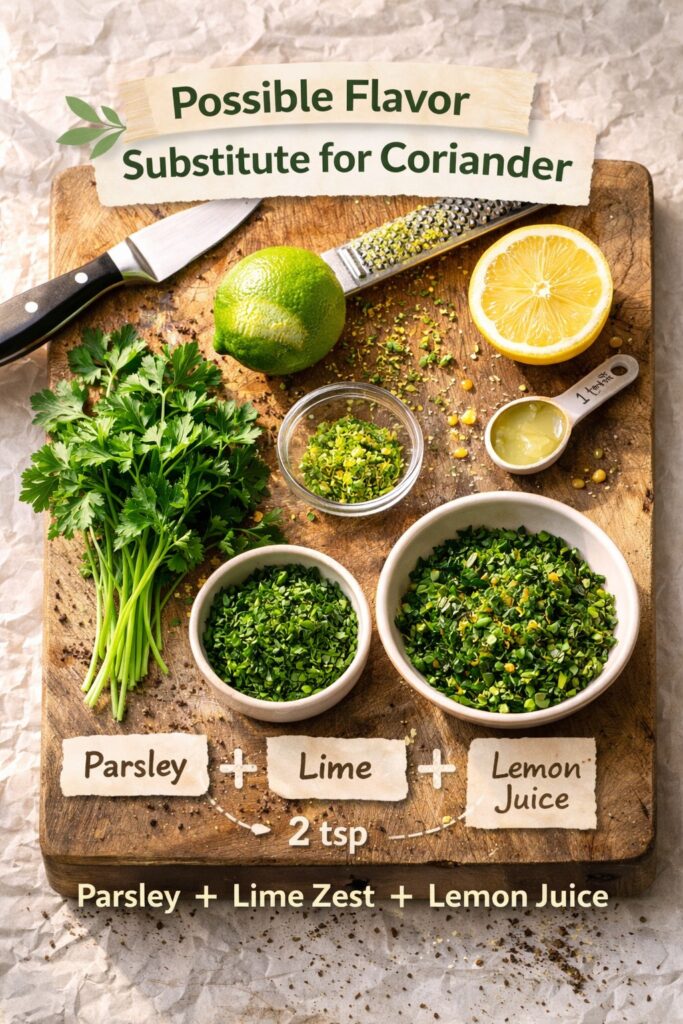
fresh substitute for coriander leaves in many recipes.
When to Use This Substitute
- Fresh salsas and pico de gallo
- Garnishing soups and stews
- Green chutney base
- Salad dressings and marinades
Important caveat
Parsley alone is NOT enough. Without lime zest, you’ll miss coriander’s signature citrus punch. The zest is non-negotiable for authentic flavor.
Alternative Leaf Substitutes
| Substitute | Best For | Flavor Difference |
|---|---|---|
| Mint Leaves | Middle Eastern dishes, yogurt sauces | Sweeter, cooler flavor |
| Basil | Thai-inspired dishes, pesto variations | Anise-like, sweeter profile |
| Chervil | French cuisine, delicate sauces | Mild anise, very subtle |
Ground Coriander Substitute
Substitute #3: Ground Cumin + Caraway
Ground coriander loses some of its bright citrus notes during grinding, leaving a warm, earthy flavor perfect for spice blends and dry rubs. This ground spice blend replicates that profile beautifully.
The Blend Recipe
| Spice | Ratio | Flavor Contribution |
|---|---|---|
| Ground Cumin | 2 parts | Earthy warmth, depth |
| Ground Fennel | 1/2 part | Extra sweetness, licorice notes |
| Ground Caraway | 1/4 part(optional) | Sweet, citrusy undertones |
How to use:
- Mix spices thoroughly in small bowl.
- Store in airtight container (lasts 3 months)
- Use 1:1 ratio—replace 1 tsp ground coriander with 1 tsp (2:1 cumin: fennel blend)
“If fennel is unavailable, a tiny pinch (¼ tsp per tbsp blend) of caraway may be added—but expect a sharper, more pungent flavor that lacks coriander’s citrus warmth. For authentic results, cumin + fennel (2:1) remains the only recommended blend.”
When to Use This Substitute
- Garam masala and curry powder blends
- Dry rubs for meats
- Baking spice mixes (for savory breads)
- Marinade bases
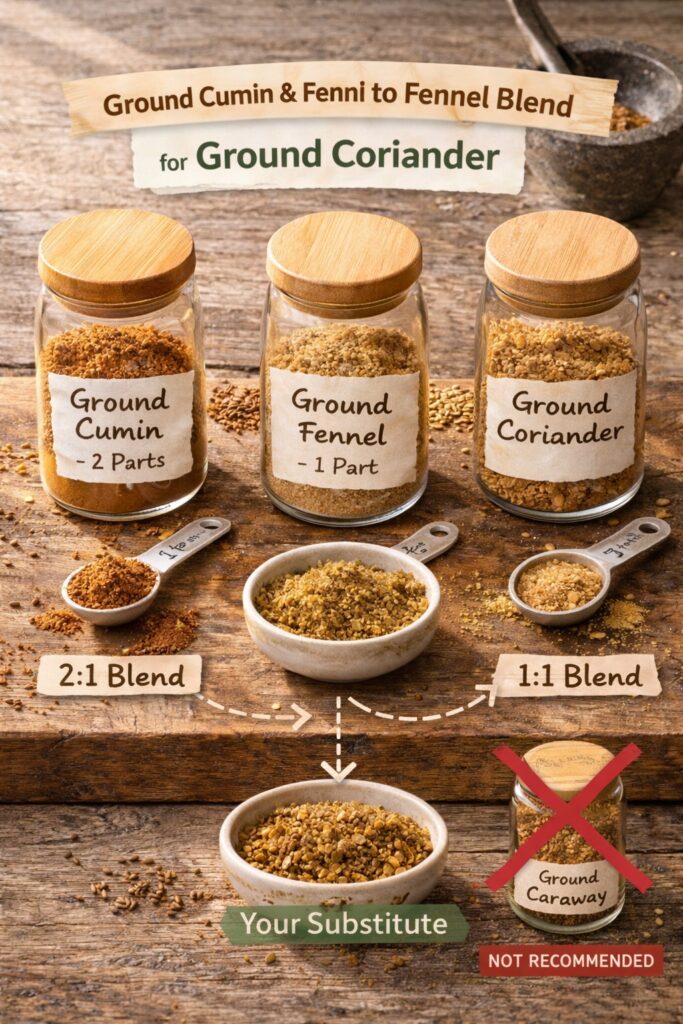
Pre-Made Spice Blend Hack
Don’t have individual ground spices? Use these pre-made blends as coriander substitutes:
| Pre-Made Blend | How to Use | Best For |
|---|---|---|
| Curry Powder | Use ¾ amount of coriander called for | Curries, stews, rice dishes |
| Garam Masala | Use ½ amount (stronger flavor) | Indian dishes, spice rubs |
| Chinese Five Spice | Use ⅓ amount (very potent) | Asian-inspired dishes |
Dried Coriander Substitute
Substitute #4: Dill Seeds (For Pickling & Brining)
Dill seeds offer a surprising coriander substitute option, especially in pickling recipes and brines where coriander’s citrus notes complement vinegar beautifully.
Why Dill Seeds Work
| Characteristic | Coriander Seeds | Dill Seeds |
|---|---|---|
| Citrus Notes | High | Medium |
| Warmth | Medium | Low |
| Aromatic Quality | High | High |
| Pickling Suitability | Excellent | Excellent |
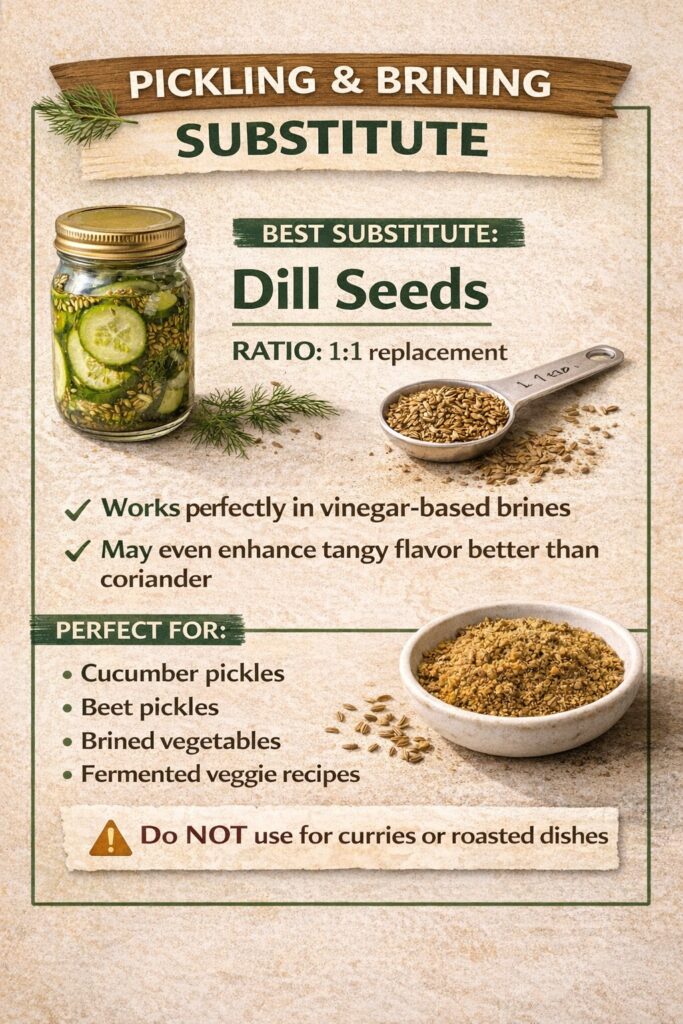
and brining recipes, especially for cucumber and beet pickles.
How to use:
- Replace coriander seeds 1:1 in pickling spice mixes
- Best for: cucumber pickles, beet pickles, brined vegetables
- Do NOT use for curries or roasted dishes (flavor profile too different)
Dill Seed Advantage
Dill seeds actually enhance the tangy flavor of pickled foods better than coriander in some cases, making this substitute a potential upgrade rather than compromise.
Substitute #5: Mexican Oregano (For Latin American Dishes)
When cooking Mexican, Tex-Mex, or Latin American cuisine, Mexican oregano (not Mediterranean oregano) provides a coriander-like citrus note that works beautifully.
Mexican Oregano vs Mediterranean Oregano
| Type | Flavor Profile | Coriander Similarity |
|---|---|---|
| Mexican Oregano | Citrusy, slightly floral, mild | High (good substitute) |
| Mediterranean Oregano | Pungent, earthy, strong | Low (poor substitute) |
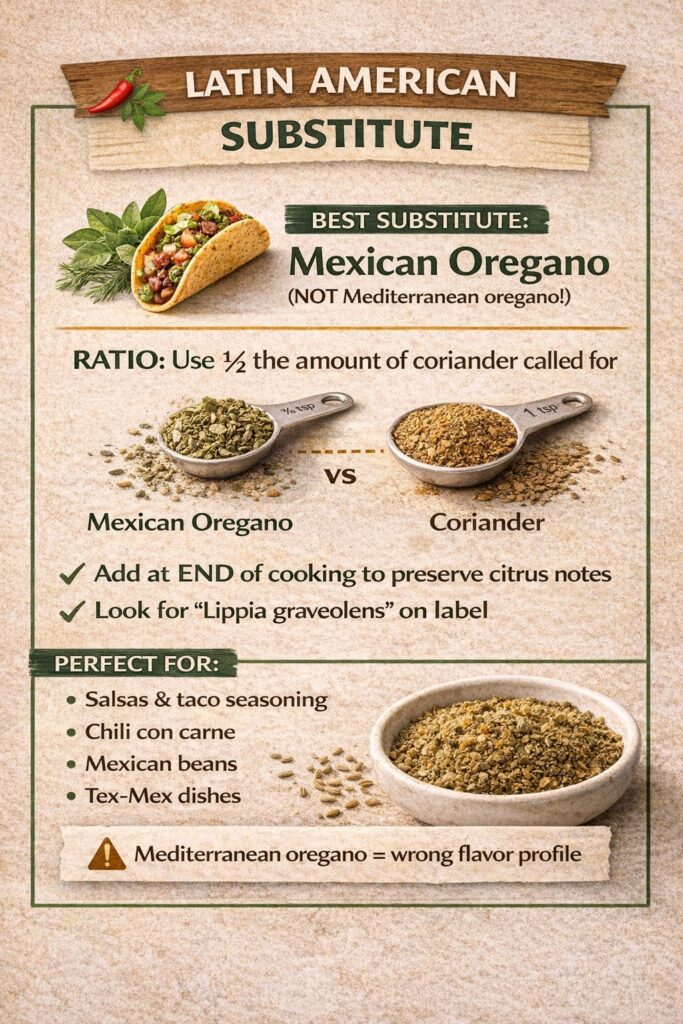
How to use:
- Use ½ the amount of coriander called for (Mexican oregano is stronger)
- Best for: salsas, taco seasoning, chili, beans
- Add at the end of cooking to preserve citrus notes.
Where to Find Mexican Oregano
Look for “oregano mexicano” or “Lippia graveolens” on the label. Common brands include:
- The Mexican
- The favorite
- Spice Islands Mexican Oregano
When NOT to Substitute Coriander
While these coriander seeds substitute options work in many situations, some dishes demand authentic coriander for proper flavor. Avoid
substituting when:
- Authentic Indian Curries
Coriander seeds are fundamental to garam masala and most Indian curry bases. Substitutes will alter the dish’s character significantly. - Fresh Cilantro Chutney
The bright, pungent flavor of fresh coriander leaves is irreplaceable in traditional chutneys. Parsley-lime mix won’t achieve the same depth. - Middle Eastern Falafel
Coriander seeds provide essential citrus notes in falafel spice blends. Substitutes result in flat, one-dimensional flavor. - Vietnamese Pho Broth
Coriander seeds contribute complex aromatic notes to pho broth that substitutes can’t replicate. - When Coriander is the Star
If your recipe features coriander as the primary flavor (e.g., coriander-crusted salmon, coriander tea), don’t substitute—reschedule cooking or make a store run.
Quick-Reference Substitution Chart
Download this chart for your kitchen or phone—never panic about missing coriander again!
| Recipe Needs | Best Substitute | Ratio | When to Use |
|---|---|---|---|
| Whole Coriander Seeds | Cumin + Fennel Blend | 1:1 | Curries, pickling, roasting |
| Fresh Coriander Leaves | Parsley + Lime Zest | 1:1 | Salsas, garnishes, chutneys |
| Ground Coriander | Ground Cumin + Caraway | 1:1 | Spice blends, dry rubs |
| Pickling Spice | Dill Seeds | 1:1 | Pickles, brines, fermented veg |
| Latin American Dishes | Mexican Oregano | ½ amount | Salsas, tacos, chili |
Storage Tips for Your Coriander Substitutes
Once you’ve created your coriander substitute blends, proper storage ensures they stay fresh and potent:
Whole Seed Blends
- Store in airtight glass jar
- Keep in cool, dark place (not above stove)
- Shelf life: 6–12 months
Ground Spice Blends
- Store in airtight container
- Refrigerate for maximum freshness
- Shelf life: 3–4 months
Fresh Herb Mixes
- Wrap in damp paper towel
- Store in sealed container in fridge
- Shelf life: 3–5 days
Pro Storage Hack: Freeze fresh parsley-lime mix in ice cube trays with olive oil for instant coriander substitute cubes ready in seconds.
In conclusion, whether you’re looking for a substitute for coriander leaves or seeds, there are plenty of options to choose from. Experiment with these alternatives to discover new flavor combinations and take your culinary creations to the next level!
FAQs:
Can I use cumin instead of coriander seeds?
Yes, but cumin alone lacks coriander’s citrus notes. For best results, blend 2 parts cumin with 1 part fennel seeds to mimic coriander’s warm, citrusy flavor profile.
How long does coriander powder last?
There’s a fascinating scientific reason why some people dislike cilantro! A genetic variation affects taste perception, making cilantro taste soapy to some individuals.
Here are some alternatives to consider if you’re not a cilantro fan:
Italian Parsley: Offers a similar grassy character that can work in many dishes.
Tarragon: Adds a subtle licorice-like flavor, perfect for certain savory dishes.
Lime Zest: Provides a fresh, citrusy note that can complement coriander’s role in some recipes.
Don’t be discouraged! Experiment with these substitutes to find what works best for your taste buds.
Can I use fresh cilantro leaves instead of coriander powder?
Absolutely! Fresh cilantro leaves and its powder come from the same plant, but they offer distinct flavor profiles. It boasts a warmer, nuttier aroma, while fresh leaves have a brighter, citrusy taste.
Here’s a general substitution guide:
1 teaspoon ground powder = 1 tablespoon chopped fresh leaves
But the substitution not always be perfect depending on the dish. For garnishes or dishes where a fresh, citrusy note is desired, fresh leaves are the better choice. Conversely, for curries and stews where a deeper, warmer flavor is preferred, coriander powder shines.
What can I use instead of fresh coriander leaves?
Combine flat-leaf parsley with lime zest and a squeeze of lemon juice. The parsley provides herbal freshness while lime adds the citrus brightness missing from coriander substitutes.
Is ground cumin the same as ground coriander?
No. Ground cumin is earthier and more pungent, while ground coriander is warmer with citrus notes. For substitution, blend ground cumin with ground caraway (2:1 ratio) for closer flavor match.
Can I use parsley instead of cilantro?
Parsley alone lacks cilantro’s distinctive flavor. For effective substitution, mix parsley with lime zest and lemon juice to approximate cilantro’s bright, citrusy profile in salsas and garnishes.
References:
- The Best Coriander Substitutes – The spruce eats