Last Updated on 6 May 2026 by Ahsan Khan
Discover how to keep fresh cilantro crisp and flavorful for up to 4 weeks using science-backed fridge and freezer methods. Stop wasting herbs—start saving money today!
Have you ever opened your fridge to find a sad, slimy bunch of cilantros? You’re not alone. Fresh cilantro is incredibly versatile—from zesty salsas to aromatic curries—but its delicate leaves spoil frustratingly fast. One day it’s vibrant and fragrant, the next it’s a wilted mess heading straight for the compost.
How to keep fresh Cilantro
I’ve been there too many times. As someone who grows herbs and studies their traditional uses, I got tired of watching good cilantro go bad. So I dug into the science: What actually keeps cilantro fresh? I tested every method I could find—the water jar trick, the paper towel wrap, even freezing—and cross-referenced my results with postharvest research from agricultural universities.
What I discovered surprised me. Some “tricks” barely add a day or two. But the right method? It can keep your cilantro crisp and flavorful for three to four weeks.
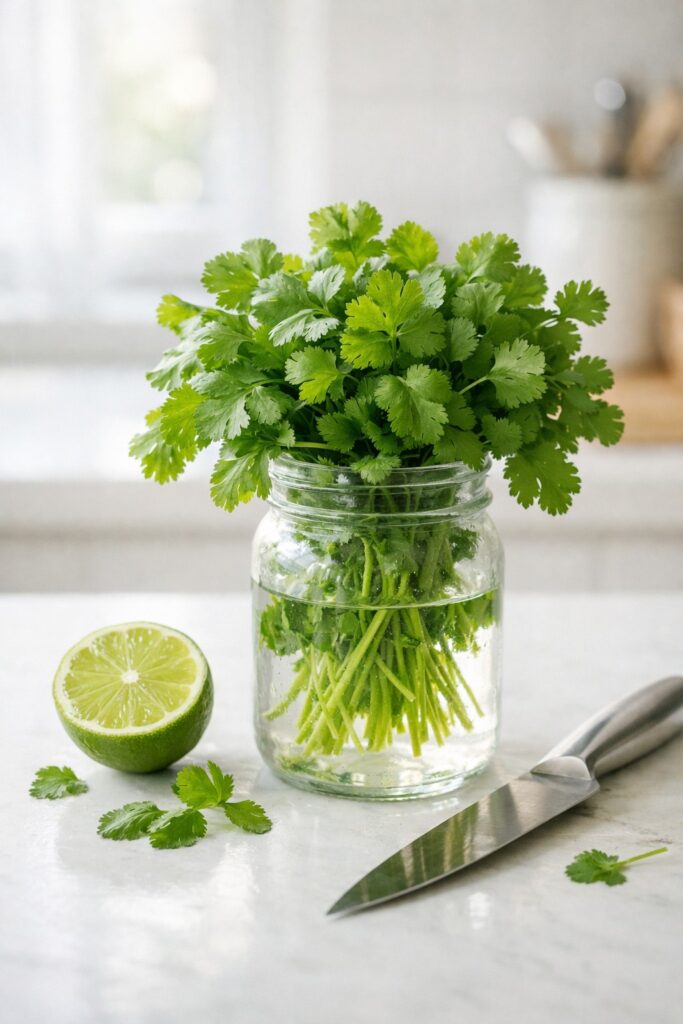
Below, I’m sharing the three storage methods that actually work—backed by both kitchen testing and plant science. Whether your meal prepping for the week or trying to stretch a farmers’ market haul, you’ll find a solution that fits your routine.
Quick Answer: The First Method to keep cilantro fresh for longest? Snip the bottom inch off the stems, stand the bunch upright in a drinking glass with cool water halfway up the stems, drape a produce bag loosely over the leaves (don’t seal it tight), and tuck it into your fridge door. This technique maintains crispness for 3–4 weeks.
Why Cilantro Spoils So Fast (And How to Outsmart It)
Cilantro (Coriandrum sativum) is a “finishing herb”—its delicate, aromatic leaves lose moisture and degrade quickly after harvest. Think of it like fresh basil or parsley: beautiful but fragile.
The three main enemies of fresh cilantro:
- Too much moisture → slime and mold
- Too little humidity → wilted, dry leaves
- Warm temperatures or ethylene gas (from apples, bananas, tomatoes) → faster decay
Research from the UC Davis Postharvest Technology Center shows cilantro stored at “0°C “(32°F)—significantly longer than at typical fridge temps (5°C/41°F) [Herbs (Fresh Culinary) | Postharvest Research and Extension Center]
The good news? Once you understand these triggers, here you will know how to best store cilantro in fridge and keeping cilantro fresh becomes simple.
There are three best ways to preserve fresh cilantro:
1. Water Jar Method Cilantro Storage
Perfect if you use cilantro raw—in tacos, salads, soups, or as a finishing touch.
Why it works:
This method treats cilantro like fresh flowers in a vase. Submerging the stems in water keeps them hydrated, while a loose plastic cover creates just enough humidity without trapping moisture that causes rot.
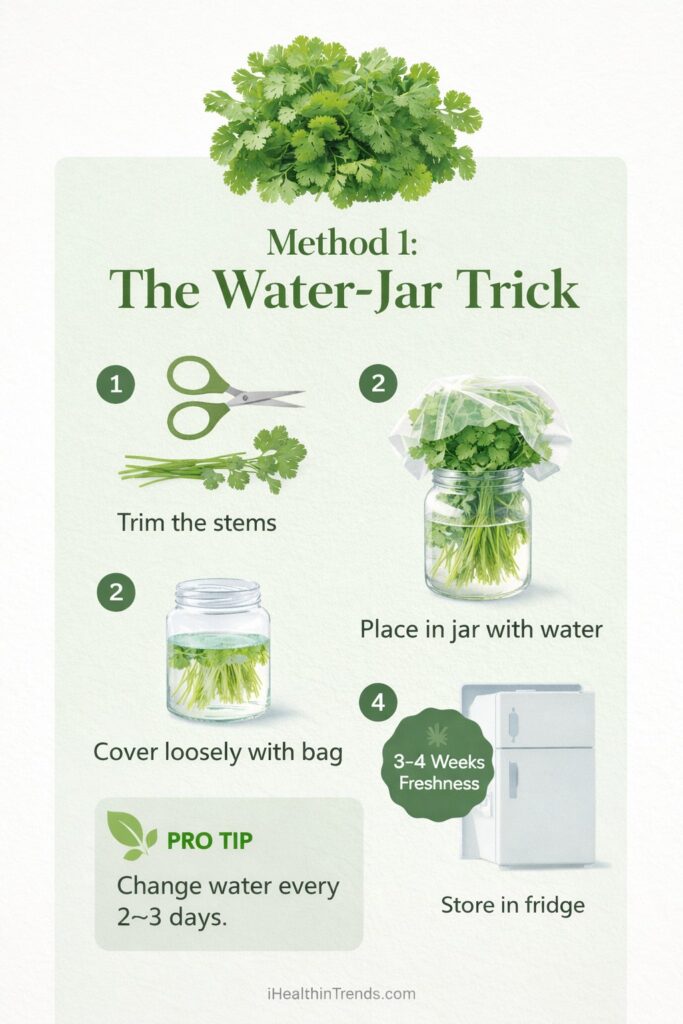
Step-by-Step how to store cilantro in the fridge:
- Trim the stems: Cut ½–1 inch off the bottom at a slight angle (like cutting flowers) to help water absorption.
- Remove lower leaves: Gently remove any leaves that would be submerged to prevent bacterial growth.”
- Place in a jar: Use a glass or mason jar with 1–2 inches of cool water.
- Cover loosely: Drape a produce bag or plastic sandwich bag over the leaves—don’t seal tightly. This method will allow some airflow inside the bag while retaining humidity.
- Refrigerate: Store in the main compartment (not the door) where temperatures stay most consistent.
- Refresh water: Change the water every 2–3 days to keep it clear.
- Expected freshness: 3–4 weeks with vibrant color and crisp texture.
Pro Tip: If your cilantro came misted from the store, gently pat leaves dry with a paper towel before storing. Excess surface moisture accelerates decay.
2. Paper Towel Container Cilantro Storage Method
Ideal if you chop cilantro ahead for chutneys, marinades, grain bowls, or weekly cooking.
Why it works:
Paper towels absorb excess moisture while the container maintains balanced humidity. It’s simple, space-efficient, and works great for pre-portioned herbs.
Step-by-Step how to preserve cilantro in fridge:
- Dry thoroughly: If cilantro is damp, spread on a clean towel and air-dry 10–15 minutes. Gently pat leaves with a dry paper towel.
- Prep container: Line a food-safe container with a dry paper towel.
- Layer loosely: Place cilantro in a single, loose layer. Avoid packing tightly—airflow prevents condensation.
- Top with towel: Cover with another dry paper towel before sealing the lid.
- Store in crisper: Place in your refrigerator’s crisper drawer for optimal humidity.
- Expected freshness: 2–3 weeks; up to 4 weeks if leaves were very dry initially.
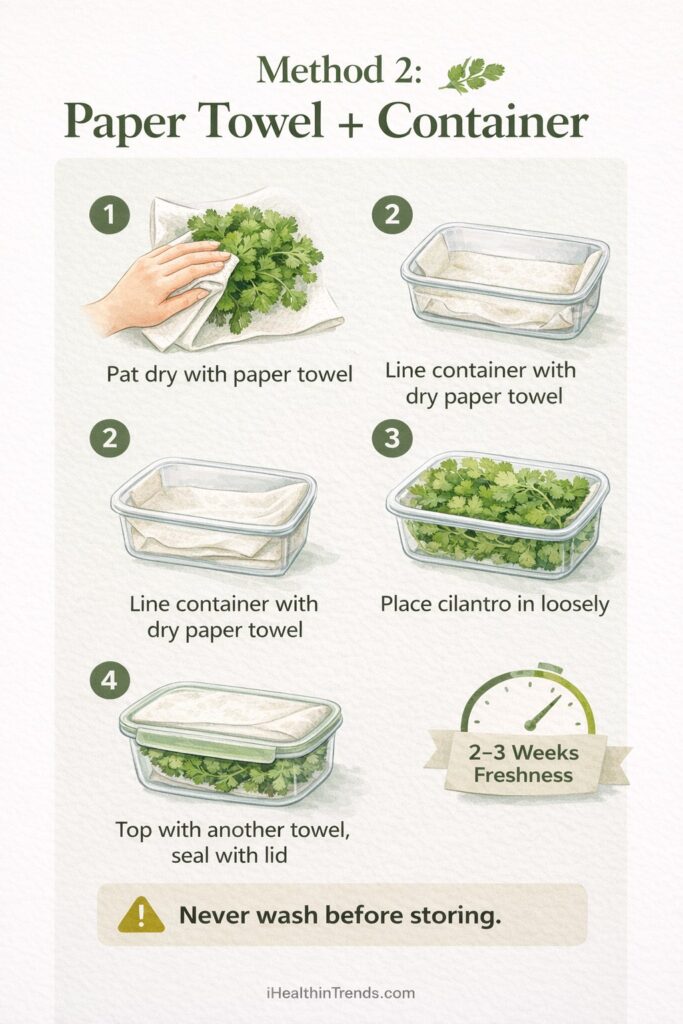
Critical: Never wash cilantro before storing. Only rinse immediately before use to avoid introducing moisture that triggers spoilage.
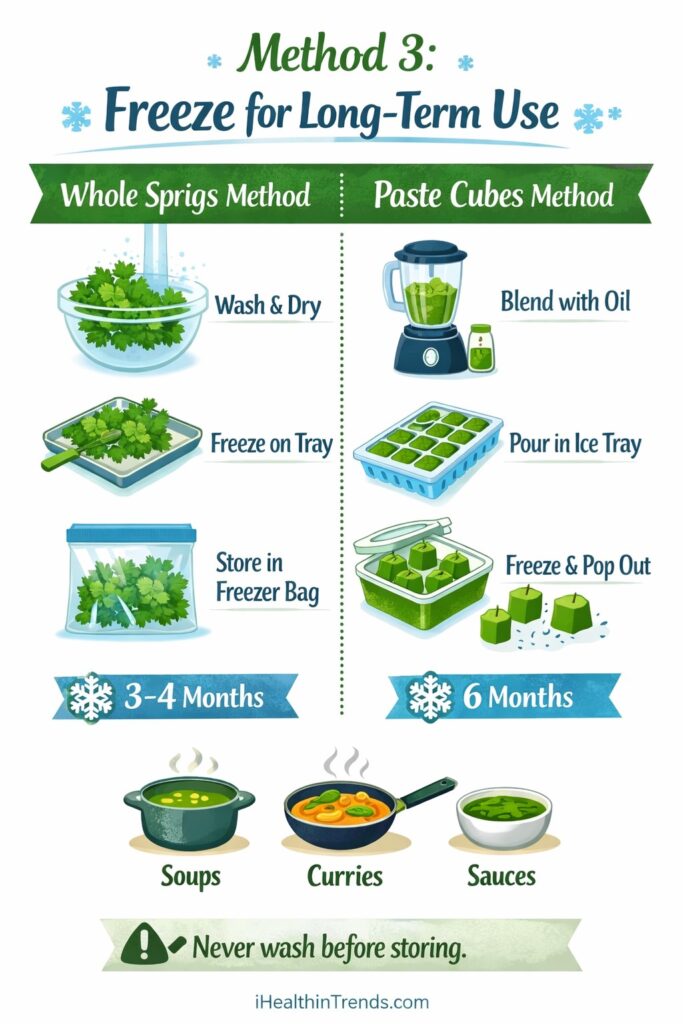
3. Freezing Cilantro Method Sprigs Paste Cubes
Use this when you want cilantro for cooked dishes like soups, curries, or sauces—not fresh garnishes.
Why freezing works:
Cilantro doesn’t dry well—its delicate leaves lose texture when dehydrated. But freezing with protection locks in flavor for months. A little oil or liquid acts as a shield against freezer burn.
Two Simple Freezer Methods:
A. Whole Sprigs (Quick & Simple)
- Wash and thoroughly dry cilantro.
- Spread sprigs on a parchment-lined baking sheet; freeze 1–2 hours until solid.
- Transfer to a freezer bag, squeeze out air, label, and return to freezer.
- Use within 3–4 months for best flavor.
B. Cilantro Paste Cubes (Most Versatile)
- Blend cleaned cilantro with a splash of water, lime juice, or olive oil until smooth.
- Put it into ice cube trays and freeze until it becomes solid.
- Pop cubes into a labeled freezer bag.
- Use within 6 months. Perfect for: Adding directly to soups, stews, or marinades—no thawing needed!
Bonus Idea: Make cilantro chutney cubes (cilantro + green chili + lime + ginger) for instant flavor boosts.
Common Mistakes That Ruin Cilantro (Avoid These!)
| Mistake | Why It Fails | Simple Fix |
|---|---|---|
| Storing in sealed plastic bag alone | Traps moisture → slime & mold | Use paper towel buffer or water-jar method |
| Washing before storage | Introduces decay-triggering moisture | Wash only right before use |
| Keeping near ethylene producers | Apples, bananas, tomatoes speed ripening | Store cilantro away from fruit drawers |
| Packing too tightly | Restricts airflow → condensation | Layer loosely with paper towels |
| Freezing without oil/water barrier | Causes freezer burn & flavor loss | Blend with liquid or toss in oil before freezing |
Bonus Tips to Extend Freshness
- Buy smart: Choose cilantro with bright green, perky leaves and firm stems. Avoid yellowing or slimy bunches.
- Revive wilted cilantro: Trim stems and place in ice water for 15–20 minutes. Often restores crispness!
- Know your herbs: If you’re exploring the difference between cilantro and coriander seeds, learn more about what is coriander on our site.
- Substitution help: Running low? Discover coriander seed substitutes that work in a pinch.
The Science Behind the Success
Our recommendations align with postharvest research:
- UC Davis confirms culinary herbs like cilantro achieve “3-week shelf life at 0°C “(32°F) [Postharvest Research and Extension Center].
- Studies show proper humidity control (95–100%) is critical for extending freshness of minimally processed herbs.
- High humidity + low temperature is the gold standard for cilantro preservation.
We don’t just share tips—we ground advice in agricultural science and real-world testing. For broader food safety guidelines, the U.S. The FDA offers excellent resources on fresh produce handling [Microbiological Surveillance Sampling: FY17-21 Fresh Herbs (Cilantro, Basil & Parsley) | FDA].
Quick Reference: Which Method Should YOU Use?
| Your Goal | Best Method | Expected Freshness |
|---|---|---|
| Fresh garnish for tacos/salads | Water-jar + fridge | 3–4 weeks |
| Pre-chopped for meal prep | Paper towel + container | 2–3 weeks |
| Cooking in soups/curries | Frozen cubes or sprigs | 3–6 months |
| Maximum convenience | Pre-washed + paper towel method | 10–14 days |
Frequently Asked Questions
Can I store cilantro at room temperature?
Only short-term (2–3 days). Room temperature accelerates moisture loss and decay. For best results, always refrigerate.
How do I know if cilantro has gone bad?
Discard if leaves are slimy, darkened, or emit an off odor. Slight wilting can often be revived with an ice-water bath
Does freezing change cilantro’s flavor?
Minimally when protected with oil or liquid. Frozen cilantro works best in cooked dishes where texture is less critical than flavor.
Can I use these methods for other herbs?
Yes! Parsley, dill, and mint respond well to the water-jar method. Basil prefers room temperature storage.
What is the best way to preserve fresh cilantro?
If you use cilantro regularly, the jar + plastic bag method is the most reliable way to keep it fresh, vibrant, and ready to use for weeks. Freezing is better if you want to preserve flavor for months but don’t mind losing the fresh texture.
Final Thought: Stop Wasting, Start Saving
Learning how to best store cilantro isn’t just about reducing food waste—it’s about honoring the vibrant, health-promoting properties of this powerful herb. Rich in antioxidants and traditional wellness benefits, fresh cilantro deserves proper care.
By applying these kitchen-tested, science-backed methods, you’ll keep cilantro crisp, flavorful, and ready to elevate your meals—while saving money and reducing waste. That’s smart, sustainable cooking.
Your Turn: Tried one of these methods? Share your results or ask a question below! We read every comment and love helping our community cook with confidence.
Disclaimer: This content is for informational purposes only and is not medical advice. Consult a healthcare professional for personalized health guidance.
Reference: