There’s a reason cherry tomatoes keep showing up in your farmers’ market tote and Instagram food reels—they’re the Swiss Army knife of the produce aisle. Sweet enough to pop straight off the vine, sturdy enough to roast until caramelized, and packed with more lycopene per bite than their beefsteak cousins, these little gems punch way above their weight.
But what exactly makes them special beyond their Instagram-friendly looks? And how do you pick the best ones, store them without turning them into sad, wrinkly orbs, and actually use up that pint container before it’s too late?
Let’s dig into everything you need to know about cherry tomatoes—no gardening degree required.
What Exactly Are Cherry Tomatoes?
Cherry tomatoes (Solanum lycopersicum var. cerasiforme) are small, round tomatoes typically 1–2 inches in diameter. They grow in abundant clusters on indeterminate vines (meaning they keep producing fruit all season long—great news for home gardeners).
Like their nightshade cousin the tomatillos, cherry tomatoes thrive in warm climates and add bright acidity to savory dishes—but while tomatillos stay green and tart, cherry tomatoes ripen to sweet red bursts.
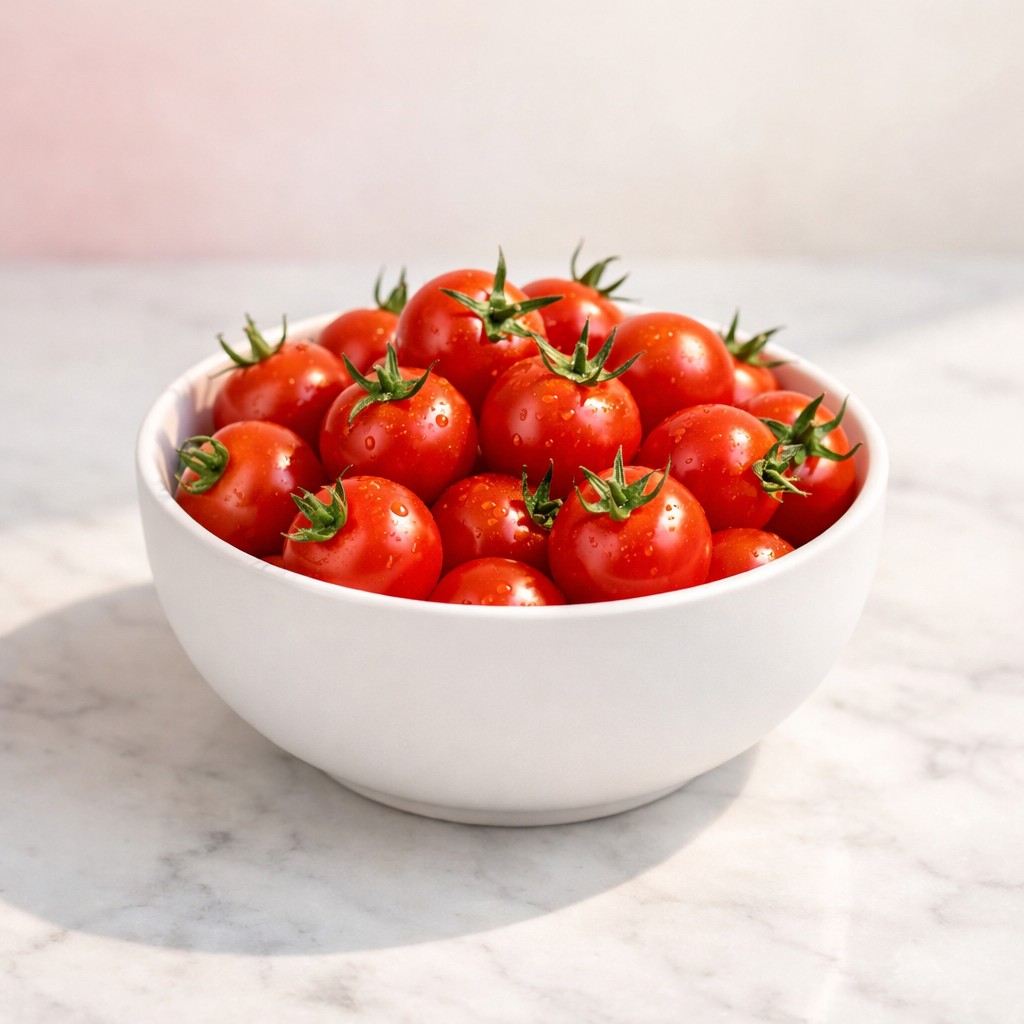
captured in soft natural light for a clean Instagram-inspired aesthetic.
Fun US fact: While tomatoes originated in South America, the modern cherry tomato variety we love today was popularized in the 1970s by Israeli breeders. They hit mainstream American grocery stores in the 1990s and haven’t left our salads since.
How they differ from regular tomatoes:
- Size: About the size of—you guessed it—a cherry
- Flavor: Higher sugar-to-acid ratio = naturally sweeter
- Skin: Thinner and more delicate (handle with care!)
- Seeds: Fewer seeds = less watery when cooked
Cherry Tomatoes vs. Grape Tomatoes: What’s the Real Difference?
You’ve seen both pints side-by-side at Trader Joe’s. Here’s how to choose:
| Feature | Cherry Tomatoes | Grape Tomatoes |
|---|---|---|
| Shape | Round | Oblong (like tiny grapes) |
| Skin | Thin, delicate | Thicker, more durable |
| Flavor | Thicker, more durable | Tangier, less watery |
| Best For | Roasting, salads, eating raw | Lunchboxes, snacking on-the-go |
| Shelf Life | 3–5 days at room temp | 7–10 days (holds up better) |
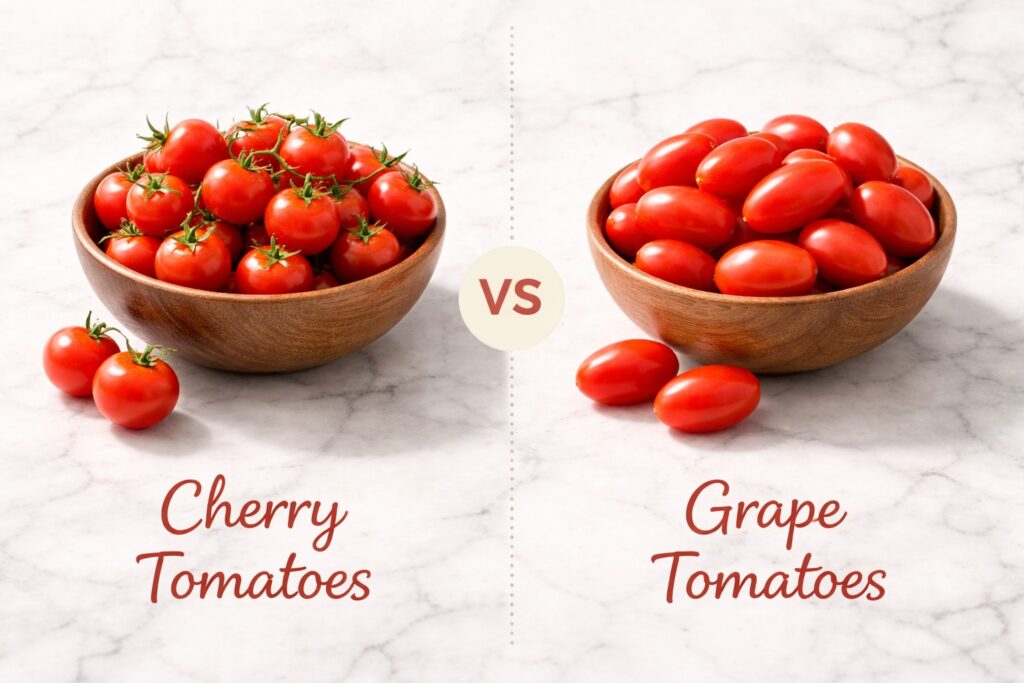
captured in soft natural light for a clean Instagram-inspired aesthetic.
Here’s how to choose without overthinking it: Reach for cherry tomatoes when you want that juicy pop of sweetness—perfect for tossing into summer salads or blistering in a hot skillet. Opt for grape tomatoes when you’re packing lunches or prepping snacks ahead; Their tougher skin holds up better in containers and won’t leak juice onto your other ingredients.
Cherry Tomatoes Calories
Don’t let their size fool you—cherry tomatoes deliver serious nutrition in a bite-sized package. A single cup (about 149 grams or a generous handful) of raw red cherry tomatoes serves up:
| Nutrient | Amount | Why It Matters |
|---|---|---|
| Calories | 27 | Light but satisfying |
| Vitamin C | 23mg (25% DV) | Immunity + glowing skin |
| Vitamin A | 1,025 IU (20% DV) | Eye health |
| Lycopene | ~3,000 mcg | Powerful antioxidant linked to heart health* |
| Potassium | 350mg | Blood pressure support |
| Fiber | 2g | Happy gut |
Lycopene absorption increases 4x when tomatoes are cooked with healthy fat (like olive oil). Roasting = smart move.
Color matters too:
- Red: Highest lycopene
- Yellow/Orange: More beta-carotene
- Purple/Black: Anthocyanins (anti-inflammatory compounds)
5 Simple Ways to Use Up That Pint Container (Before They Go Bad)
You bought them with good intentions. Now they’re judging you from the fridge. Rescue them with these no-fuss ideas:
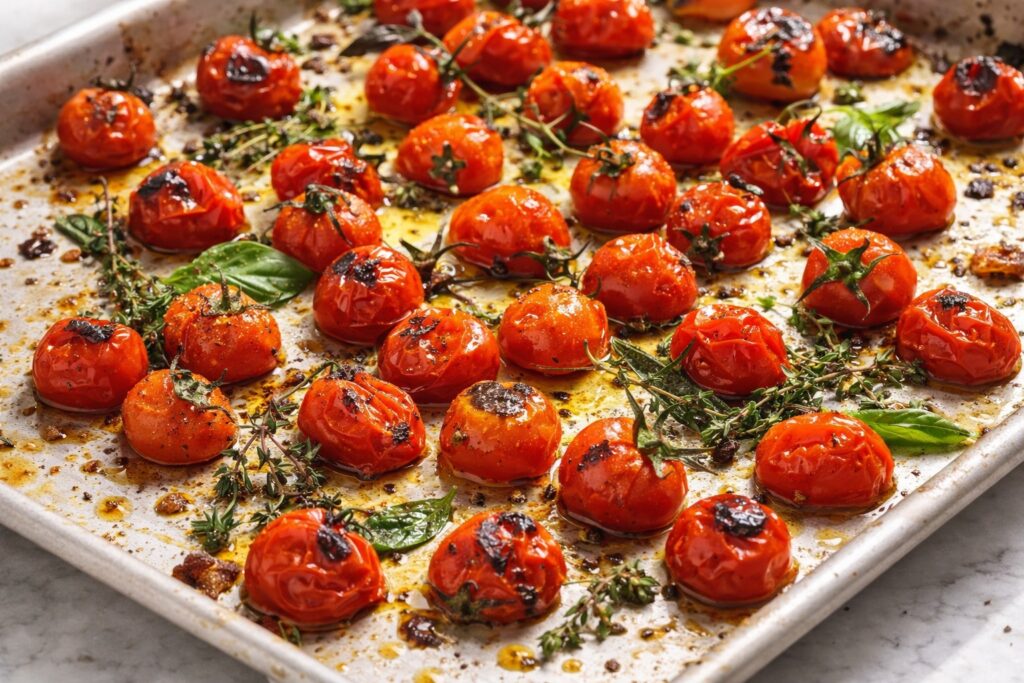
- The 10-Minute Roast
Toss cherry tomatoes with olive oil, salt, and pepper. Spread on a sheet pan and roast at 400°F for 15–20 minutes until blistered and caramelized at the edges. Serve over pasta, fold into scrambled eggs, or scoop onto toast with ricotta.- Pro upgrade: For a complete plant-powered meal, toss the roasted tomatoes with garlic and white beans—you’ll get lycopene plus 15g of protein in under 15 minutes.
- Freezer-Friendly Hack
Yes—you can freeze cherry tomatoes whole (no blanching needed). Spread on a tray, freeze solid, then transfer to a bag. Use within 6 months in soups, stews, or sauces. (Full guide coming soon!) - 5-Minute Pan Sauce
Sauté with garlic and shallots until they burst. Deglaze with balsamic vinegar. Spoon over grilled chicken or fish. - Breakfast Upgrade
Halve and scatter over avocado toast with everything bagel seasoning. Or fold into scrambled eggs at the last minute. - Snack Attack
Thread onto toothpicks with fresh mozzarella balls and basil leaves. Drizzle with balsamic glaze. Instant appetizer.
Hungry for recipes? We’ve got a dead-simple roasted cherry tomatoes recipe that takes 20 minutes start to finish.
How to store cherry tomatoes
At the store or market:
- Look for: Firm, taut skin; bright uniform color; still attached to green stems
- Avoid: Wrinkled skin, soft spots, or leaking liquid (sign of overripeness)
Storage rules that actually work:
- Room temperature (counter): 3–5 days in a single layer, stem-side down, out of direct sunlight. Never refrigerate unless fully ripe—cold kills flavor and creates mealy texture.
- After cutting: Refrigerate in an airtight container for up to 2 days.
- Revive slightly soft tomatoes: Roast immediately—they’ll sweeten as they caramelize.
The Bottom Line
Cherry tomatoes aren’t just cute—they’re nutritional powerhouses that happen to be stupidly easy to use. Roast them, toss them raw into salads, freeze them for winter soups, or just pop them like candy while you’re prepping dinner. Their sweet burst of flavor and lycopene-rich profile make them one of the simplest upgrades to your everyday cooking.
And the best part? You don’t need a recipe to enjoy them. Just a pint container, five minutes, and zero guilt.
FAQ’s
Are cherry tomatoes good for you?
Absolutely—they’re nutritional powerhouses in bite-sized form. One cup delivers 25% of your daily vitamin C, heart-healthy lycopene, and only 27 calories. Like black grapes, they’re packed with antioxidants—but while black grapes bring anthocyanins (great for brain health), cherry tomatoes specialize in lycopene, which supports heart health and skin protection. Eat them raw or roasted for maximum benefits.
Can dogs eat cherry tomatoes?
Ripe cherry tomatoes in small amounts are generally safe for dogs. But—avoid stems, leaves, and unripe green tomatoes (they contain solanine, which is toxic to dogs). When in doubt, skip it or ask your vet.
Are cherry tomatoes determinate or indeterminate?
Most cherry tomato varieties are indeterminate, meaning they grow on vining plants that produce fruit continuously until frost. Great for season-long harvesting if you garden.
How many calories in cherry tomatoes?
About 27 calories per cup (roughly 15–20 tomatoes). They’re 95% water—naturally hydrating and low-calorie.
Disclaimer: The health and nutrition information in this article is for educational purposes only and based on publicly available research. I am a food and wellness writer—not a medical professional. Always consult your doctor or a registered dietitian before making significant changes to your diet, especially if you have underlying health conditions, allergies, or are pregnant/nursing. Individual results may vary.