Last Updated on 26 May 2026 by Ahsan Khan
What Does Spirulina Taste Like?
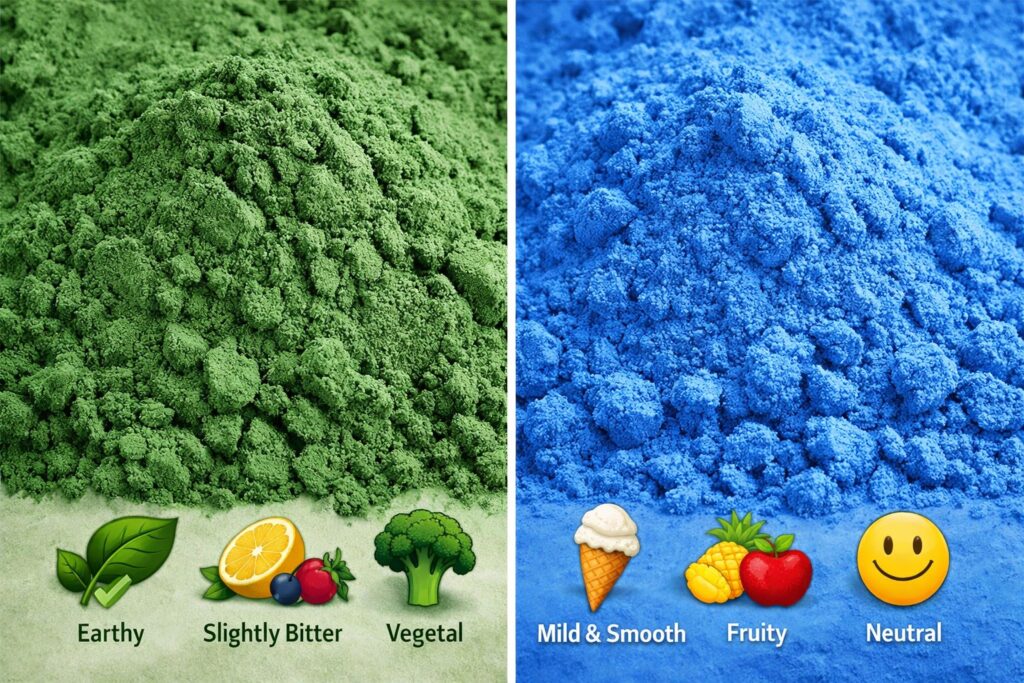
Green spirulina has a distinct earthy, seaweed-like flavor with slight fishy undertones that some describe as “oceanic” or “pond-like.” Blue spirulina, however, is virtually tasteless with only a very mild, subtle earthiness—making it far easier to incorporate into foods and drinks without altering their flavor profile.
The good news? There are simple tricks to mask green spirulina’s strong taste, and blue spirulina offers a flavor-neutral alternative with the same powerful health benefits.
Green vs. Blue Spirulina: Taste Comparison
| Feature | Green Spirulina | Blue Spirulina |
|---|---|---|
| Flavor Intensity | Strong, noticeable | Very mild, almost neutral |
| Taste Profile | Earthy, seaweed-like, slightly fishy | Subtle earthiness, barely detectable |
| Aftertaste | Lingering oceanic flavor | Clean, minimal aftertaste |
| Best For | Strong smoothies, savory dishes | Colorful drinks, desserts, delicate recipes |
| Price Point | $15-25 per lb | $30-50 per oz (more expensive) |
The Bottom Line: If you’re sensitive to strong flavors, blue spirulina is your best bet. But if you’re budget-conscious and don’t mind masking the taste, green spirulina offers incredible value.
Why Does Spirulina Taste This Way?
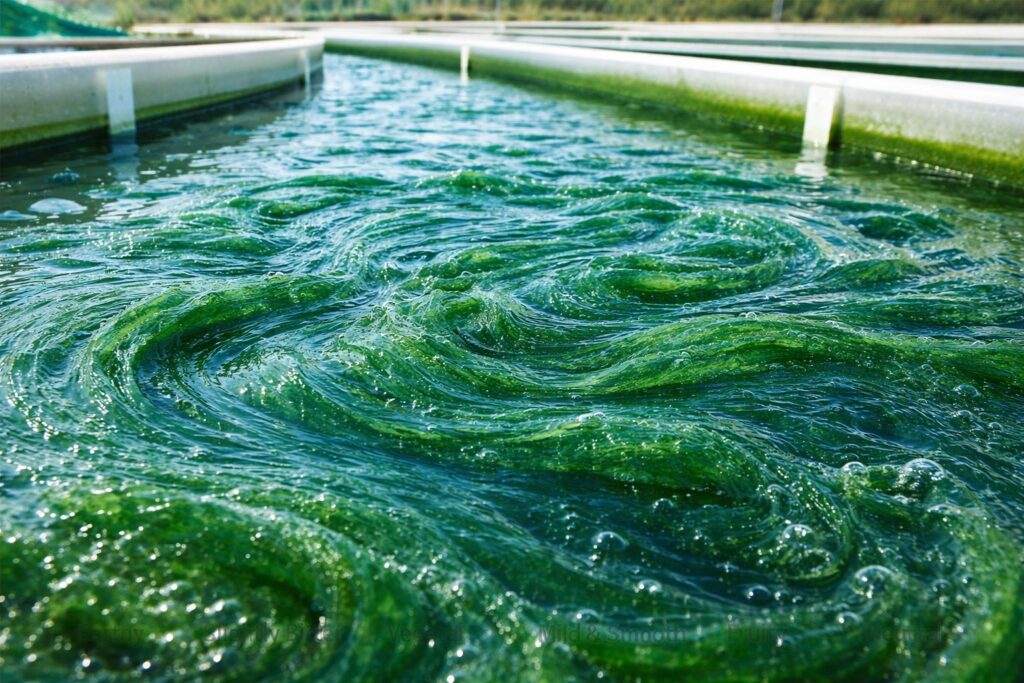
Spirulina’s distinctive taste comes from its natural composition:
The Science Behind the Flavor
- Chlorophyll Content (Green Spirulina): This green pigment gives plants their color and contributes to the grassy, earthy taste. Green spirulina is packed with chlorophyll—up to 1% of its dry weight.
- Phycocyanin (Blue Spirulina): This blue pigment is a powerful antioxidant but has minimal flavor impact. Blue spirulina is essentially purified phycocyanin extract with most taste compounds removed.
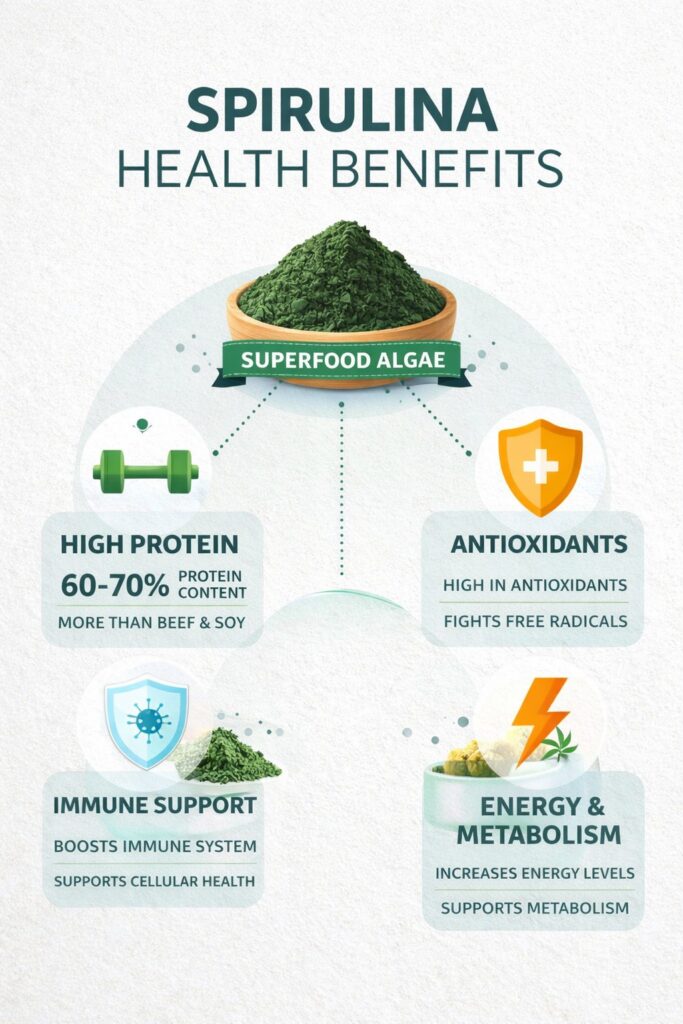
- Protein & Amino Acids: Spirulina is 60-70% protein, and certain amino acids can create umami or slightly bitter notes.
- Growing Conditions: Algae cultivated in controlled, clean environments taste milder than wild-harvested varieties, which can have stronger “pond scum” flavors.
Pro Tip: The quality of your spirulina directly impacts its taste. Premium brands use careful harvesting and low-temperature drying to preserve nutrients while minimizing strong flavors.
Green Spirulina Taste: What to Expect
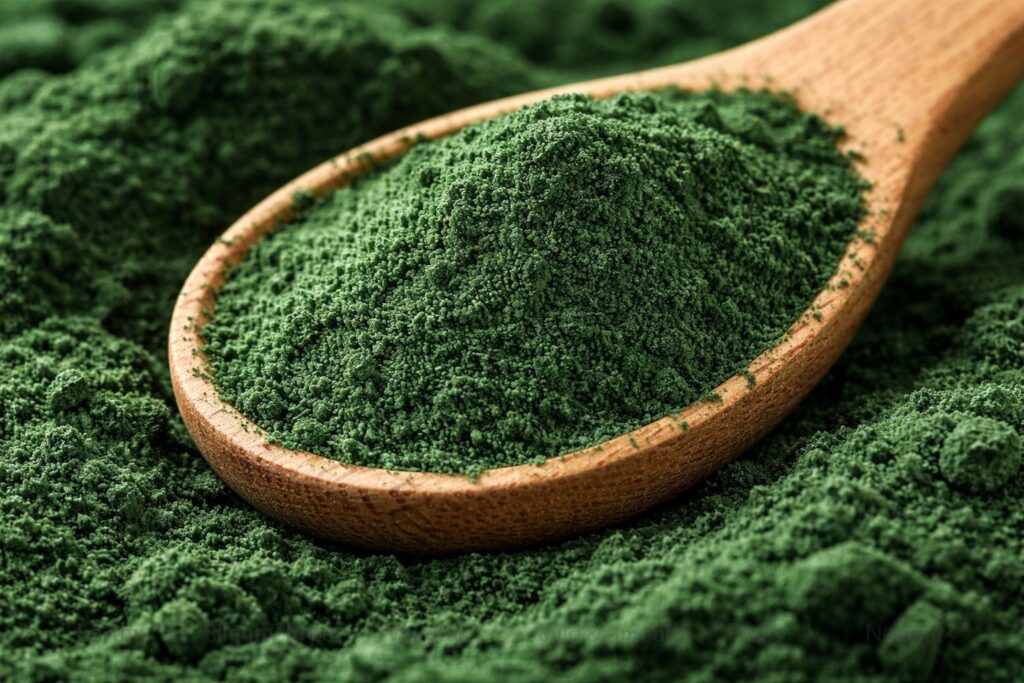
If you’re trying green spirulina for the first time, here’s an honest breakdown:
Flavor Descriptors from Real Users:
- Like ocean water mixed with fresh grass
- Spinach meets seaweed with a hint of nuts
- Slightly fishy but not unpleasant
- Earthy and herbaceous, like wheatgrass
What Affects the Taste?
Better Taste When:
- Mixed with strong-flavored fruits (banana, mango, pineapple)
- Blended into chocolate smoothies
- Added to citrus juices (orange, lemon)
- Used in small unit one or 1/2 tablespoon
Stronger Taste When:
- Taken alone with just water
- Mixed with mild flavors (vanilla, almond milk)
- Used in large doses (1+ tablespoon)
- Added to hot beverages (heat intensifies flavor)
Real Talk: Yes, green spirulina has a strong taste—but it’s not unbearable. Think of it like kale or arugula: an acquired taste that becomes easier to enjoy when you pair it wisely.
Blue Spirulina Taste: The Milder Alternative
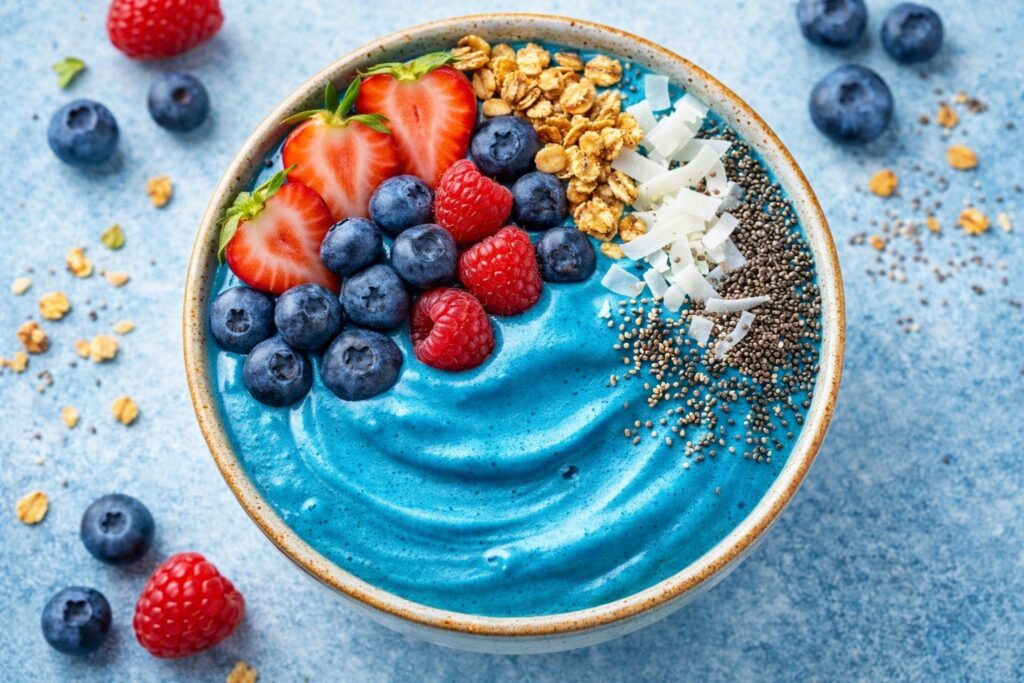
The Flavor Truth About Blue Spirulina
Here’s the exciting part: Blue spirulina has a much milder and smoother taste than green spirulina, making it ideal for smoothies and sweet recipes.
When you add it to food or drinks, you might notice:
- A very faint earthy note (only if you’re really looking for it)
- Slight sweetness in some brands
- Essentially neutral in most recipes
Why the Difference?
Blue spirulina is phycocyanin extract—the blue pigment isolated from spirulina algae. During processing:
- The algae is crushed and filtered
- Chlorophyll and other flavor compounds are removed
- Only the blue pigment remains
- Result: All the benefits, none of the “ocean” taste
Perfect For:
- Naturally coloring frostings, ice cream, and desserts
- Creating Instagram-worthy blue lattes and smoothies
- Introducing kids to superfoods (the color is fun!)
- Baking without altering flavor profiles
📚 Learn more about the amazing benefits in our complete Blue Spirulina Powder Guide
5 Easy Ways to Make Spirulina Taste Better
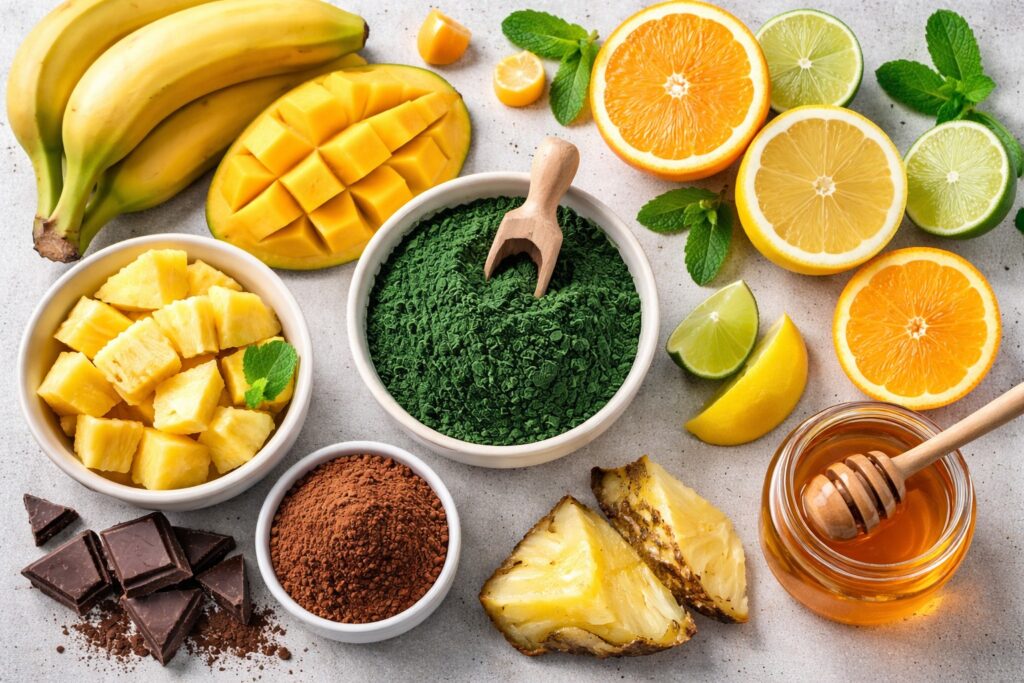
Don’t let taste stop you from enjoying spirulina’s incredible benefits! Here are proven strategies:
1. The Tropical Smoothie Method Best for: Green spirulina
Recipe Base:
- 1 frozen banana
- 1/2 cup mango or pineapple
- 1/2 tsp green spirulina
- 1 cup coconut water or orange juice
- Optional: 1 tbsp chia seeds
Why it works: Strong tropical flavors completely mask the earthy taste.
2. The Chocolate Camouflage
Best for: Green spirulina
Recipe Base:
- 1 tbsp cocoa or cocoa powder
- 1/2 tsp green spirulina
- 1 frozen banana
- 1 cup almond milk
- 1 tsp honey or maple syrup
Why it works: Chocolate’s rich flavor dominates, and the green color disappears.
3. The Citrus Splash
Best for: Both green and blue spirulina
Method: Mix 1/2 tsp spirulina into fresh orange, lemon, or pineapple juice. The acidity and sweetness neutralize the algae flavor.
4. Start Small, Build Up
- Week 1: 1/4 teaspoon daily
- Week 2: 1/2 teaspoon daily
- Week 3: 1 teaspoon daily
- Week 4+: Full dose (1-2 tablespoons
Your taste buds adapt! Many people report that spirulina tastes less intense after 2-3 weeks of regular us
5. Switch to Blue Spirulina
If you’ve tried everything and still can’t stomach green spirulina, blue spirulina is your solution. Yes, it’s more expensive, but:
- Zero taste compromise
- Same antioxidant benefits (phycocyanin)
- Easier to stay consistent with daily use
Pro Tip: Use green spirulina for savory dishes (soups, salad dressings) where earthy flavors blend in naturally, and save blue spirulina for sweet applications.
Ready to try spirulina like the pros? Discover why NASA uses spirulina for astronauts and how you can incorporate it like a space-age superfood!
Where to Buy Quality Spirulina
Not all spirulina is created equal. here is a check list what to see before you buy a spirulina
Quality Checklist
Before purchasing, verify:
- Third-Party Tested for heavy metals and contaminants
- Organic Certification (USDA, EU Organic)
- Made in Controlled Environments (not wild-harvested)
- Low-Temperature Drying (preserves nutrients)
- Transparent Sourcing (country of origin listed)
- No Fillers or Additives (100% pure spirulina)
Where to Buy Spirulina Online
Best Overall: Amazon
Pros:
- Fast shipping (Prime eligible)
- Customer reviews help vet quality
- Wide price range ($10-$50)
- easy returns
Top Brands:
- Nutrex Hawaii (green spirulina, $20-25)
- Micro Ingredients (blue spirulina, $25-30)
- Terrasoul Superfoods (organic, budget-friendly)
Best for Organic: iHerb
Pros:
- Strict quality standards
- international shipping
- Frequent sales (10-20% off)
- Detailed product information
Recommended:
- Sunfood Blue Spirulina (premium quality)
- Organic Green Spirulina Powder (bulk options)
Best for Bulk: Thrive Market
Pros:
- Membership discounts (25-50% off retail)
- Curated organic selection
- Eco-friendly packaging
Best For: good for regular customer who want to stock up
Best Local Options:
- Whole Foods Market (organic section)
- Sprouts Farmers Market (bulk bins available)
- Local Health Food Stores (support small business!)
Price Comparison
| Type | Average Price | Servings | Cost Per Serving |
|---|---|---|---|
| Green Spirulina (8 oz) | $15-25 | 32-64 | $0.25-0.75 |
| Blue Spirulina (2 oz) | $20-35 | 20-40 | $0.50-1.75 |
| Green Spirulina (1 lb) | $25-40 | 64-128 | $0.20-0.60 |
Money-Saving Tip: Buy green spirulina in bulk for daily use, and reserve blue spirulina for special recipes where color matters.
💡 Quality Matters in Space & on Earth: NASA only uses pharmaceutical-grade spirulina tested for contaminants. The same third-party testing standards apply to consumer brands—always verify purity! See how NASA ensures spirulina quality →
Red Flags to Avoid
- Suspiciously cheap prices (under $10 for large quantities)
- No third-party testing information
- Vague sourcing (“imported” without country)
- Artificial colors or fillers in ingredient list
- No expiry date or batch number
Remember: Spirulina can absorb toxins from contaminated water. Always buy from reputable brands that test for heavy metals, microcystins, and bacteria.
Taste Test: Is It Worth It?
The Verdict
Green Spirulina:
- Taste: 3/10 ⭐⭐⭐☆☆
- Value: 9/10 ⭐⭐⭐⭐⭐
Best For: Budget-conscious users, savory recipes, smoothie veterans
Blue Spirulina:
- Taste: 8/10 ⭐⭐⭐⭐☆
- Value: 7/10 ⭐⭐⭐⭐☆
Best For: Taste-sensitive individuals, colorful recipes, beginners
Why People Stick With It
Despite the taste challenge, millions of people use spirulina daily because:
Nutrient Density: Just 1 tablespoon provides:
- 4g complete protein
- 14% DV Vitamin B1 (Thiamin)
- 20% DV Vitamin B2 (Riboflavin)
- 47% DV Copper
- 11% DV Iron
Health Benefits:
- Boosts immune function
- Supports muscle recovery
- Improves cholesterol levels
- Enhances mental clarity
- Glowing skin and hair
Sustainability: Spirulina requires:
- 10x less water than beef protein
- Minimal land use
- No pesticides or fertilizers
- Carbon-negative production
Cosmic Credibility: If spirulina is good enough for the extreme conditions of space, it’s definitely worth trying on Earth! NASA’s decades of research validate its safety and nutritional value. Learn why astronauts rely on spirulina for space missions →
The Bottom Line: Yes, green spirulina tastes strong—but so do kale, coffee, and dark chocolate. These are all acquired tastes that become enjoyable (even craveable) with time. Blue spirulina offers a taste-neutral entry point if you prefer to skip the adjustment period.
Final Recommendation:
- New to spirulina? Start with blue spirulina or tiny doses of green (1/4 tsp)
- On a budget? Green spirulina + strong flavor smoothies = winning combo
- Cooking for kids? Blue spirulina’s fun color wins every time
- Consistency is key: Choose the type you’ll actually use daily.
FAQ’s
Does spirulina taste like fish?
Green spirulina can have a mild fishy or oceanic taste due to its algae origin, but it’s more accurately described as earthy and seaweed-like. Blue spirulina has virtually no fishy taste—it’s nearly flavorless. Mixing spirulina with citrus, tropical fruits, or chocolate effectively masks any fishy notes.
How can I make spirulina taste better?
The best ways to improve taste of spirulina:
Blend it into strong-flavored smoothies (mango, banana, pineapple)
Mix with citrus juices (orange, lemon)
Add to chocolate recipes
Start with small portion one fourth tablespoon and then gradually increase
Switch to blue spirulina for a neutral taste
Use in savory dishes like soups or salad dressings
Is blue spirulina better tasting than green?
Yes, absolutely. Blue spirulina has a very mild, almost neutral taste compared to green spirulina’s strong earthy, seaweed-like flavor. Blue spirulina is purified phycocyanin extract with most flavor compounds removed, making it ideal for people sensitive to taste or for recipes where you want color without flavor changes.
Where can I buy spirulina powder?
You can buy quality spirulina powder from:
Amazon (fastest shipping, wide selection)
iHerb (organic options, international shipping)
Thrive Market (bulk discounts for members)
Whole Foods/Sprouts (local shopping)
Brand websites (Nutrex Hawaii, Sunfood, Micro Ingredients)
Always choose third-party tested, organic spirulina from controlled cultivation environments.
Can you taste spirulina in smoothies?
With green spirulina, yes—you can taste it unless you mask it with strong flavors like banana, mango, pineapple, or cocoa. Blue spirulina is virtually tasteless in smoothies, adding only vibrant color without affecting flavor. For best results with green spirulina, use 1/2 teaspoon or less per smoothie and pair with tropical fruits.
Why does my spirulina taste bad?
Spirulina may taste particularly bad if:
It’s low quality or contaminated
It was improperly stored (heat/moisture exposure)
You’re using too much (start with 1/4-1/2 tsp)
You’re mixing it with mild flavors that don’t mask it
It’s expired or oxidized
Solution: Buy from reputable brands, store in a cool dark place, start with small doses, and mix with strong flavors.
Does spirulina expire?
Yes, spirulina powder typically has a shelf life of 1-2 years when stored properly in a cool, dark, dry place. Exposure to heat, light, and moisture can degrade quality and intensify unpleasant flavors.
Do astronauts actually drink spirulina?
Yes! Astronauts consume 2-5 grams of spirulina daily on the International Space Station. Unlike green spirulina’s strong taste, blue spirulina’s neutral flavor makes it easy to mix into space food and drinks without affecting taste. Discover how astronauts use spirulina.
Reference :
- Grant Abstract: Spirulina oral supplement for enhancing host resilience to virus infection
- Spirulina – Not All Brands Are Equal – Nutrex Hawaii
- Chemical Composition, Bioactivities, and Applications of Spirulina (Limnospira platensis) in Food, Feed, and Medicine – PMC
- Spirulina Supplementation: A Thematic Review of Health Benefits, Dosage, and Clinical Effects