Last Updated on 9 September 2026 by Ahsan Khan
Discover batana oil’s transformative benefits for hair growth, skin health & scalp care. Learn authentic Honduran traditions, science-backed uses & how to choose pure oil.
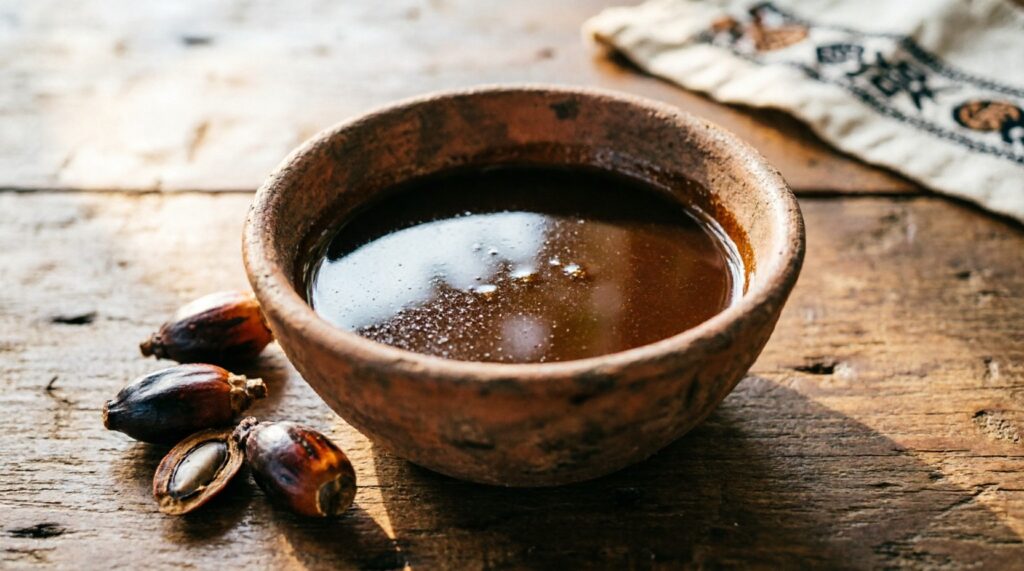
Batana oil is experiencing a remarkable renaissance in the natural beauty world—and for good reason. This golden elixir, extracted from the nuts of the American oil palm (Elaeis oleifera), has been treasured for generations by the Miskito people of Honduras for its extraordinary ability to restore, nourish, and transform hair and skin.
If you’re struggling with hair thinning, dry scalp, dull skin, or simply seeking a natural alternative to synthetic beauty products, you’ve discovered something special. This comprehensive guide reveals everything you need to know about batana oil benefits, traditional usage methods, scientific insights, and how to identify authentic Honduran batana oil in a market flooded with imitations.
What you’ll discover:
- The 7 science-backed benefits of batana oil for hair, skin, and scalp
- Step-by-step application techniques used by the Miskito people
- How batana oil compares to rosemary, argan, and castor oils
- Red flags that reveal fake or diluted batana oil
- Realistic expectations and timeline for visible results
Let’s explore why this ancient remedy is captivating modern wellness enthusiasts worldwide.
What Is Batana Oil?
Batana oil is a rich, dark amber oil traditionally extracted from the roasted nuts of the American oil palm tree (Elaeis oleifera), native to the rainforests of Central and South America. Unlike commercial palm oil, Batana oil is produced using time-honored methods passed down through generations of the Miskito indigenous community along Honduras’ Caribbean coast.
The Traditional Extraction Process
The authentic production method is labor-intensive and deeply cultural:
- Harvesting: Palm nuts are carefully collected from sustainable wild groves
- Roasting: Nuts are slow-roasted over open fires, developing the oil’s signature nutty aroma.
- Grinding: Roasted nuts are ground into a thick paste using traditional stone tools.
- Boiling: The paste is simmered in water, allowing the oil to separate and rise.
- Skimming: Pure oil is carefully collected and filtered through natural materials.
Important Note: While traditional use of batana oil is well-documented in Miskito culture, large-scale Clinical trials are still limited. Most evidence comes from ancestral wisdom, anecdotal reports, and studies on analogous oils like argan and coconut oil.
The Cultural Heritage of Batana Oil
Historical Significance in Honduran Communities
Batana oil is deeply woven into the cultural fabric of indigenous groups in Honduras, including the Miskito and Tawahka peoples. For centuries, this oil has been more than just a cosmetic product—it represents a connection to ancestral knowledge, sustainable harvesting practices, and community identity.
Traditional preparation methods have been passed down through generations, often involving entire families in the harvesting and pressing process. The oil has historically been used not only for hair care but also for skin moisturizing, joint relief, and ceremonial purposes.

Traditional Uses Throughout History
In Honduran culture, batana oil has served multiple purposes:
- Hair Care: Applied to promote shine, reduce breakage, and maintain scalp health.
- Skin Care: Used as a natural moisturizer for dry skin
- Ceremonial Uses: Incorporated into coming-of-age rituals and community celebrations
- Medicinal Applications: Applied to soothe minor joint discomfort and skin irritations
Today, the production of Batana oil continues to support local economies in Honduras, with many cooperatives working to preserve traditional methods while meeting growing international demand.
Batana Oil Nutrition Facts
What makes batana oil potentially beneficial for hair health lies in its unique nutritional composition. While specific studies on batana oil are limited, its fatty acid profile shares similarities with other plant oils known for their hair-nourishing properties.
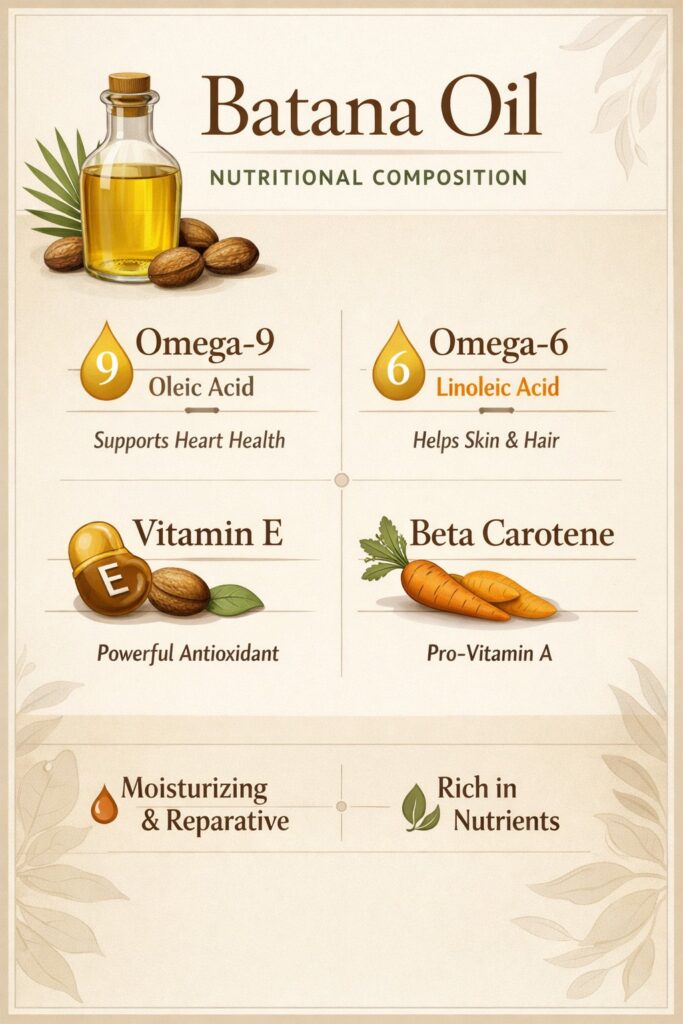
Essential Fatty Acids
The oil contains several fatty acids that may support hair and scalp health:
- Oleic Acid: A monounsaturated fat that helps moisturize and soften hair.
- Palmitic Acid: May contribute to hair strength and structure.
- Linoleic Acid: An omega-6 fatty acid with potential anti-inflammatory properties.
Vitamins and Nutrients
Batana oil is believed to contain:
- Vitamin E: An antioxidant that may help protect hair follicles from oxidative stress
- Vitamin A: Supports skin and scalp health
- Natural Antioxidants: May help combat free radical damage
Note: Exact nutrient concentrations can vary depending on extraction methods and growing conditions.
Natural Plant Compounds
Like many plant oils, batana oil contains various phytochemicals:
| Compound | Potential Function |
|---|---|
| Polyphenols | Antioxidant properties |
| Phytosterols | May support skin barrier function |
| Natural tocopherols | Vitamin E variants with antioxidant activity |
What the Science Actually Says
Comparative Studies
Research on analogous oils provides insights:
- A 2015 study on coconut oil showed 92% reduction in protein loss when used as a pre-wash treatment (similar mechanism expected for batana oil)
- Argan oil research demonstrates improved skin elasticity and hydration (Batana oil shares similar fatty acid profile)
- Studies on omega-rich oils confirm anti-inflammatory effects on scalp conditions
What’s Missing
Transparency Note: Large-scale, peer-reviewed clinical trials specifically on batana oil for hair growth are limited.
Most evidence comes from:
- Anecdotal reports and user testimonials
- Traditional knowledge from Miskito communities
- Extrapolation from studies on chemically similar oils
We believe in honest communication: while the traditional evidence is compelling and the nutritional profile is promising, more rigorous scientific research is needed to confirm specific efficacy claims.
7 Powerful Batana Oil Benefits
Batana oil is known for its many hair benefits. It supports Batana Oil and adds shine. Its formula is packed with nutrients for healthier hair.
Promotes Hair Growth & Reduces Breakage
The Science: Batana oil’s high concentration of fatty acids penetrates the hair shaft, strengthening the protein structure and reducing protein loss. The oil’s emollient properties seal moisture into hair cuticles, preventing the brittleness that leads to breakage.
Traditional Use: Miskito women have used batana oil for centuries to maintain their famously thick, lustrous hair well into old age. The oil is massaged into the scalp to stimulate circulation and applied to hair lengths to prevent split ends.
What to Expect: While individual results vary, consistent use over 8-12 weeks may show:
- Reduced hair shedding during brushing/washing
- Improved hair elasticity and strength
- Enhanced shine and smoothness
Note: For targeted hair growth protocols, see our detailed guide on batana oil for hair growth.
Repairs Damaged, Dry, or Chemically-Treated Hair
If styling heat, coloring, or environmental damage has left your hair feeling like straw, batana oil offers deep restoration. The oil’s molecular structure allows it to penetrate deeper than many commercial conditioners, rebuilding the hair’s lipid layer from within.
Best For:
- Bleached or color-treated hair
- Heat-damaged strands from straighteners/curling irons
- Sun-exposed, dehydrated hair
- Rough, coarse hair textures
Soothes Scalp Conditions & Dandruff
A thriving scalp nurtures radiant hair. Batana oil’s anti-inflammatory properties and natural antimicrobial compounds help calm:
- Dry, flaky scalp
- mild dandruff symptoms
- Scalp irritation and itching
- Tightness from product buildup
How It Works: The oil’s moisturizing properties restore the scalp’s natural moisture barrier, while its fatty acid profile creates an environment where beneficial microbes can thrive.
Enhances Skin Radiance & Elasticity
Beyond hair care, batana oil is a powerhouse for skin health. The beta-carotene content converts to vitamin A in the body, supporting cell turnover and collagen production. Regular application may improve:
- Skin texture and smoothness
- Natural glow and radiance
- Fine lines from dryness
- Overall skin barrier function
Application Tip: Mix 2-3 drops with your favorite moisturizer or apply directly to damp skin after showering for maximum absorption.
Nourishes Eyelashes & Eyebrows
Just as it strengthens scalp hair, batana oil can condition and fortify delicate facial hair. Apply a tiny amount to clean lashes and brows before bed using a clean spoolie or cotton swab.
Gentle Alternative: Unlike some lash serums containing harsh prostaglandin analogs, batana oil works through nourishment rather than stimulation, making it suitable for sensitive eyes.
Softens Cuticles & Strengthens Nails
Massage batana oil into cuticles and nail beds to:
- Prevent hangnails and cracking
- Improve nail flexibility (reducing breakage)
- Add natural shine to dull nails
- Soothe dry, rough cuticles
Pro Tip: Apply overnight with cotton gloves for intensive treatment.
Provides Natural Heat Protection
While not a substitute for dedicated heat protectants, batana oil’s high smoke point and coating properties offer a layer of protection when using hot tools. just Apply a small amount to damp hair before dressing the hair.
Here is a table given to easily understand the health benefits of Batana oil by its key ingredients and how it works:
| Benefit | How It Works | Key Ingredient |
|---|---|---|
| Hair Growth Support | Nourishes roots with fatty acids | Linoleic Acid |
| Reduced Loss | Calms inflammation causing shedding | Omega-6 Fatty Acids |
| Scalp Health | Promotes circulation and balances sebum | Antioxidants |
| Texture/ Shine | Smooths cuticles with vitamins | Vitamin E |
Beyond haircare, Batana oil is also used in skincare for its moisturizing properties. But its main role is in supporting hair follicles and for hair loss solutions. For the best results, use it as part of a consistent hair care routine.
Batana Oil vs. Other Popular Hair Oils
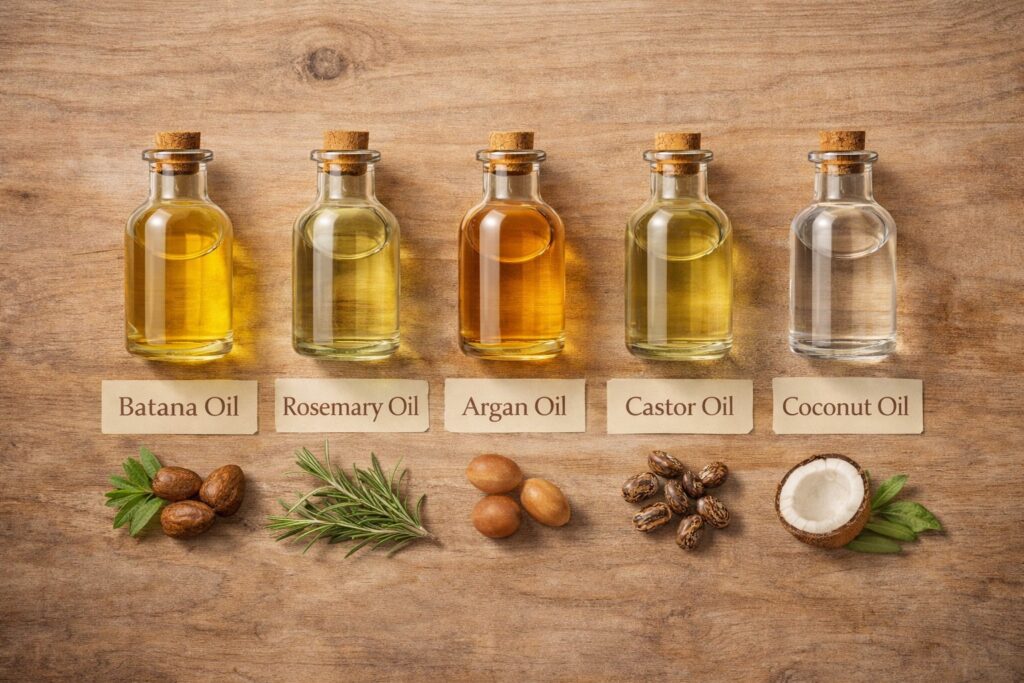
| Oil Type | Best For | Texture | Scent | Absorption |
|---|---|---|---|---|
| Batana Oil | Overall hair repair, scalp health, traditional use | Thick, rich | Nutty, smoky | Moderate |
| Rosemary Oil | Hair growth stimulation, circulation | Light (must dilute) | Herbal, camphor | Fast (when diluted) |
| Argan Oil | Shine, frizz control, heat protection | Medium, silky | Mild, nutty | Fast |
| Castor Oil | Thickness, lash/brow growth | Very thick, sticky | Mild, earthy | Slow |
| Coconut Oil | Protein retention, deep conditioning | Solid at room temp | Sweet, tropical | Moderate |
The Verdict:
- Choose batana oil if you want an all-in-one traditional remedy for hair AND scalp health
- Choose rosemary oil if your primary goal is hair growth stimulation (can be combined with batana oil)
- Choose argan oil if you prioritize lightweight shine and frizz control.
- Choose castor oil if you’re focused on thickness and density
- Choose coconut oil if you need intense protein protection for damaged hair.
Pro Strategy: Many users rotate oils or create custom blends. Try mixing batana oil with a few drops of rosemary essential oil for enhanced growth benefits.
How to Use Batana Oil
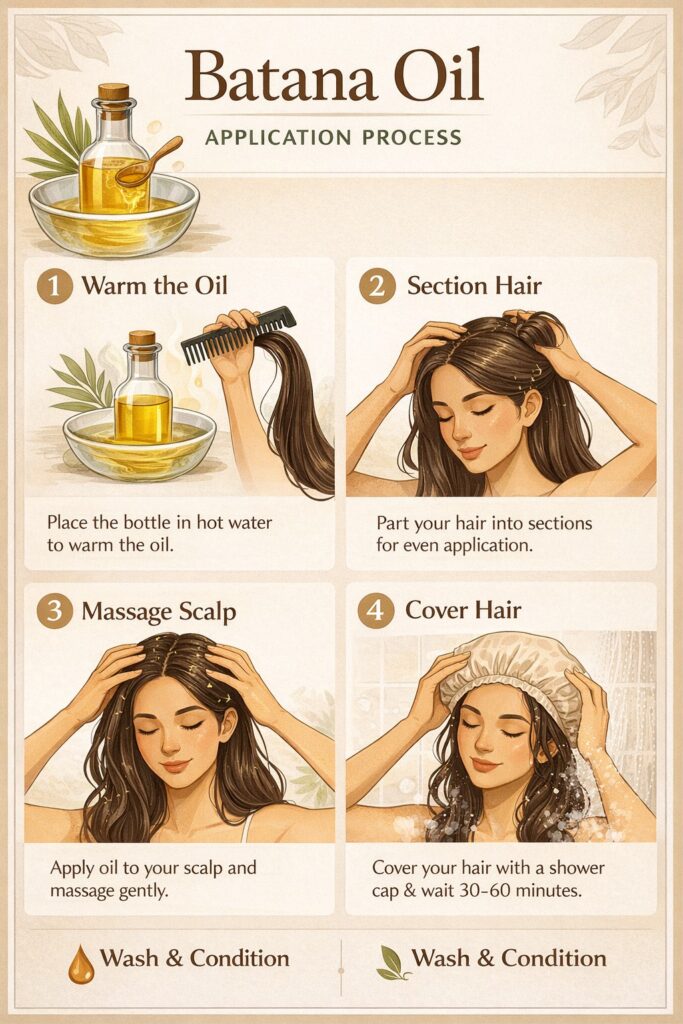
Batana oil is highly versatile. Here are the most common, effective ways to incorporate it into your routine:
- As a Deep Conditioning Mask: Warm 1–2 tablespoons of oil, apply from mid-lengths to ends, cover with a shower cap, and leave for 30–60 minutes before shampooing.
- As a Daily Frizz Tamer: Rub 2–3 drops between your palms and smooth over flyaways and frizzy areas on dry hair. No rinse needed.
- As a Scalp Soother: Massage a small amount into a dry scalp 30 minutes before washing to help loosen buildup and moisturize.
- As a Body & Cuticle Moisturizer: Apply a few drops directly to damp skin after a shower or rub into nail beds before bed.
If your primary goal is measurable hair growth and shedding reduction, follow our science-backed protocols with specific timing and frequency. Check out our detailed Batana Oil for Hair Growth Guide with clinically timed methods.
How to Choose Authentic Batana Oil: Avoid These Red Flags
The surge in batana oil’s popularity has attracted counterfeiters and diluters. Here’s how to ensure you’re getting the real deal from Honduras:
✅ Signs of Authentic Batana Oil:
- Origin: Clearly labeled as sourced from Honduras (specifically the Miskito Coast)
- Color: Deep amber to dark brown (not light yellow or clear)
- Aroma: Distinctive smoky, nutty, roasted scent (not odorless or artificially fragrant)
- Texture: Thick and viscous at room temperature; may solidify slightly in cool conditions
- Transparency: Brand provides information about Miskito community partnerships or fair trade practices
- Processing: Cold-pressed or traditionally roasted (not chemically extracted)
- Packaging: Dark glass bottle (protects from light degradation)
🚩 Red Flags of Fake or Low-Quality Oil:
- Too cheap (authentic batana oil requires labor-intensive traditional processing)
- No scent or artificial fragrance added
- Crystal clear or very light color (indicates heavy refining or dilution)
- Vague sourcing (“imported from Central America” without specific origin)
- Mixed with unknown oils without clear labeling
- Sold in clear plastic bottles (degrades oil quality)
Questions to Ask Before Buying:
- Where exactly is this oil sourced from?
- Is it 100% pure batana oil or a blend?
- What extraction method is used?
- Does the brand work directly with Miskito communities?
- Are third-party lab tests available for purity verification?
Pro Tip: Look for brands that provide transparency about their supply chain and contribute to the economic empowerment of Honduran indigenous communities.
Potential Side Effects & Safety Considerations
Batana oil is generally well-tolerated, but consider these precautions:
Who Should Be Cautious:
- Palm allergies: If you’re allergic to palm products, avoid batana oil
- Nut allergies: While not a tree nut, cross-contamination is possible during processing
- Acne-prone skin: The thick consistency may clog pores on facial skin (patch test first)
- Fine, oily hair: May weigh down very fine hair types if overused.
Patch Test Protocol:
Prior to initial application, place a small dab on your inner arm and allow 24 hours to pass. If no irritation occurs, the oil is likely safe for you.
Pregnancy & Breastfeeding:
Topical use is typically well‑tolerated, though it’s wise to check with your healthcare professional if you have any concerns.
Real User Experiences: What People Are Saying
While individual results vary, here are common themes from batana oil users:
Positive Reports:
- “i feel my hair softer in just one use”
- “Noticeable reduction in breakage after 6 weeks”
- “My scalp itching stopped within 2 weeks”
- “Hair stylist commented on improved hair health”
- “Works better than expensive salon treatments”
Mixed Feedback:
- “The smell takes getting used to”
- “Too heavy for my fine hair (I use less now)”
- “Didn’t see dramatic growth, but hair is healthier”
- “Takes time—don’t expect overnight miracles”
Key Takeaway: Batana oil excels at improving hair quality (texture, shine, strength) more reliably than dramatic hair growth. Set realistic expectations and commit to consistent use.
Your Next Steps: Incorporating Batana Oil Into Your Routine
Are you ready to unlock the remarkable benefits of batana oil? Here’s your action plan:
Week 1-2: Introduction Phase
- Purchase authentic batana oil from a verified source
- Perform a patch test
- Start with one overnight treatment per week
- Observe how your hair and scalp respond
Week 3-4: Optimization Phase
- Increase to 2 treatments weekly if well-tolerated.
- Experiment with different application methods
- Take before/after photos to track progress
- Adjust quantity based on your hair’s needs
Month 2-3: Consistency Phase
- Establish your ideal routine (frequency + method)
- Consider combining with complementary oils (rosemary, peppermint)
- Monitor improvements in texture, shine, and breakage
- Share your experience to help others
Remember: Natural remedies work with your body’s rhythms, not against them.”Stick with it—patience and steady effort are the real game‑changers.
FAQ’s
How long does it take to see results from batana oil?
Most users report noticing improvements in hair texture and shine within 2-4 weeks of consistent use. For hair growth benefits, allow 8-12 weeks to see measurable changes. Remember, hair grows approximately 1/2 inch per month, so patience is essential.
Can I use batana oil every day?
Yes, but frequency depends on your hair type and goals. For leave-in conditioning, daily use is fine. For deep treatments, 1-2 times weekly is sufficient. Overuse on fine hair may cause buildup and greasiness.
Does batana oil have a strong smell?
Authentic Batana oil has a distinctive smoky, nutty aroma from the traditional roasting process. Some people like it and some people find it very strong. The scent typically dissipates after washing. If you’re sensitive to smells, look for deodorized versions (though these may be more processed.
Can batana oil reverse baldness?
Batana oil is not a cure for genetic baldness (androgenetic alopecia). However, it can improve hair health, reduce breakage, and create an optimal scalp environment for existing hair to thrive. For pattern hair loss, combine with proven treatments like minoxidil under medical supervision.
Is batana oil vegan and cruelty-free?
Yes, pure batana oil is plant-based and vegan. However, verify that your brand doesn’t test on animals and sources ethically from communities that benefit from the trade.
Can I mix Batana oil with other oils?
Absolutely! Popular combinations include:
Batana + rosemary essential oil (enhanced growth)
Batana + argan oil (lighter texture for fine hair)
Batana + peppermint oil (scalp stimulation)
Where can I buy authentic batana oil?
Look for reputable brands that:
Clearly state Honduran origin
Partner with Miskito communities
Provide third-party testing
Use dark glass packaging
Avoid generic “palm oil” products—batana oil is specifically from Elaeis oleifera.
Does Batana oil expire?
Properly stored in a cool, dark place, batana oil lasts 1-2 years. The high antioxidant content provides natural preservation. If the oil develops a rancid smell or changes color dramatically, discard it.
Can men use batana oil for beard growth?
Yes! Batana oil conditions beard hair, softens coarse facial hair, and moisturizes the skin underneath to prevent beard dandruff. Apply 2-3 drops daily to a clean, damp beard.
Is Batana oil suitable for dyed or chemically colored hair?
Absolutely—Batana oil is a great choice for color‑treated hair. It helps lock down the cuticle to minimize fading and replenishes the moisture that’s often stripped away during chemical treatments.
Conclusion: Embracing Ancient Wisdom for Modern Beauty
Batana oil represents more than just another beauty trend—it’s a bridge between indigenous wisdom and contemporary wellness. The Miskito people’s centuries-old tradition of using this remarkable oil offers a holistic approach to hair and skin health that resonates deeply in our chemical-saturated world.
While scientific research continues to evolve, the combination of traditional evidence, nutritional analysis, and thousands of positive user experiences makes a compelling case for batana oil’s benefits. Whether you’re seeking to restore damaged hair, soothe a troubled scalp, or simply embrace more natural beauty practices, batana oil deserves a place in your self-care ritual.
The bottom line: Authentic batana oil from Honduras, used consistently and correctly, can transform your hair and skin from the inside out. But remember—it’s not magic. It’s nature, nurtured by tradition, enhanced by your commitment to consistent care.
References:
- Elaeis oleifera – Wikipedia
- RECOGNIZING INDIGENOUS MISKITU TERRITORY IN HONDURAS on JSTOR
- Jayashri Naphade, Int. J. of Pharm. Sci., 2025, Vol 3, Issue 6, 2538-2549
- Effect of mineral oil, sunflower oil, and coconut oil on prevention of hair damage – PubMed
- Comparative Analysis and Structural Modeling of Elaeis oleifera FAD2, a Fatty Acid Desaturase Involved in Unsaturated Fatty Acid Composition of American Oil Palm – PMC