Running out of sumac? Discover the best sumac spice substitute options with flavor tips, usage ratios, and expert-backed advice to keep your dishes vibrant and delicious.
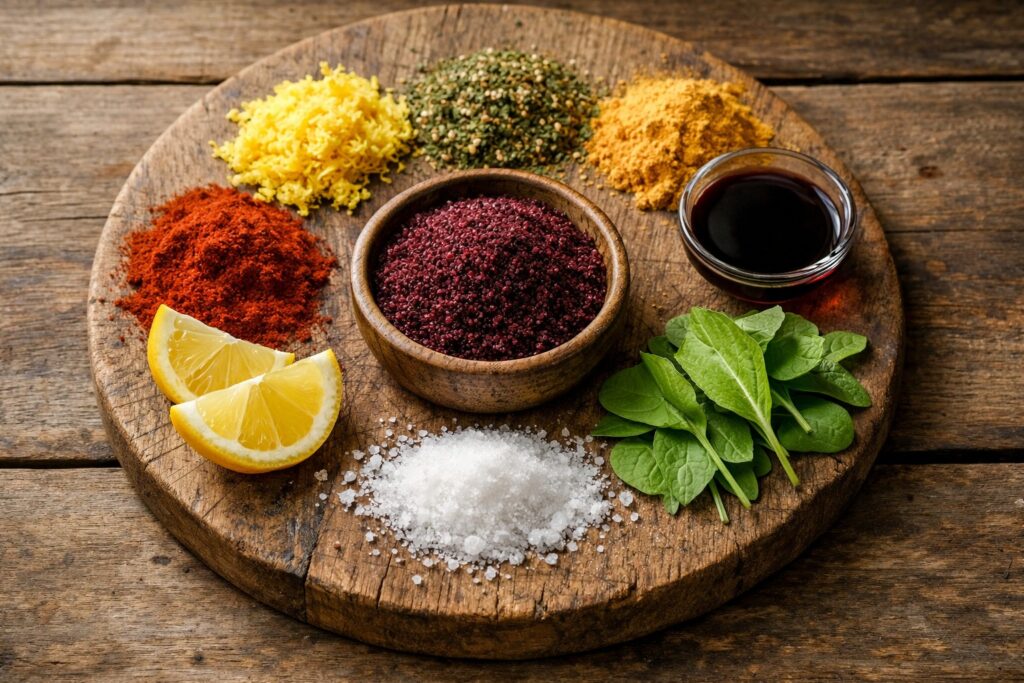
You’re mid-recipe, reaching for that vibrant red sumac spice—only to find the jar empty. Don’t panic. Whether you’re crafting a Middle Eastern Fattoush, seasoning grilled lamb, or brightening a yogurt dip, a reliable sumac substitute can save your dish without compromising on that signature tangy, citrusy depth.
Below, we blend time-tested kitchen wisdom with science-backed insights to guide you toward the most effective alternatives—so your meals stay flavorful, balanced, and beautifully aromatic.
What Is Sumac, and Why Might You Need a Substitute?
Sumac (Rhus Cori aria) is a deep-red, tangy spice made from dried berries of a wild shrub native to the Mediterranean and Middle East. Prized for its lemon-like acidity without sharpness, it adds brightness to meats, salads, grains, and spice blends like za’atar.
sumac has been used traditionally to support immune health and digestive wellness as they are Rich in antioxidants like flavonoids and gallic acid,
But sumac isn’t always easy to find. If your local store doesn’t carry it—or if you have dietary restrictions—you’ll need a smart sumac substitution that mimics its tart, fruity, earthy profile. The good news? Several pantry staples can step in beautifully.
Pro Tip: Always taste as you go. Substitutes vary in intensity, so start with less and adjust.
Top 7 Sumac Spice Substitutes (With Ratios & Best Uses)
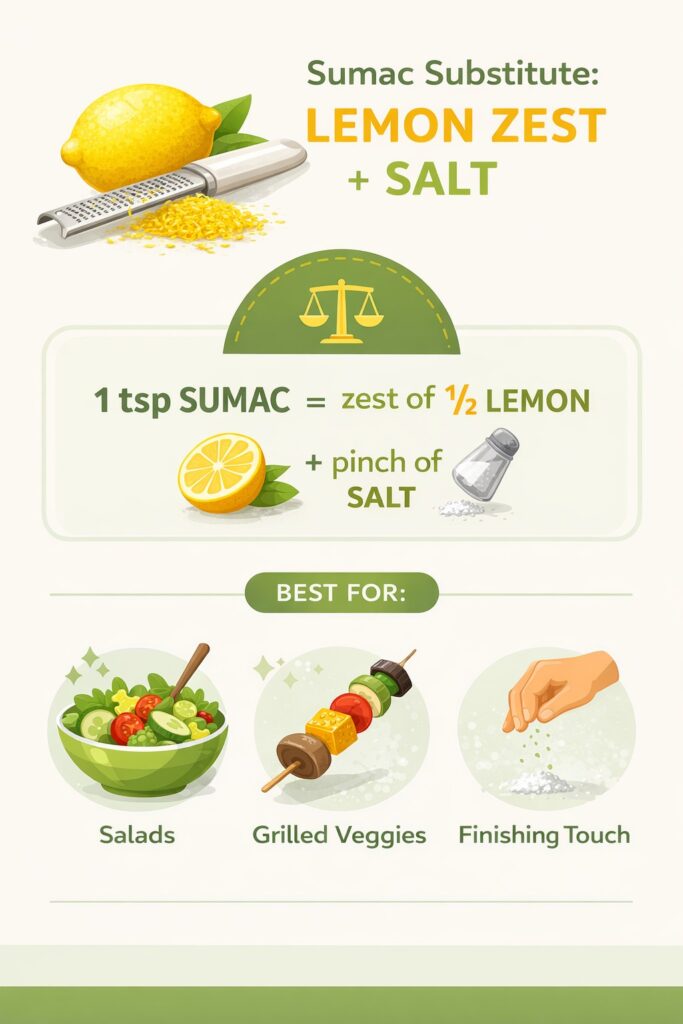
Lemon Zest + Pinch of Salt (Closest Flavor Match)
- Why it works: Lemon zest delivers sumac’s bright citrus notes; salt enhances depth.
- Ratio: 1 tsp sumac = zest of ½ lemon + tiny pinch of salt
- Best for: Salads, grilled veggies, finishing touches
- Bonus: High in vitamin C and flavonoids
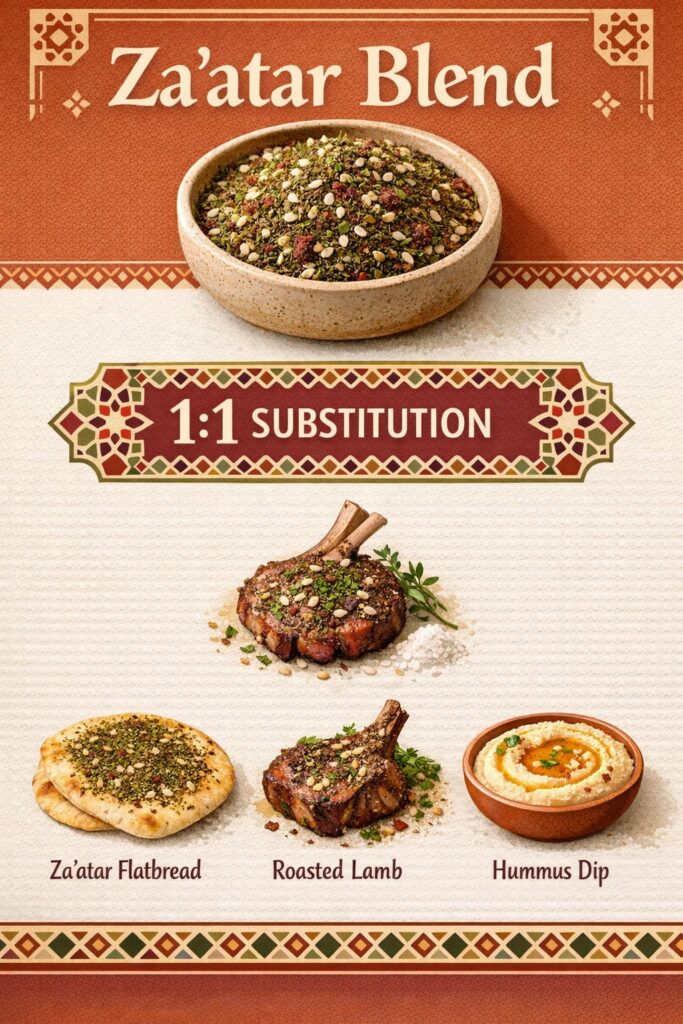
Za’atar Blend (Authentic Middle Eastern Swap)
- Why it works: Za’atar contains sumac plus thyme, sesame, and salt—offering complexity with familiar notes.
- Ratio: 1:1 replacement
- Best for: Dips, flatbreads, roasted meats
- Note: If your za’atar lacks sumac, add extra lemon zest to compensate.
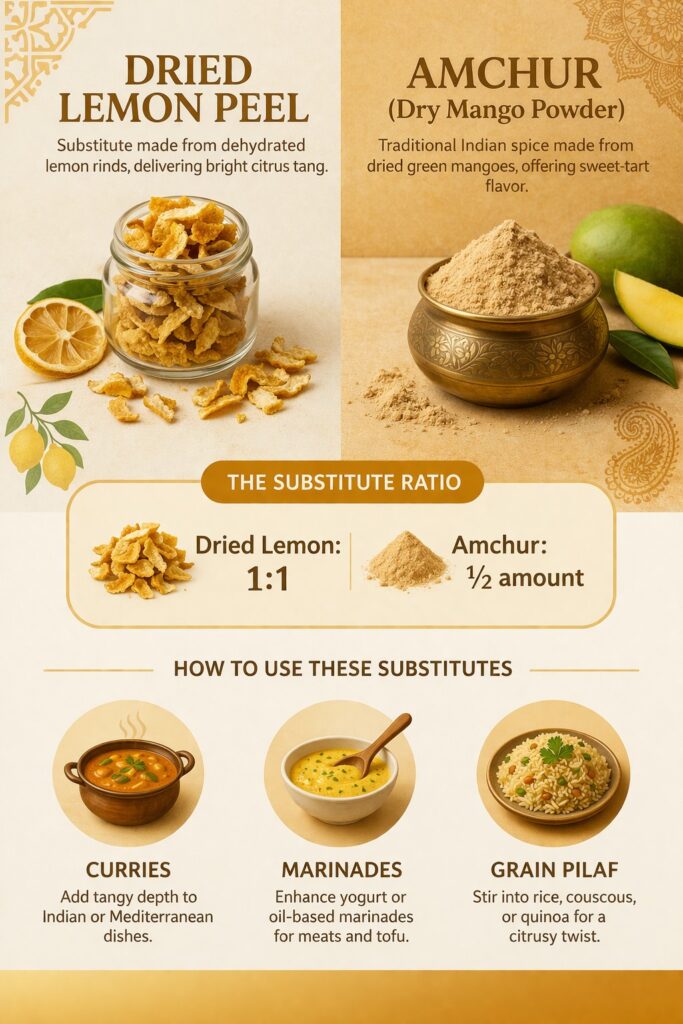
Dried Lemon Peel or Amchur (Dry Mango Powder)
- Why it works: Both offer tart, fruity acidity. Amchur (Indian dry mango powder) brings a gentle sourness similar to sumac.
- Ratio: Use ½ the amount of amchur; 1:1 for dried lemon peel
- Best for: Curries, marinades, spice rubs
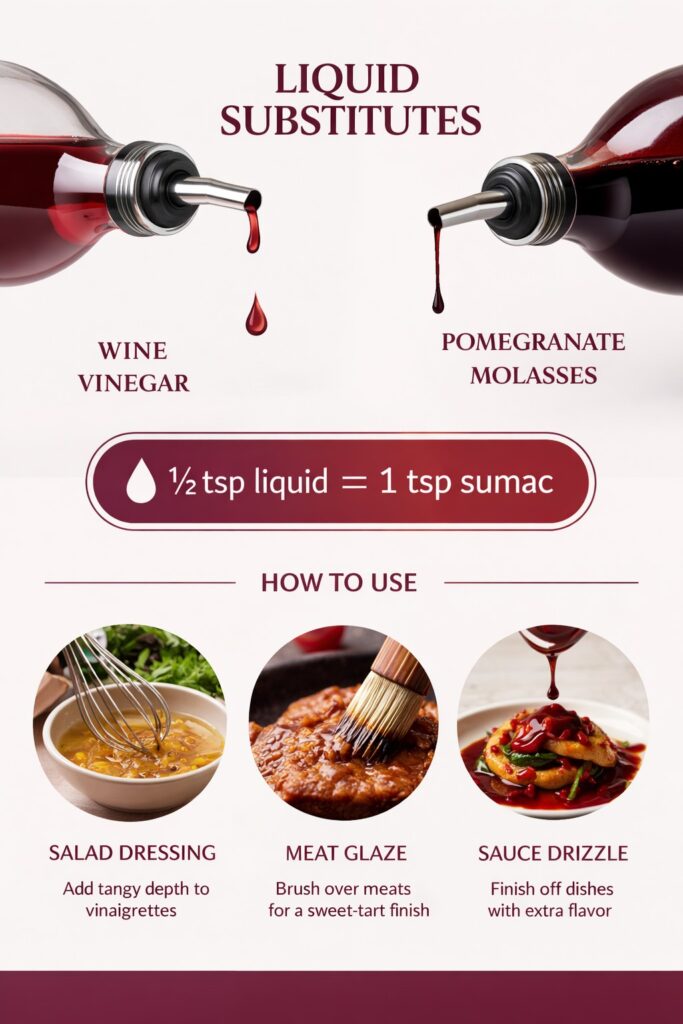
Red Wine Vinegar or Pomegranate Molasses (Liquid Options)
- Why it works: Vinegar adds acidity; Pomegranate molasses contributes tart-sweet depth and rich color.
- Ratio: 1 tsp sumac = ½ tsp vinegar or molasses (adjust to taste)
- Best for: Dressings, glazes, sauces
- Caution: Liquids can alter texture—reduce other liquids in the recipe slightly.
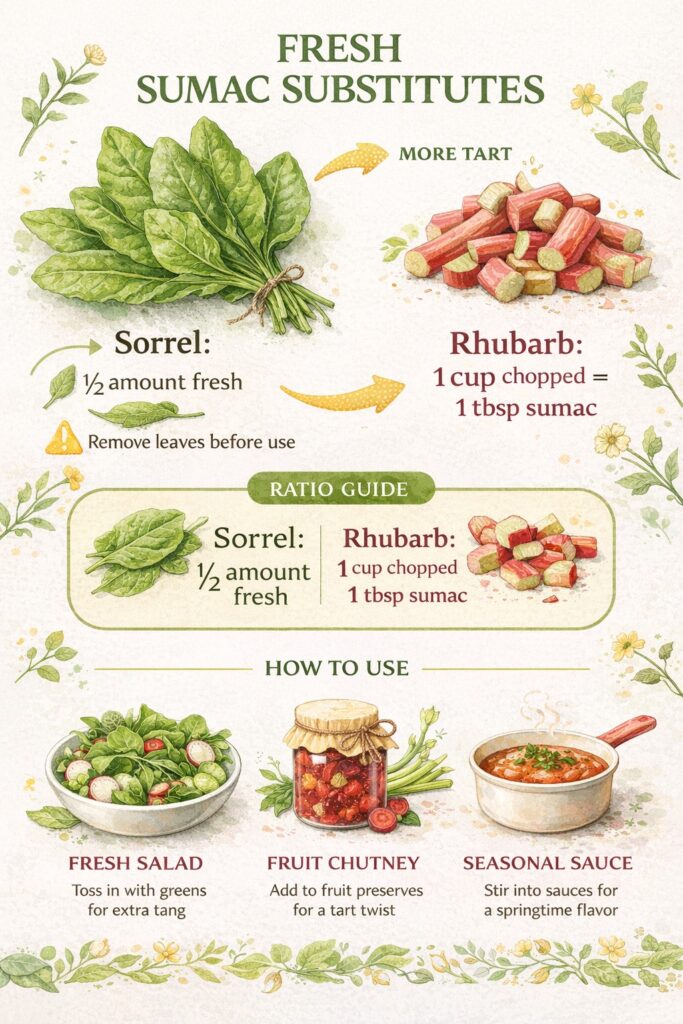
Sorrel or Rhubarb (Fresh, Seasonal Alternatives)
- Why it works: Sorrel offers a lemony tartness; Rhubarb adds gentle sourness with a hint of sweetness.
- Ratio: Use half the amount of fresh sorrel; 1 cup chopped rhubarb ≈ 1 tbsp ground sumac
- Best for: Salads, chutneys, fruit-based sauces
- Safety note: Always remove rhubarb leaves—they contain toxins.
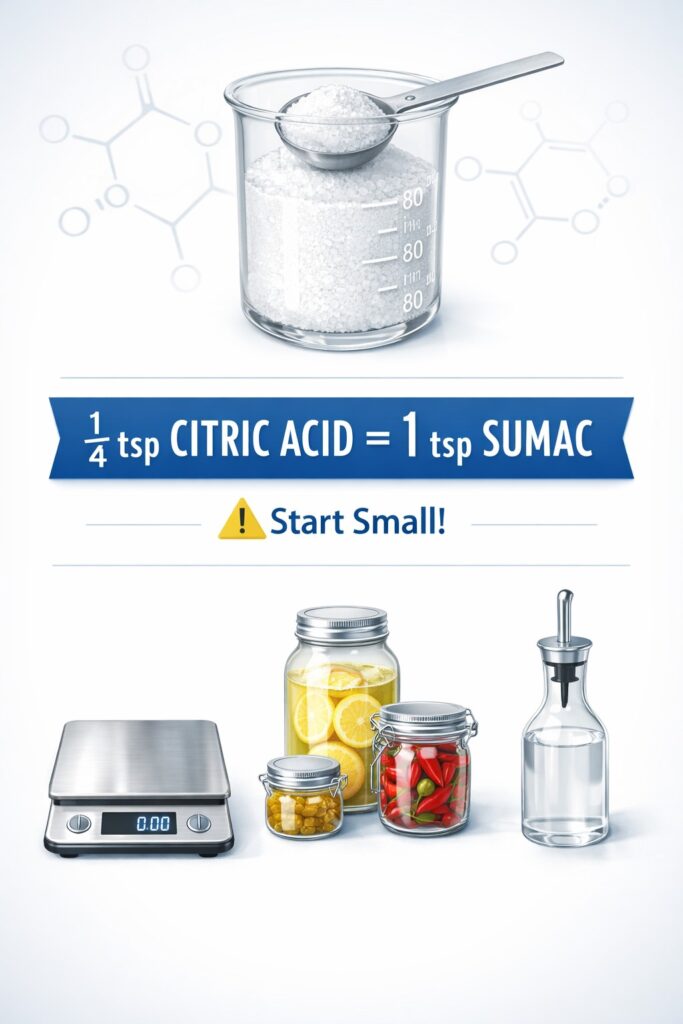
Citric Acid Powder (For Precision Acidity)
- Why it works: Pure tartness without added flavor—ideal when you only need sumac’s acidic punch.
- Ratio: ¼ tsp citric acid ≈ 1 tsp sumac (start small!)
- Best for: Baking, preserving, clear dressings
- Source: Often derived from citrus fermentation
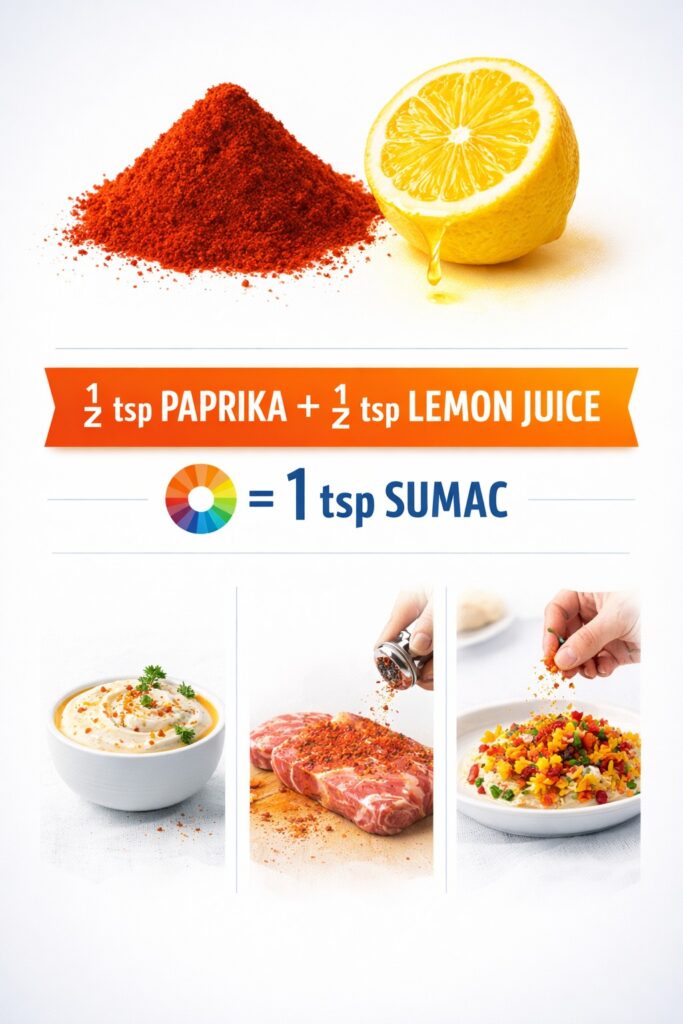
Paprika + Lemon Juice (Color + Flavor Combo)
- Why it works: Paprika mimics sumac’s ruby hue; Lemon juice adds tang.
- Ratio: 1 tsp sumac = ½ tsp paprika + ½ tsp fresh lemon juice
- Best for: Visual appeal in dips, rubs, garnishes
What can I substitute for sumac spice?
Try these pantry-friendly swaps, matched to your dish:
| If you need… | Try this substitute | Best used in |
|---|---|---|
| Fresh citrus lift | Lemon or lime zest + pinch of salt | Salads, grilled veggies, finishing touches |
| Herbal complexity | Za’atar or dried oregano + lemon | Flatbreads, dips, roasted meats |
| Dry tartness | Amchur or citric acid powder | Rubs, curries, spice blends |
| Liquid acidity | Red wine vinegar or pomegranate molasses | Dressings, marinades, glazes |
| Color + flavor | Paprika + lemon juice | Garnishes, dips, visual appeal |
Always adjust gradually—substitutes vary in intensity. For more herbal swap ideas, see our guide on Mexican oregano substitutes.
Traditional Wisdom Meets Modern Science: While sumac has been used for centuries to aid digestion and reduce inflammation, its substitutes can still deliver functional benefits. Lemon zest offers vitamin C; amchur provides digestive enzymes; pomegranate molasses is rich in polyphenols. Choose based on both flavor and wellness goals.
FAQ’s: Sumac Spice Substitutes
What is sumac spice substitute?
A sumac spice substitute is any ingredient that replicates sumac’s signature tart, citrusy, and slightly earthy flavor profile. Since sumac (Rhus coriaria) delivers bright acidity without sharpness, the best substitutes mimic this balance. Top choices include:
* Lemon zest + salt for fresh, aromatic brightness
* Za’atar blend for authentic Middle Eastern depth
* Amchur (dry mango powder) for gentle, fruity tang
* Red wine vinegar or pomegranate molasses for liquid applications
Choose based on your recipe’s cuisine, texture needs, and whether you need a dry or wet ingredient.
What is a good substitute for sumac spice?
Lemon zest is widely considered the best all-purpose substitute. It’s readily available, flavor-accurate, and adds nutritional perks like vitamin C and flavonoids. For a more complex swap:
* Za’atar (if it contains sumac) adds herbal warmth
* Paprika + lemon juice mimics both color and tang
* Citric acid powder offers pure acidity for baking or preserving
Pro Tip: Start with half the amount of your substitute, taste, and adjust. Sumac’s flavor is subtle overpowering it defeats the purpose.
What spice can you substitute for sumac seasoning?
Dry substitutes for sumac seasoning are shelf-stable options:
* Amchur (dry mango powder): Offers gentle sourness with fruity notes—ideal for Indian-inspired dishes or grain bowls.
* Za’atar: A Middle Eastern blend that often includes sumac, thyme, and sesame; use 1:1 if your blend contains sumac.
* Dried lemon peel: Provides concentrated citrus without moisture; great for rubs and baked goods.
* Citric acid powder: Pure tartness for precision baking or preserving (use sparingly: ¼ tsp ≈ 1 tsp sumac).
Note: If using za’atar without sumac, boost it with extra lemon zest to capture that signature tang.
What to substitute for sumac spice in salads, marinades, or dips?
Context matters! Match your substitute to the dish:
For salads & fresh dishes
Lemon zest + salt or fresh sorrel
Why: No-cook acidity that won’t wilt greens; adds vitamin C and freshness.
For marinades & rubs
Za’atar, amchur, or red wine vinegar
Why: Penetrates protein, adds depth, and complements herbs/spices. For warm-spice
For dips & sauces
Pomegranate molasses or lemon juice + paprika
Why: Blends smoothly, enhances creaminess, and adds visual appeal.
For grains & rice
Dried lemon peel or citric acid
Why: Dry texture won’t make grains soggy; precise acidity balances rich dishes.
Wellness Note: While sumac is rich in antioxidants like gallic acid and flavonoids, many substitutes offer their own benefits—lemon zest (vitamin C), amchur (digestive enzymes), pomegranate molasses (polyphenols). Choose based on both flavor and your health goals.
Expand Your Spice Knowledge
Looking for more smart swaps? Explore our guides on:
- 7 Best Mexican Oregano Substitutes – for earthy, citrus-adjacent flavor boosts
- Coriander Seeds Substitute – when warm, citrusy notes are needed
Both articles follow the same philosophy: honor tradition, respect science, and keep your kitchen adaptable.
Final Thoughts
Running out of sumac doesn’t mean sacrificing flavor. With these thoughtful substitutes—backed by culinary tradition and nutritional science—you can adapt any recipe while staying true to your wellness values. Whether you choose the bright simplicity of lemon zest or the complex depth of za’atar, you’re not just replacing a spice; you’re embracing the art of intuitive, health-conscious cooking.
Your Turn: Tried one of these substitutes? Share your experience in the comments below—or tag us on social with your sumac-swap creations!
Disclaimer: This content is for informational purposes only and is not medical advice. Consult a healthcare provider before making significant dietary changes, especially if managing a health condition.
Reference: