Last Updated on 4 October 2026 by Ahsan Khan
You’ve probably walked past them a hundred times in the grocery aisle—those unassuming cans of white beans tucked between the tomatoes and the broth. But when it comes to white beans nutrition, this humble pantry staple delivers something remarkable: science-backed glow for your gut, your skin, and your long-term health.
In a world chasing exotic superfoods—from Himalayan berries to Icelandic algae—we’ve overlooked the quiet power sitting right here in American kitchens.
In 2026, that changes. With new research spotlighting gut health, metabolic resilience, and natural aging, white beans are stepping out of the shadows—not as a side dish, but as a cornerstone of everyday wellness.
No fluff. No hype. Just real reasons why this simple food might be the easiest upgrade to your health this year.
What Exactly Are White Beans? (And why the confusion?)
First things first: “white beans” isn’t one single bean—it’s a family.
In the U.S., when recipes call for “white beans,” they’re usually referring to one of three types:
- Navy beans: Small, oval, quick-cooking. Common in baked beans.
- Great Northern beans: Medium-sized, delicate flavor. Great in soups.
- Cannellini beans: Large, meaty, creamy when cooked. The Italian favourite.
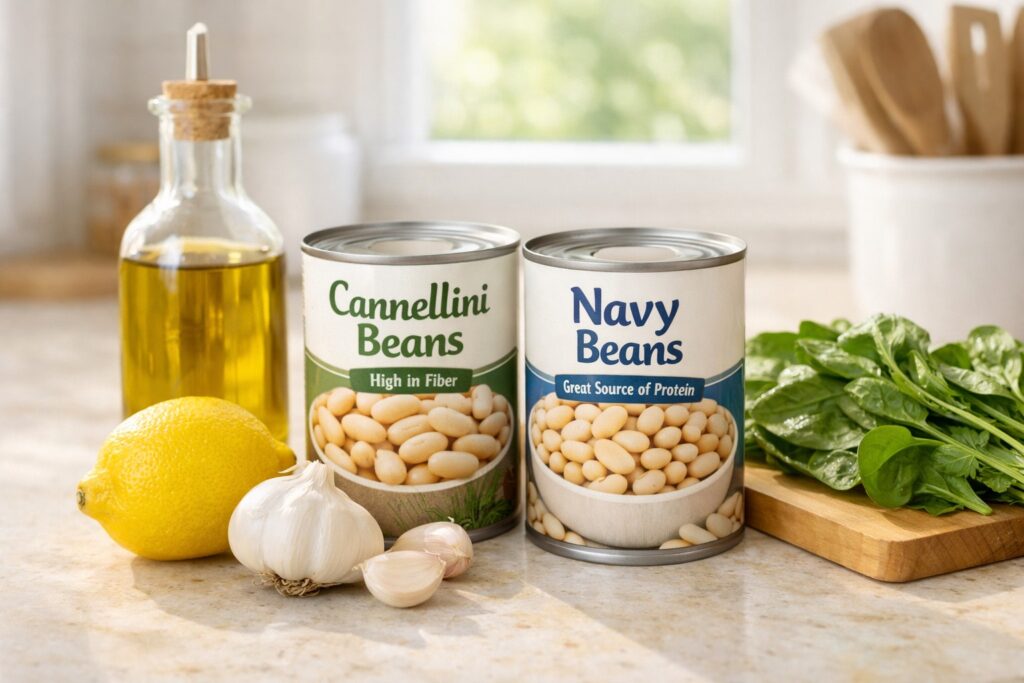
All are Phaseolus vulgaris—the same species as kidney and pinto beans—but their mild taste, smooth texture, and nutritional profile make them uniquely versatile (and digestible) for daily eating.
And yes—canned white beans count. More on that in a minute.
White Beans Nutrition Facts
Let’s get practical. Here’s what you get in one cup (177g) of cooked white beans—whether homemade or canned (rinsed):
| Nutrient | Amount | % Daily Value (U.S. Adult) |
|---|---|---|
| Calories | 249 | – |
| Protein | 17g | 34% |
| Fiber | 16g | 57 |
| Folate (B9) | 294 mcg | 74% |
| Iron | 5.6 mg | 31% |
| Magnesium | 89 mg | 21% |
| Potassium | 1,000+ mg | 21% |
| Copper | 0.6 mg | 67% |
| Zinc | 2.5 mg | 23% |
Notice anything? This isn’t just “healthy.” It’s a nutrient-dense powerhouse—especially for three things Americans are actively seeking in 2026:
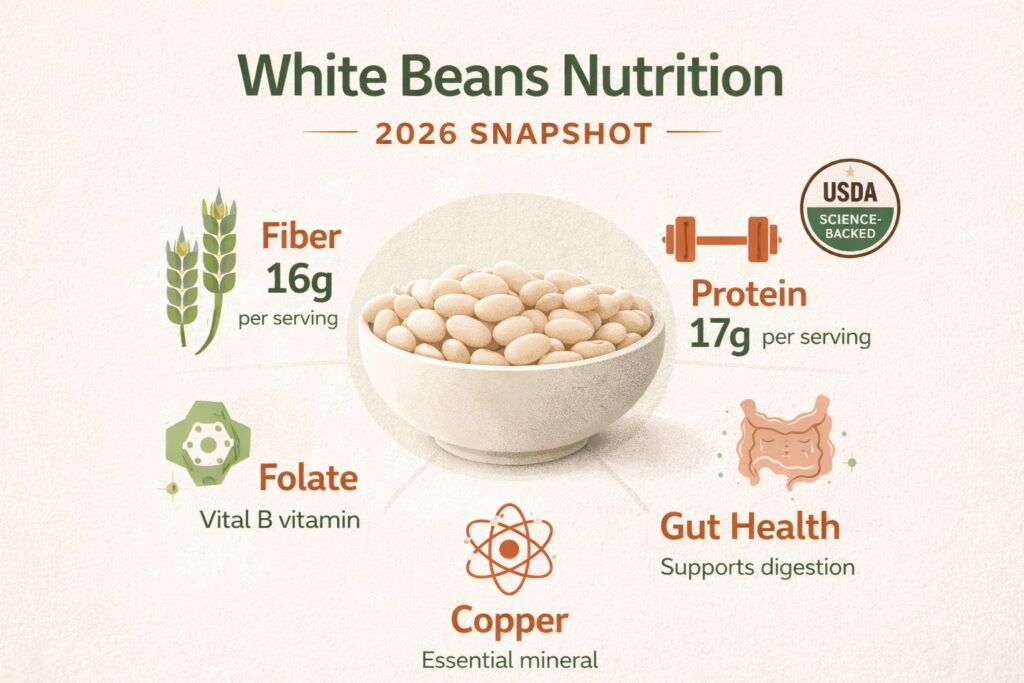
- Gut health (thanks to 16g of prebiotic fiber)
- Natural energy & mood balance (folate + magnesium)
- Long-term aging support (antioxidants + plant protein)
And unlike ultra-processed “health” foods, white beans come with zero added sugar, zero additives, and a price tag under $2 per can.
Are white beans good for you
5 Science-Backed Reasons White Beans Belong in Your 2026 Health Plan

1. They’re One of the Best Foods for Your Gut Microbiome
Your gut is your second brain—and your first line of defense. In 2026, more Americans than ever are prioritizing digestive wellness, and for good reason.
White beans are loaded with resistant starch and soluble fiber—the exact kind of fuel your good gut bacteria crave. When these fibers ferment in your colon, they produce short-chain fatty acids (like butyrate), which:
- Reduce gut inflammation
- Strengthen the gut lining (helping prevent “leaky gut”)
- Support balanced immune function
A 2025 meta-analysis in The American Journal of Clinical Nutrition found that people who ate legumes like white beans at least 4x/week had significantly more diverse gut microbiomes—linked to lower risks of obesity, diabetes, and even depression.
Practical tip: Start with ½ cup/day. Pair with leafy greens or olive oil to boost absorption and ease digestion.
2. They Support Radiant Skin—From the Inside Out
Forget expensive serums for a moment. In 2026, the smartest skincare starts on your plate.
White beans are unusually rich in copper—a trace mineral most Americans don’t get enough of. Copper is essential for collagen and elastin production, the proteins that keep your skin firm, supple, and resilient.
They also deliver zinc and antioxidants that help fight oxidative stress—one of the main drivers of premature aging.
Think of it this way: while you’re nourishing your gut, you’re also feeding your skin. That’s true holistic beauty.
Try this: Blend cooked cannellini beans with lemon, garlic, and olive oil for a skin-loving dip. Eat it with carrot sticks or cucumber slices—bonus points for vitamin A + hydration.
3. They Stabilize Mood, Focus, and Energy
Feeling foggy or emotionally drained? Your diet might be part of the story.
White beans are one of the best plant-based sources of folate (vitamin B9)—a nutrient directly tied to neurotransmitter production (like serotonin and dopamine). Low folate levels are linked to fatigue, brain fog, and low mood.
Plus, their low glycemic index means they release energy slowly—no blood sugar spikes, no 3 p.m. crashes.
In a time when burnout and mental fatigue are epidemic, this is quiet, edible resilience.
Real-life hack: Add white beans to your morning smoothie (yes, really!) for steady energy. They’re mild enough to blend right in with banana, cinnamon, and almond milk.
4. They’re a Longevity Food—Straight from the Blue Zones
Ever wonder why people in places like Sardinia or Okinawa live so long, so well?
Beans are the #1 dietary commonality across all Blue Zones—the regions with the world’s longest-lived populations. And white beans? They’re a staple in Italian and Mediterranean longevity diets.
Why? Because they deliver high-quality plant protein + fiber + polyphenols without the saturated fat of animal proteins. This combo supports:
- Healthy blood pressure
- Balanced cholesterol
- Stable weight over time
A 2024 study tracking U.S. adults for 12 years found that those who ate at least ½ cup of legumes daily had a 22% lower risk of early death from heart disease or metabolic disorders.
That’s not a supplement. That’s a can of beans.
5. They Make Healthy Eating Simple, Affordable, and Delicious
Let’s be honest: eating well in America shouldn’t require a second mortgage.
White beans cost less than $0.50 per serving. They keep for years in the pantry (dried) or months in the fridge (cooked). And they’re endlessly adaptable:
- Mash into veggie burgers
- Toss into grain bowls
- Blend into creamy soups (no cream needed)
- Stir into pasta sauces for extra protein
In 2026, as inflation continues to squeeze budgets, nutrient density per dollar matters more than ever. White beans deliver more health per penny than almost any other food.
What About Canned White Beans? Are They Healthy?
Yes—if you choose wisely.
Most major U.S. brands (like Bush’s, Goya, or Eden Organic) now offer BPA-free cans and low-sodium or no-salt-added versions. Always rinse them well—this removes up to 40% of added sodium and reduces compounds that cause bloating.
And nutritionally? Canned white beans are nearly identical to home-cooked. The canning process actually increases antioxidant availability in some cases.
So don’t feel guilty reaching for the can. In fact, convenience is what makes consistent healthy eating possible.
Want to enjoy white beans daily?
They’re incredibly easy to use straight from the can—just rinse, drain, and add to soups, salads, or blend into creamy sauces (no soaking or long cooking needed!).
Looking for simple, gut-friendly ways to use them? I’ll be sharing a dedicated post soon on 3 no-fuss white bean recipes that support skin, energy, and digestion—complete with prep tips, photos, and nutrition breakdowns.
Looking for a naturally sweet, fiber-rich snack to complement your savory, plant-based meals? Discover the [7 science-backed benefits of figs fruit] for digestion and heart health.
Also read :
- Top 7 Plant-Based Health Trends Shaping 2026
- Artichoke Benefits: A Prickly Treasure Of The Culinary World
Final Thought
You don’t need a radical diet overhaul to feel better in the new year. Sometimes, the most powerful shifts come from revisiting the simple, timeless foods we’ve forgotten.
White beans aren’t flashy. They won’t trend on TikTok. But they’ve nourished generations—and now, science is catching up to what grandmothers always knew.
So, this January, instead of chasing the next miracle pill, try this:
Add one serving of white beans to your plate three times this week.
Your gut will thank you. Your skin might glow. Your energy could stabilize. And your long-term health? It just got a quiet, powerful ally.
That’s the kind of real, sustainable wellness worth building a new year on.
FAQs: White Beans Nutrition & Health
Do I need to soak white beans before eating them?
Only if you’re using dried beans. Soaking (8–12 hours) helps reduce cooking time and
removes compounds that can cause gas. But if you’re using canned white beans—which most Americans do—you can use them straight from the can after rinsing. No soaking needed.
Are canned white beans as healthy as dried?
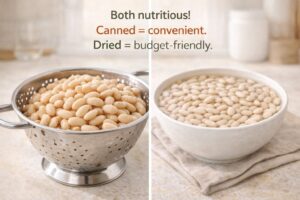
Yes! Canned white beans retain nearly all the fiber, protein, and minerals of home-cooked beans. Just choose low-sodium or no-salt-added versions and rinse well to reduce sodium by up to 40%.
Can white beans help with weight loss?
Indirectly, yes. Their high fiber and protein content promote fullness, helping you eat fewer calories naturally. Plus, their low glycemic index prevents blood sugar spikes that lead to cravings.
Are white beans good for people over 50?
Especially so. Their combination of folate, magnesium, plant protein, and fiber supports heart health, cognitive function, bone density, and digestive regularity—key priorities for healthy aging in 2026.
How often should I eat white beans for health benefits?
Research suggests 3–4 servings per week (½ to 1 cup per serving) is enough to see measurable benefits for gut health, cholesterol, and longevity. Start with 1–2 times/week if you’re new to legumes.
Can white beans cause bloating?
They can—for some people, especially at first. Start with small portions (¼ cup), rinse canned beans well, and pair them with digestion-friendly herbs like fennel, cumin, or ginger.
References: